


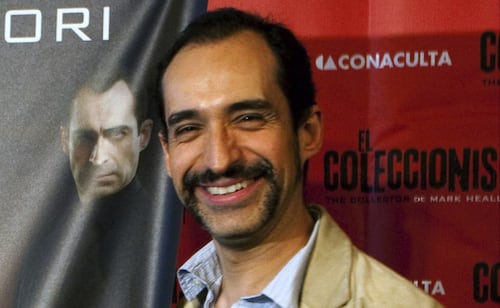
Bruno Bichir declares himself a man of faith before premiering 'Réquiem': 'I couldn't be an actor if I didn't believe'
Translated from Spanish, summarized and contextualized by DistantNews.
At a glance
News
Sources not specified
Context piece
- Actor Bruno Bichir describes himself as a man of faith, not necessarily religious, ahead of his role as a priest in the play "Réquiem."
- He believes faith is essential for acting, enabling him to connect with and provoke audiences.
- In the play, Bichir portrays Father Banks, who tries to prevent a minor's execution, engaging in debates about justice and society with the prosecutor.
Bruno Bichir, preparing to star as a priest in the play "Réquiem," identifies as a man of faith, though not strictly religious. He stated that faith is fundamental to his acting career, asserting, "I couldn't be an actor if I didn't believe, because I have to believe in what I say when I go on stage." Bichir explained that his role is to evoke emotion, provoke thought, and challenge audiences.
I believe in miracles. Basically, I couldn't be an actor if I didn't believe, because I have to believe in what I say when I go on stage, because my job is to move the audience; but also to make them reflect, doubt, get angry, provoke them and even disturb them.
The play, set to premiere on July 17, features Bichir as Father Banks. His character's mission is to halt the execution of a minor. During the performance, he engages in a profound dialogue with the prosecutor, Emma, played by Marimar Vega. Their conversations delve into complex themes of justice, fear, guilt, violence, and the perceived loss of compassion in contemporary society.
Bichir expressed his fortune in being part of this project, highlighting the compelling story, its message, and the production team. He also praised the cast, particularly Marimar Vega, with whom he shares a deep connection to the theater. "Marimar and I come from the theater world, from running around as babies in a theater; intrinsically we are linked to respect for the author, and for the director, and for the stage itself, which makes this a whole experience," he added.
Marimar and I come from the theater world, from running around as babies in a theater; intrinsically we are linked to respect for the author, and for the director, and for the stage itself, which makes this a whole experience.
Vega echoed Bichir's sentiments, finding common ground with her character, Emma, who is driven by a strong sense of justice. "Emma is a woman of very firm ideals, who has worked hard for this case. Through her, we can see that one can have strong opinions and clarity on a subject, but when you are on the other side, who knows if you will still think the same," Vega commented.
Emma is a woman of very firm ideals, who has worked hard for this case. Through her, we can see that one can have strong opinions and clarity on a subject, but when you are on the other side, who knows if you will still think the same.
Playwright Reynolds Robledo emphasized that this new season is not a mere revival. The text, originally written in 2018, has been reinterpreted and updated to reflect current societal issues. "It's talking about the polarization of positions; so the important question is, how much are we willing to listen to someone when they are against what we believe and opine? Especially at a time when we are constantly asked to make decisions and take stances on politics, religion, social issues, etcetera," Robledo stated.
It's talking about the polarization of positions; so the important question is, how much are we willing to listen to someone when they are against what we believe and opine? Especially at a time when we are constantly asked to make decisions and take stances on politics, religion, social issues, etcetera.
DistantNews Editorial
Originally published by El Universal in Spanish. Translated, summarized, and contextualized by our editorial team with added local perspective. Read our editorial standards.
More Stories


From Our Blog

What Press Freedom Means for the News You Read

What Gets Lost (and Found) When News Is Translated

The Critical Role of Diaspora Media in Global News

What Travellers Should Know About Countries with Restricted Press

A Digital Nomad's Guide to Following Local News
