

Bucharest Opera Festival Concludes with Lavish "Adriana Lecouvreur" Production
Translated from Romanian, summarized and contextualized by DistantNews.
At a glance
In-depth
Sources not specified
Outcome reported
- The Bucharest Opera Festival concluded with a performance of Cilea's "Adriana Lecouvreur" by the Romanian National Opera Timișoara.
- The 2011 production, directed by Mario De Carlo, featured elaborate costumes and set design, utilizing thousands of meters of natural fibers and unique designs for each of the 130 costumes.
- The performance was conducted by David Crescenzi, who led a semi-international cast in presenting Cilea's verismo melodies.
The Bucharest Opera Festival closed its curtains with a performance of Francesco Cilea's "Adriana Lecouvreur," presented by the Romanian National Opera Timișoara. This 2011 production, helmed by Mario De Carlo for artistic direction, set design, and costumes, finally arrived in the capital after more than a decade since its premiere and five years into the festival's existence.
the staging by Mario De Carlo (artistic direction, set design, costumes) has been well maintained, although it has a complicated mise-en-scène due to the abundance of details difficult to find in other productions, defining an eminently classical vision, an expression of pure traditionalism in opera direction, which is rarely encountered today.
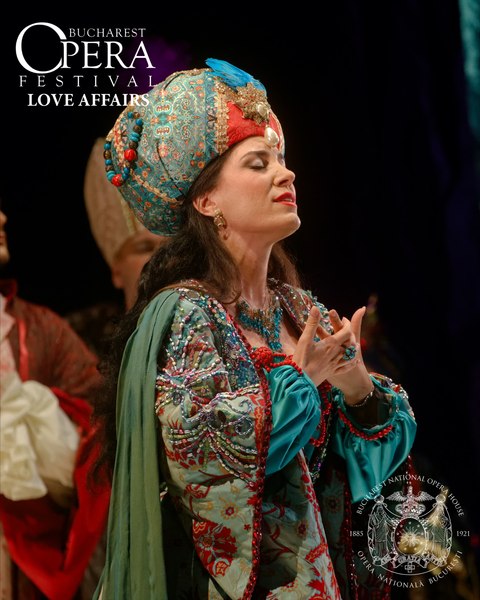
De Carlo's staging, though featuring a complex mise-en-scène with abundant detail, maintained a classical vision of opera direction. The costumes, in particular, lent the production the allure of a cinematic blockbuster. For the 130 costumes, nearly three thousand meters of material, including silks and satins sourced from Syria, were used, with each design being unique. The lead soprano's gowns were crafted from luxurious materials like taffeta, silk, and satin, specially ordered from Italian suppliers catering to renowned European theaters.
the costumes are what give the spectacle the allure of a cinematic super-production.
The production spared no expense, with the lead soprano's Act I costume sourced from Istanbul, and a three-meter satin cape, trimmed with faux polar fox fur, for the Princess of Bouillon in Act II. Even the 100 wigs were acquired from a specialized Italian firm, and the footwear was crafted by Milanese ateliers producing period shoes for European theaters. This opulent scenography, completed in a record 50 days, created a visually rich and historically evocative atmosphere.
For the 130 costumes, almost three thousand meters of material were used, trimmings, tulle, silks, satin, entirely from natural fibers without polyester, brought from Syria, as well as embroidery, stones, sequins. Each costume has a unique design.
Under the baton of Italian conductor David Crescenzi, the Timișoara opera company presented a semi-international cast. Crescenzi skillfully navigated Cilea's verismo melodies, emphasizing the famous arias and their thematic elements, bringing the opera's action to life within the lavish visual environment.
The dresses of the titular performer were made from pretentious materials, taffeta, silk, satin, specially ordered from Italy, from stores that supply famous theaters in Europe, such as those in Vienna, Paris, Barcelona, Rome or Milan.
DistantNews Editorial
Originally published by Adevărul in Romanian. Translated, summarized, and contextualized by our editorial team with added local perspective. Read our editorial standards.
More Stories
From Our Blog

What Gets Lost (and Found) When News Is Translated

The Critical Role of Diaspora Media in Global News

What Travellers Should Know About Countries with Restricted Press

A Digital Nomad's Guide to Following Local News

How the Same Story Looks Different in Different Countries
