


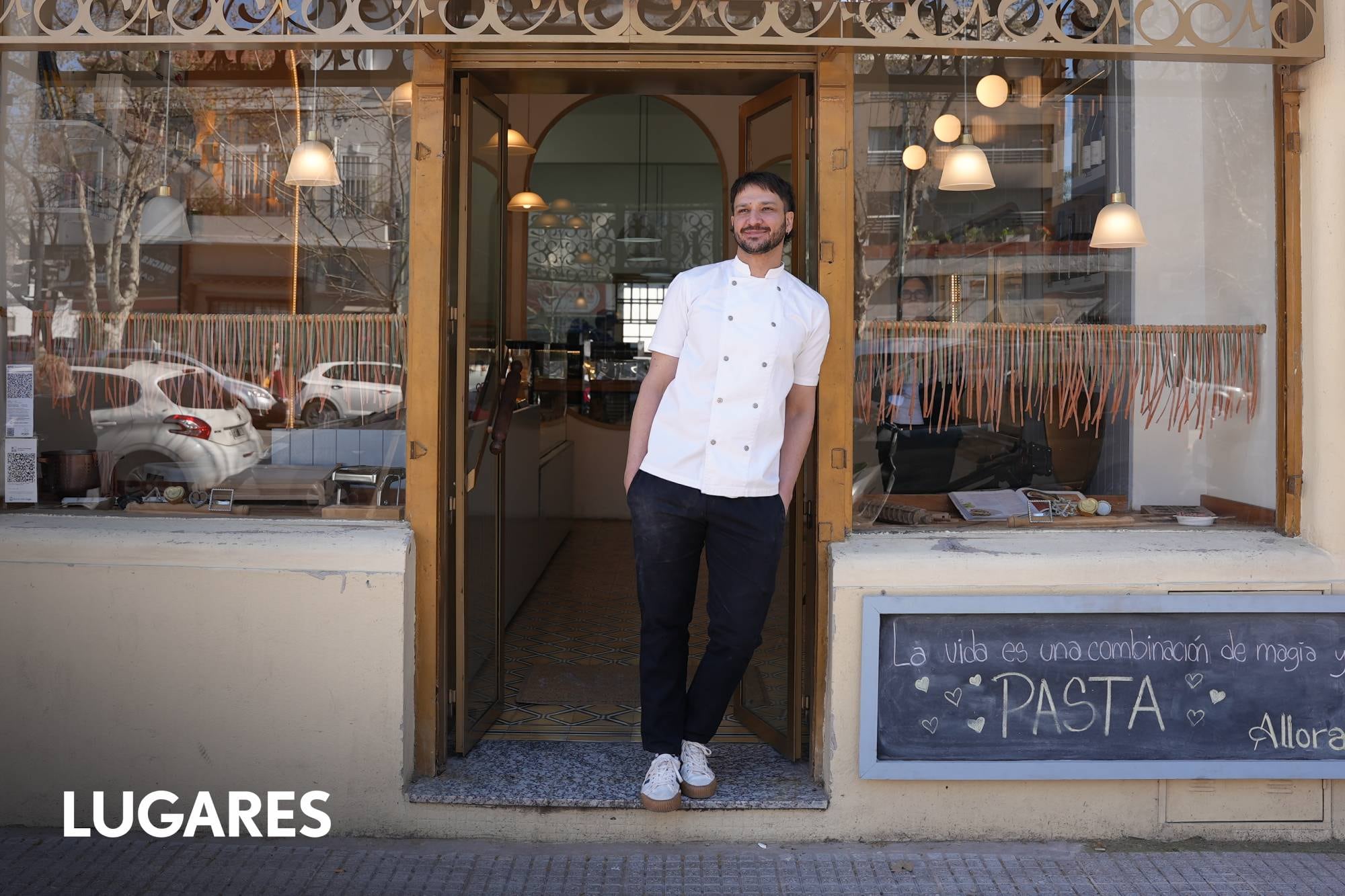
Buenos Aires restaurant reinvents artisanal pasta with unique flavors and gourmet fillings
Translated from Spanish, summarized and contextualized by DistantNews.
At a glance
In-depth
Sources not specified
Context piece
- Allora Pasta, a restaurant in Buenos Aires, reinvents traditional Italian pasta with unique flavors and high-cuisine fillings.
- Chef Martín Bizzorero, drawing on family heritage and international training, leads the venture, which began as a pandemic-era delivery service.
- The restaurant emphasizes artisanal techniques, fresh ingredients, and a distinctive dining experience, blending classic Italian methods with innovative culinary approaches.
In the heart of Buenos Aires' Parque Chas neighborhood, Allora Pasta has become a haven for food enthusiasts, distinguishing itself from mass-produced options. Chef Martín Bizzorero leads the establishment, merging Italian culinary techniques with a unique approach to flavors and high-cuisine fillings.
The restaurant's design evokes the 1950s and '60s, while the kitchen, fully visible to diners, focuses on meticulous details. Allora Pasta uses sémola rimacinata for a velvety dough and crafts flavor combinations that tell a story. Dishes like "cappellacci de queso azul" and "lasagna de osobuco desmechado" showcase this blend of tradition and innovation.
Allora began as a word-of-mouth secret during the 2020 pandemic, evolving into a popular delivery service for three years. Bizzorero's experience at Benedetta, a Michelin-recognized spot, further honed his vision for innovative ravioli. Now, with partner Mario Federico Álvarez, the project has found its own dedicated space.
Bizzorero's culinary journey is rooted in his immigrant family's heritage. He learned the basics of dough making from his grandfather, inheriting patience and a deep respect for ingredients. Initially studying marketing, he found himself drawn to the kitchen, eventually pursuing formal culinary training at IAG and dedicating himself fully to cooking.
His quest for authentic pasta led him to Italy, where he studied the art of handmade pasta from "sfogline" in Emilia-Romagna and learned specific techniques for "agnolotti" in Piedmont and "cappellacci" in Romagna. "In Italy, I learned the secrets to making authentic pasta," he recalls. "There I understood how temperature, air humidity, and resting time change everything. It's not just a recipe; it's physics and sensitivity."
In Italy, I learned the secrets to making authentic pasta; there I understood how temperature, air humidity, and resting time change everything. It's not just a recipe; it's physics and sensitivity.
DistantNews Editorial
Originally published by La Nación in Spanish. Translated, summarized, and contextualized by our editorial team with added local perspective. Read our editorial standards.
More Stories


From Our Blog

What Gets Lost (and Found) When News Is Translated

The Critical Role of Diaspora Media in Global News

What Travellers Should Know About Countries with Restricted Press

A Digital Nomad's Guide to Following Local News

How the Same Story Looks Different in Different Countries
