


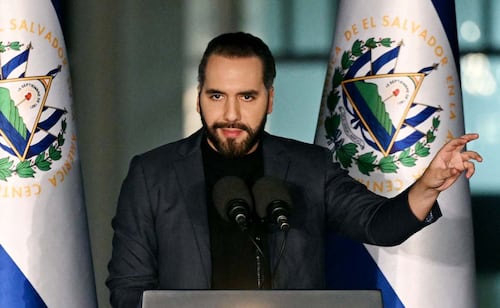
Bukele wins party nomination for third term in El Salvador
Translated from Spanish, summarized and contextualized by DistantNews.
At a glance
News
Named sources
New plan
- El Salvador's President Nayib Bukele has secured his party's nomination to seek a third consecutive six-year term in the February 2027 elections.
- Bukele's path to re-election was cleared by legal reforms, including the abolition of term limits and an extension of the presidential term to six years.
- Critics accuse Bukele of authoritarianism due to his control over state institutions, despite his popularity stemming from his anti-gang policies.
President Nayib Bukele of El Salvador has officially secured his party's nomination, Nuevas Ideas, to run for a third six-year term in the upcoming February 2027 elections. Bukele, who has been in power since 2019, was proclaimed the nominee after winning his party's internal elections, a move facilitated by controversial legal reforms that permit consecutive re-election.
The 44-year-old president enjoys significant popularity, largely attributed to his aggressive war on gangs. Under a state of exception, which international organizations have criticized for alleged human rights violations, Bukele has dismantled groups designated as terrorist organizations by the United States. His bid for re-election was further solidified in July 2025 when Congress eliminated the limit on consecutive terms and extended the presidential term from five to six years, also abolishing the runoff election.
These reforms, coupled with a 2021 ruling by the Constitutional Chamber that authorized immediate re-election, have cleared Bukele's path. His current term, shortened to align presidential elections with local ones, will conclude in 2027. Without a strong opposition, the right-wing leader will compete alongside his vice president, Félix Ulloa.
Bukele broke a three-decade bipartisan system in 2019, winning with 53% of the vote, appealing to young voters and those disillusioned with the traditional parties. However, critics label him an autocrat for his firm grip on Congress, the judiciary, and other state institutions. He self-describes as a "cool dictator" and his security model has garnered attention from various right-wing governments across Latin America.
DistantNews Editorial
Originally published by El Universal in Spanish. Translated, summarized, and contextualized by our editorial team with added local perspective. Read our editorial standards.
More Stories

From Our Blog

What Press Freedom Means for the News You Read

What Gets Lost (and Found) When News Is Translated

The Critical Role of Diaspora Media in Global News

What Travellers Should Know About Countries with Restricted Press

A Digital Nomad's Guide to Following Local News
