


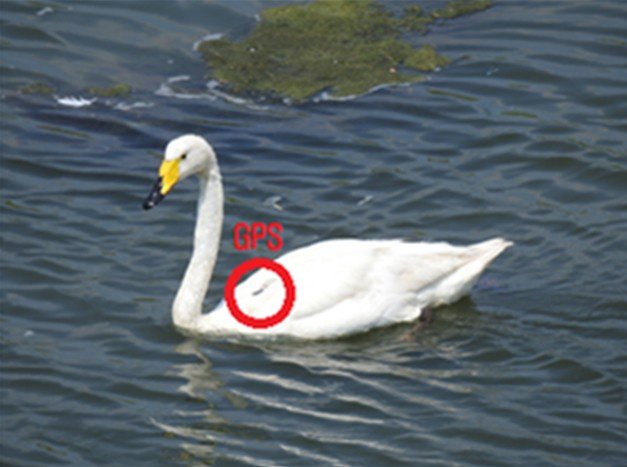
Busan-Raised Goose Completes Successful Round-Trip Migration to Russia
Translated from Korean, summarized and contextualized by DistantNews.
At a glance
News
Official statement
Outcome reported
- A Greater White-fronted Goose, nicknamed 'Yeoreumi', born in Busan, South Korea, has successfully completed a round-trip migration between South Korea and Russia.
- This marks the first documented case in Korea of a goose raised in captivity joining a wild flock and completing the migratory journey.
- Experts view this as a significant ecological achievement, demonstrating the goose's complete recovery of wild migratory instincts and highlighting the importance of the Nakdong River Estuary as a safe haven for migratory birds.
A remarkable feat of avian migration has been achieved by a Greater White-fronted Goose, affectionately known as 'Yeoreumi', born in Busan's Eulsukdo Island. The goose has successfully completed a round-trip journey between South Korea and Russia, according to the Nakdong Estuary Eco-Center.
'Yeoreumi' hatched in May 2023 at Yongin Everland and was moved to the Nakdong Estuary waterbird alternative habitat in October of the same year to undergo wild adaptation training. Last spring, tracking device data revealed 'Yeoreumi' flew approximately 2,300 kilometers, passing through Ulsan and North Korea, to reach Primorsky Krai in Russia. This journey garnered significant attention from researchers.
As winter approached last year, 'Yeoreumi' returned to Busan. Recently, with the onset of the breeding season, the goose has once again migrated north to Russia. This case is considered the first in South Korea where a goose born in captivity has successfully integrated with a wild flock and completed a migratory cycle.
Avian experts are hailing this as a major ecological success. They emphasize that it goes beyond mere survival of an artificially raised individual, showcasing a complete restoration of complex wild migratory instincts. Seo Jin-won, director of the Nakdong Estuary Eco-Center, stated, "The fact that 'Yeoreumi', who grew up in Eulsukdo, went to its native breeding grounds in Russia and returned to Busan proves how precious and safe the Nakdong River Estuary is for migratory birds."
DistantNews Editorial
Originally published by Dong-A Ilbo in Korean. Translated, summarized, and contextualized by our editorial team with added local perspective. Read our editorial standards.
More Stories



From Our Blog

What Gets Lost (and Found) When News Is Translated

The Critical Role of Diaspora Media in Global News

What Travellers Should Know About Countries with Restricted Press

A Digital Nomad's Guide to Following Local News

How the Same Story Looks Different in Different Countries
