


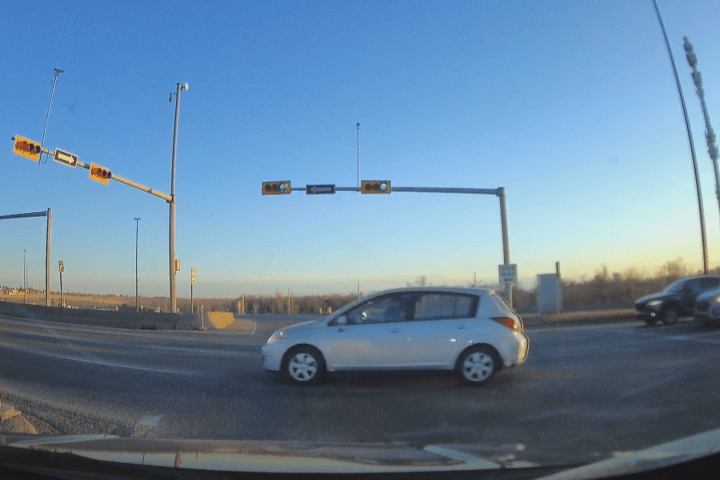
Calgary police issue more than 60,000 tickets for running red lights since 2024
Summarized and contextualized by DistantNews.
At a glance
News
Sources not specified
New plan
- Calgary police have issued over 60,000 tickets for red light violations captured by cameras since 2024.
- Approximately 8,400 tickets were issued between January 1 and May 31 of this year alone.
- Experts suggest more cameras are needed to effectively deter drivers from running red lights.
Calgary police are grappling with a significant increase in drivers running red lights, having issued more than 60,000 tickets based solely on camera footage since 2024. The data reveals a stark reality: between January 1 and May 31 of this year, approximately 8,400 motorists were caught violating the law.
Red lights are there for people safety
Staff Sgt. Andy Woodward of the Calgary police traffic unit emphasized the critical role of red lights in ensuring public safety. "Red lights are there for people's safety," he stated, urging drivers to reduce speed and anticipate light changes. He noted that while officers observe violations, dashcam videos are now a primary source for enforcement, highlighting the difficulty of catching offenders in real-time.
When you approach a red light or you’re approaching a set of traffic lights start, reduce your speed and anticipate that light is probably going to change.
Woodward appealed to the public for responsibility, reminding drivers that obeying traffic rules is essential for their own safety and that of other road users. Dashcam footage frequently uploaded to social media groups like "Bad Calgary Drivers" showcases numerous near misses and blatant disregard for traffic signals, sometimes seconds after the light has turned red.
We’re asking the public to be responsible. You’re driving your car, you pass the driving test, and you’ve got to obey the rules of the road … for a reason.
Jacob Lamb, an assistant professor in civil engineering at the University of Calgary, pointed out that the city's 57 active cameras cover less than five percent of intersections. He suggested that a wider camera presence, ideally at most intersections, would be more effective in deterring this behavior, assuming the current cameras are strategically placed in high-severity or high-history collision areas.
They’re there for your safety and safety of other road users.
DistantNews Editorial
Originally published by Global News. Summarized and contextualized by our editorial team with added local perspective. Read our editorial standards.
More Stories


From Our Blog

What Gets Lost (and Found) When News Is Translated

The Critical Role of Diaspora Media in Global News

What Travellers Should Know About Countries with Restricted Press

A Digital Nomad's Guide to Following Local News

How the Same Story Looks Different in Different Countries
