


Can ISIS Breach Syrian Security at Will?
Summarized and contextualized by DistantNews.
At a glance
News
Named sources
Under investigation
- Syrian security forces arrested a cell affiliated with ISIS following two bomb explosions in Damascus during French President Emmanuel Macron's visit.
- An expert stated the attacks do not indicate a security breach but rather a failed terrorist attempt dealt with swiftly.
- The incident highlights the ongoing asymmetric warfare against ISIS, which relies on suicide attacks and indiscriminate violence.
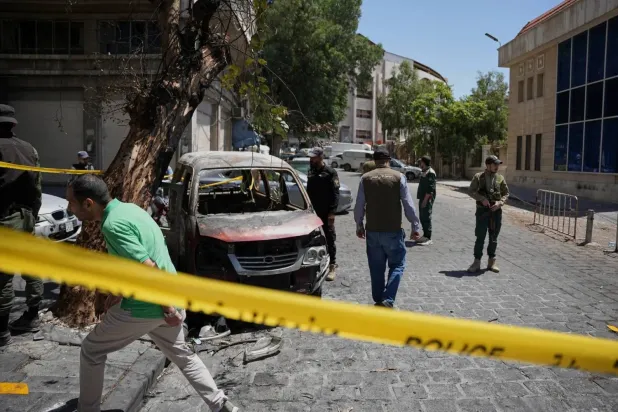
Syrian security forces announced Thursday they had arrested the cell responsible for two bomb explosions in Damascus, which occurred two days after the blasts during French President Emmanuel Macron’s visit. Initial investigations linked the cell to ISIS, making the attacks particularly sensitive as they occurred near the luxury Four Seasons Hotel where Macron was staying.
The two explosions cannot in any way be seen as a sign of weakness or incapacity. Rather, they confirm the nature of the asymmetric war Syrian security and military authorities are fighting against ISIS, which relies on suicide attacks and indiscriminate violence to spread fear.
This visit marked the first by a leader of a major Western power since President Ahmed al-Sharaa assumed office in late 2024. The explosions have caused unease among Damascus residents, raising questions about whether ISIS can breach security at will. Ismat al-Absi, a strategic security and military expert close to the Defense Ministry, rejected this notion.
"The two explosions cannot in any way be seen as a sign of weakness or incapacity," al-Absi stated. "Rather, they confirm the nature of the asymmetric war Syrian security and military authorities are fighting against ISIS, which relies on suicide attacks and indiscriminate violence to spread fear." He described the incident not as a technical security breach, but as a "failed terrorist attempt that was uncovered and dealt with in record time."
The incident was not a security breach in the technical sense, but a failed terrorist attempt that was uncovered and dealt with in record time.
The bombs detonated several hundred meters from Macron's hotel, shortly after his convoy departed for a meeting with President al-Sharaa. The French presidency confirmed Macron was safe and would continue his visit. Al-Absi emphasized that the tight security measures in place, coupled with the swift arrest of the perpetrators and the detonation of devices away from the official route, proved that national security was not breached. He noted that the state can effectively distinguish between enemy actions and its sovereign duties.
The fact that the devices were detonated away from the official guest’s route, followed by the immediate arrest of those responsible, proves that the red line of national security was not breached.
These attacks followed an explosion in a Damascus cafe that killed 10 people the previous Friday. Al-Absi differentiated between infiltration and establishing a foothold, asserting that ISIS lacks a popular base or significant civilian presence in Syria. He explained that the group relies on scattered sleeper cells exploiting temporary security vacuums created by years of war. The appearance of such cells around Damascus, he concluded, reflects ISIS's desperate attempts to re-establish a presence before being eliminated by the state, rather than indicating broad infiltration.
It also shows that the state can separate the enemy’s noise from the performance of its sovereign duties.
DistantNews Editorial
Originally published by Asharq Al-Awsat. Summarized and contextualized by our editorial team with added local perspective. Read our editorial standards.
More Stories


From Our Blog

What Gets Lost (and Found) When News Is Translated

The Critical Role of Diaspora Media in Global News

What Travellers Should Know About Countries with Restricted Press

A Digital Nomad's Guide to Following Local News

How the Same Story Looks Different in Different Countries
