

Can Kabul hold?
Summarized and contextualized by DistantNews.
At a glance
Analysis
Named sources
Context piece
- Afghanistan's Taliban administration faces profound structural decay nearly five years after Kabul's fall, challenging the notion of authoritarian permanence.
- Internal divisions between the Kandahar and Kabul factions, coupled with a consolidating political opposition, accelerate instability.
- The regime's internal economy of power, volatile regional relations, and emerging resistance movements contribute to a strategic impasse and potential multi-factional conflict.
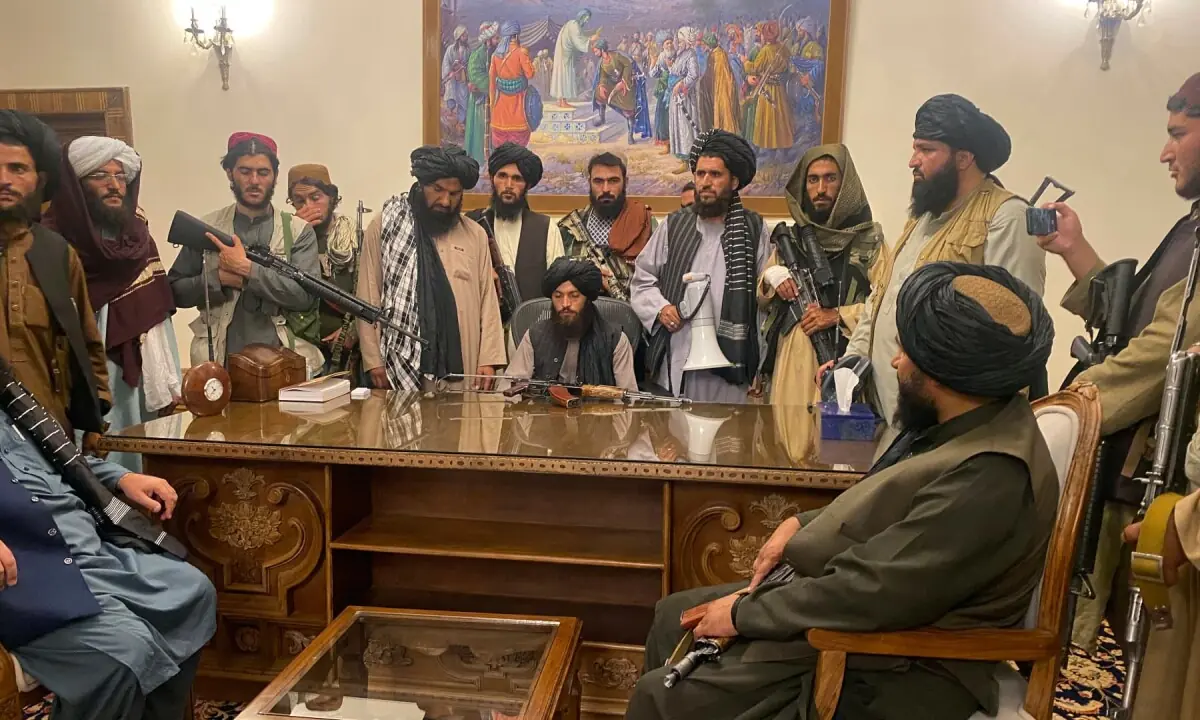
Nearly five years after the fall of Kabul, Afghanistan's Taliban administration is exhibiting profound structural decay, undermining the idea that authoritarian suppression equates to institutional permanence. The regime has reached a strategic impasse, teetering on the brink of localized, multi-factional civil conflict.
This impending instability stems not only from diplomatic isolation and international sanctions but is also driven by an unsustainable internal economy of power, strained relationships with regional neighbors, and the rise of decentralized resistance movements. Domestically, the regime is fracturing along factional lines, revealing a power struggle between the hyper-conservative Kandahar faction, led by Supreme Leader Hibatullah Akhundzada, and the militarized Kabul faction, overseen by figures like Sirajuddin Haqqani.
the fundamental path toward resolving the Afghan crisis reduces to a singular, foundational principle: returning the executive right to make decisions directly to the Afghan people.
Kandahar's insistence on ideological conformity and centralized fiscal control has alienated field commanders, paralyzing state administrative capacity and reducing the economy to a state dependent on illicit trade and irregular humanitarian aid. This internal pressure is amplified by a consolidating political opposition. Ahmad Massoud, leader of the National Resistance Front (NRF), directly challenges the Taliban's claims of control and legitimacy, asserting that true national unity requires returning decision-making power to the Afghan people and grounding the state in justice and respect for diversity.
The Taliban's internal security is increasingly challenged by a dual-layered opposition. The NRF represents the formal, institutional wing of the resistance, maintaining a military presence in northern valleys. Simultaneously, groups like Pasiban-i-Watan (Guardians of the Homeland) employ divergent operational strategies, contributing to the complex landscape of Afghan resistance.
true national unity cannot be built upon a foundation of silence, fear, or the forced structural conformity imposed by the Taliban. Instead, a durable state architecture requires a system grounded in justice, mutual respect, and an institutional acceptance of Afghanistan’s diverse ethnic and cultural tapestry.
DistantNews Editorial
Originally published by Dawn. Summarized and contextualized by our editorial team with added local perspective. Read our editorial standards.
More Stories
From Our Blog

What Gets Lost (and Found) When News Is Translated

The Critical Role of Diaspora Media in Global News

What Travellers Should Know About Countries with Restricted Press

A Digital Nomad's Guide to Following Local News

How the Same Story Looks Different in Different Countries
