


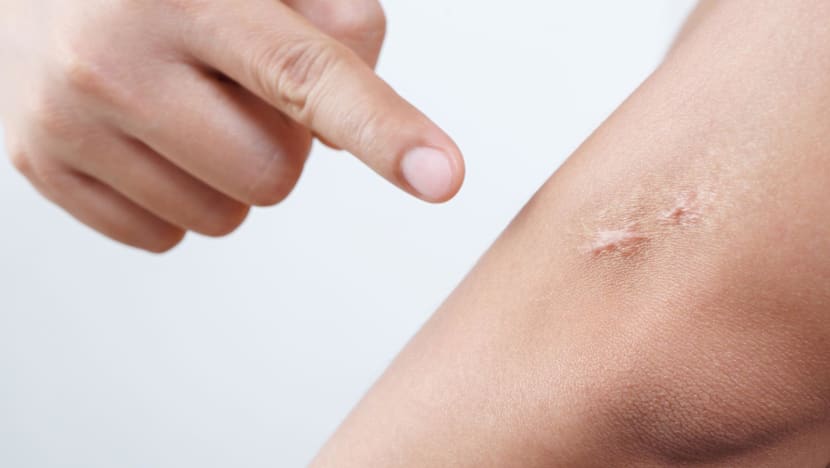
Can you make scars fade? Doctors explain why they form and what works – from silicone sheets to Vitamin E
Summarized and contextualized by DistantNews.
At a glance
Explainer
Named sources
Context piece
- Dermatologists explain how scars form and why some are more noticeable than others.
- They discuss the effectiveness of various treatments, including silicone sheets and Vitamin E.
- The timing of treatment is crucial, with scars being easiest to treat when they are newer.
Scars are a natural part of the healing process, but their appearance can vary significantly depending on factors like wound depth, location, and individual healing responses. Dermatologists explain that scars form when the skin's dermis layer is damaged, prompting the body to produce collagen fibers to repair the injury. However, this repair process often results in scar tissue that differs in texture and color from the surrounding skin.
Certain wounds are more prone to leaving noticeable marks. Factors such as the direction of the wound relative to the skin's natural lines, the tension across the scar, and the individual's predisposition to keloid or hypertrophic scarring all play a role. Understanding these elements helps in predicting how a scar might develop and what treatments might be most effective.
When it comes to minimizing scar visibility, timing is key. Dermatologists emphasize that scars are generally easiest to treat in their early stages, typically within the first year after formation. Over-the-counter remedies like silicone sheets and Vitamin E are commonly recommended. Silicone sheets work by hydrating the scar tissue and creating a barrier, which can help flatten and soften raised scars. While Vitamin E is popular, scientific evidence supporting its effectiveness is mixed, with some studies showing minimal benefit.
More advanced treatments, such as corticosteroid injections, laser therapy, or surgical revision, may be considered for more persistent or prominent scars. However, a consultation with a dermatologist is essential to determine the best course of action based on the specific type and age of the scar, as well as the patient's skin type and expectations.
DistantNews Editorial
Originally published by CNA. Summarized and contextualized by our editorial team with added local perspective. Read our editorial standards.
More Stories



From Our Blog

What Gets Lost (and Found) When News Is Translated

The Critical Role of Diaspora Media in Global News

What Travellers Should Know About Countries with Restricted Press

A Digital Nomad's Guide to Following Local News

How the Same Story Looks Different in Different Countries
