

Canada Resists US Tariff Pressure, Prioritizing Sovereignty Over Economic Cost
Translated from Spanish, summarized and contextualized by DistantNews.
At a glance
News
Named sources
Context piece
- Canada withdrew from trade negotiations with the U.S. after rejecting demands it deemed unacceptable and a threat to its sovereignty.
- The U.S. imposed 50% tariffs on $20 billion of Canadian products, prompting Canada to announce retaliatory tariffs.
- The dispute tests Canada's stance on resisting economic coercion from larger powers, potentially influencing international relations and Mark Carney's standing.
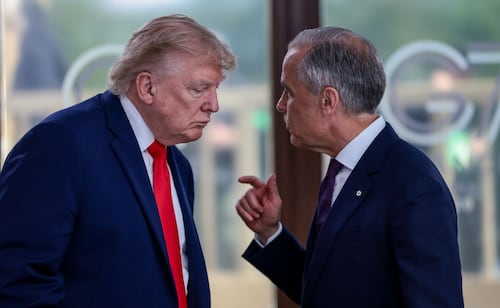
Canada has withdrawn from trade negotiations with the United States, rejecting demands that Prime Minister Mark Carney described as "unacceptable" and a violation of Canadian sovereignty. The move came late Friday after Carney concluded the U.S. was asking too much in exchange for tariff relief. In response, the U.S. imposed 50% tariffs on approximately $20 billion worth of Canadian products, effective Saturday. Carney announced that Canada would retaliate with dollar-for-dollar tariffs starting September 8.
We are going to respond.
Carney is taking a stand that many U.S. allies have avoided, choosing to endure economic pain rather than yield to tariff pressure. This confrontation represents the clearest test yet of Carney's argument that middle powers must resist economic coercion from larger nations like the U.S. and China, even at a significant cost. Canada's response could set a precedent for how countries navigate a world where traditional alliances offer less protection and economic ties become tools of influence.
The trade dispute also serves as a crucial test of sovereignty. Carney cited a U.S. demand in the final hours of negotiations that would have restricted Canada's ability to strike trade deals with other countries. He deemed this demand "unacceptable" and a matter of sovereignty. David Eby, Premier of British Columbia, warned that accepting such a condition would reduce Canada to "the economic equivalent of the 51st state," a status Donald Trump has often fantasized about.
unacceptable
Carney's message on resisting economic pressure resonated in January during a speech at the World Economic Forum in Davos, Switzerland. At the time, Europe was bracing for Trump's threats regarding Greenland and new tariffs. Carney argued that the international order was undergoing a "breakdown, not a transition," and that sovereignty would increasingly depend on a nation's ability to "resist pressure." He cautioned that middle powers negotiating alone with great powers do so from a position of weakness.
a matter of sovereignty
Trump responded to Carney's earlier remarks by highlighting Canada's dependence on the U.S., stating, "Canada lives off the United States." He added, "Remember that, Mark, the next time you make your statements."
to the economic equivalent of the 51st state
DistantNews Editorial
Originally published by El Universal in Spanish. Translated, summarized, and contextualized by our editorial team with added local perspective. Read our editorial standards.
More Stories

From Our Blog

What Press Freedom Means for the News You Read

What Gets Lost (and Found) When News Is Translated

The Critical Role of Diaspora Media in Global News

What Travellers Should Know About Countries with Restricted Press

A Digital Nomad's Guide to Following Local News
