


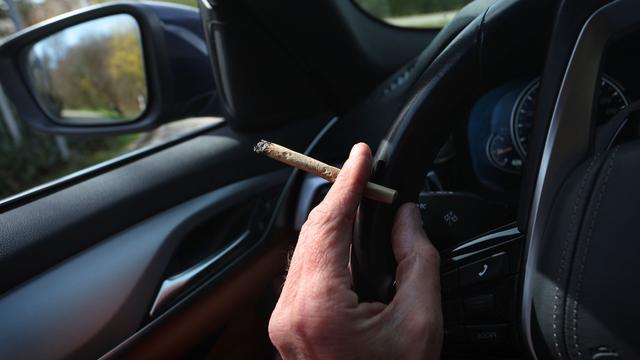
Cannabis Use Behind the Wheel: Rise in Driving Under Influence in Baden-Württemberg
Translated from German, summarized and contextualized by DistantNews.
At a glance
News
Official statement
Context piece
- Cannabis use while driving has significantly increased in Baden-Württemberg since partial legalization two years ago.
- Between April 2024 and March 2026, accidents under the influence of cannabis rose by 8.4%, with non-accident related offenses also climbing.
- Germany-wide, drug offenses in traffic have increased, with a legal blood THC limit of 3.5 nanograms per milliliter, and violations leading to fines, points, and potential driving bans.
Driving under the influence of cannabis is a growing concern in Baden-Württemberg, Germany, following the partial legalization of the drug.
The state's Interior Ministry reports a "leapfrog increase" in cannabis-impaired driving incidents. Between April 2024 and March 2025, "follow-free" cannabis drives, those not resulting in an accident, rose by 11% to nearly 6,900. This trend continued with a further 1.2% increase in the subsequent year, reaching almost 7,000 such offenses detected during traffic stops.
Traffic accidents involving cannabis influence also saw a rise. From 450 accidents in the 2024/2025 period, the number climbed to 488 in 2025/2026, an 8.4% increase. However, officials note that these specific data points have only been systematically collected since the partial legalization.
Nationally, drug offenses in traffic, excluding alcohol, have also seen an uptick. The German Road Safety Council cites federal statistics showing approximately 48,000 such offenses in both 2023 and 2024, rising to around 50,000 in 2025. In Baden-Württemberg alone, drug-related traffic accidents (excluding alcohol) increased from nearly 9,400 in 2023 to over 10,600 last year.
Germany has a blood THC limit of 3.5 nanograms per milliliter. The ADAC emphasizes that driving while impaired by cannabis remains illegal, regardless of decriminalization. Experts like forensic physician Matthias Graw highlight that THC metabolizes differently than alcohol, and users often don't know the potency of the cannabis they consume. Violations can result in fines, points on a driving license, and a one-month ban, with potential mandatory medical-psychological evaluations for those deemed unfit to drive.
DistantNews Editorial
Originally published by Die Zeit in German. Translated, summarized, and contextualized by our editorial team with added local perspective. Read our editorial standards.
More Stories



From Our Blog

What Gets Lost (and Found) When News Is Translated

How the Same Story Looks Different in Different Countries

The Critical Role of Diaspora Media in Global News

What Travellers Should Know About Countries with Restricted Press

A Digital Nomad's Guide to Following Local News
