


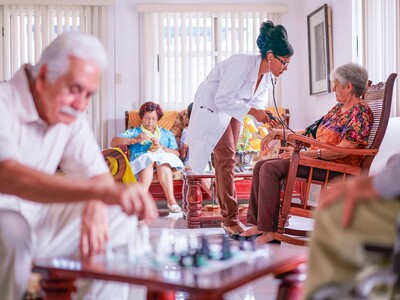
Caring for the elderly presents growing challenge for Dominican Republic
Translated from Spanish, summarized and contextualized by DistantNews.
At a glance
News
Sources not specified
Context piece
- The Dominican Republic faces a growing challenge in caring for its aging population, with increasing economic and personal costs for families.
- A significant demographic shift is underway, with the number of elderly people rising while the birth rate declines.
- Experts warn that public policy must adapt to this demographic transition to ensure adequate support for the elderly.
Caring for aging parents and grandparents is becoming an increasingly significant economic and personal burden for Dominican families. This trend is exacerbated by a rapidly aging population and a declining birth rate, foreshadowing a greater challenge in the coming decades. Families are incurring substantial costs for medical care, in-home assistance, and daily living expenses for their elderly relatives.
One example highlights the financial strain: a family spends approximately 9,000 pesos monthly on medication for their 98-year-old mother and nearly 100,000 pesos for three full-time caregivers. Another case involves an 83-year-old man working to support his wife, who suffers from chronic conditions like obesity and diabetes, underscoring the dual responsibility of providing care and maintaining financial stability.
Demographic projections indicate a substantial increase in the population aged 60 and over, from approximately 1.36 million in 2025 to over 2.6 million by 2050. Concurrently, the number of young children is expected to decrease. Diana Mejía, director of Integral Development and Protection for the Elderly at the National Council for the Elderly (Conape), stresses the urgency for public policy to anticipate this demographic shift. She advocates for strengthening support systems and ensuring that age does not become a basis for exclusion, citing initiatives like the "Pasante con sabiduría" program as examples of efforts to integrate and support the elderly population.
The Dominican Republic is aging, and public policy must anticipate it. Right now, the country's median age, according to ONE, is 32.9 years and life expectancy at birth is 75.7 years; it is projected that by 2031 we will have a stage of high aging.
DistantNews Editorial
Originally published by Diario Libre in Spanish. Translated, summarized, and contextualized by our editorial team with added local perspective. Read our editorial standards.
More Stories


From Our Blog

What Gets Lost (and Found) When News Is Translated

The Critical Role of Diaspora Media in Global News

What Travellers Should Know About Countries with Restricted Press

A Digital Nomad's Guide to Following Local News

How the Same Story Looks Different in Different Countries
