


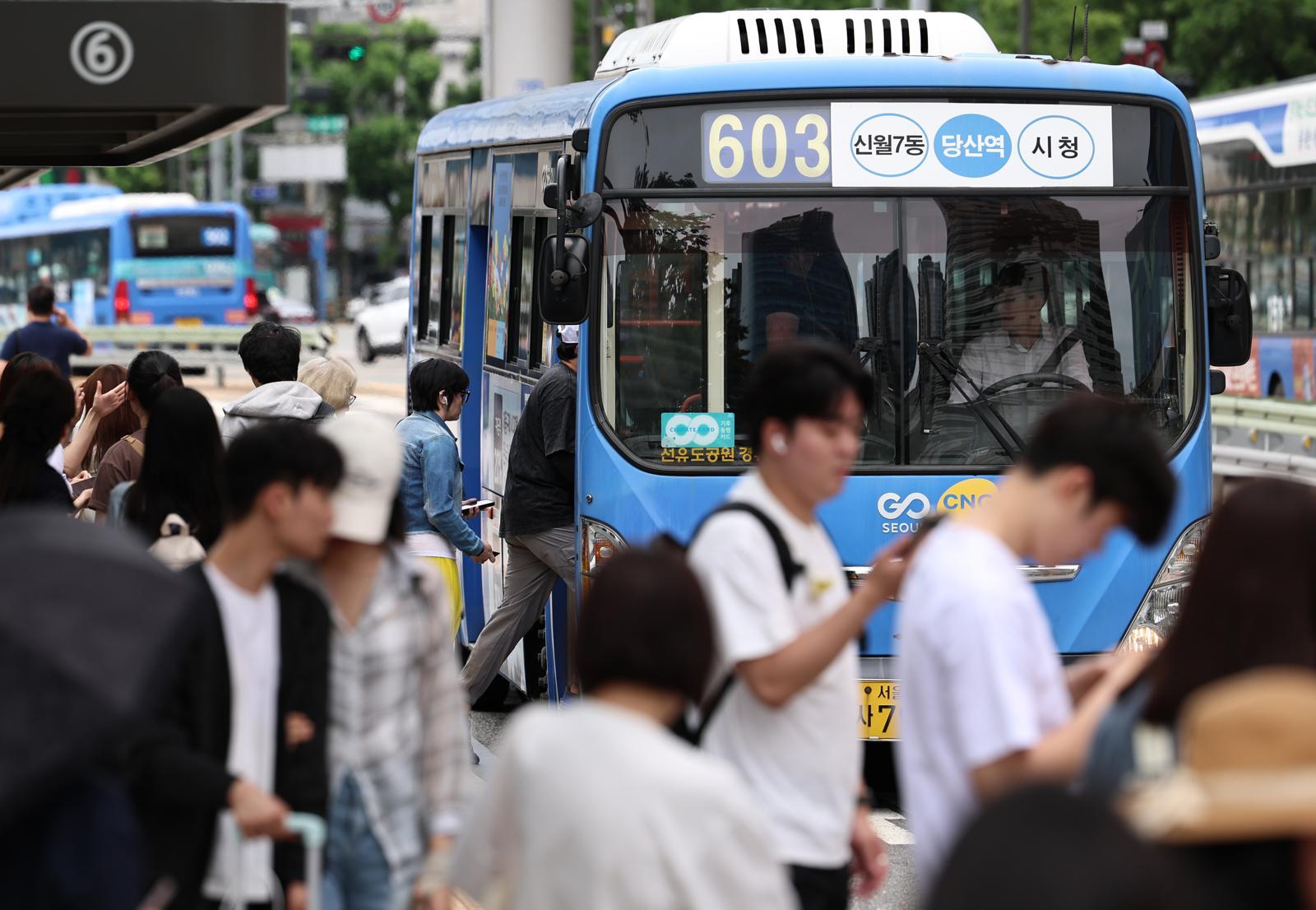
Cash fares account for just 0.24% of Seoul bus revenue as debate over cash boxes intensifies
Translated from Korean and summarized by DistantNews. Read the original for the full story.
At a glance
News
Named sources
New plan
- Seoul city buses collected 3.3 billion won in cash fares last year, just 0.24% of total revenue, while operators spent about 4 billion won managing cash boxes.
- Cashless bus services are spreading across South Korea, but Seoul has kept cash boxes on about 4,363 buses because older passengers and foreign tourists may still need cash payment.
- Officials and an urban-planning professor say alternative payment methods should be improved before Seoul moves to a full cashless system.
Every morning, a cash-box manager at a Seoul bus company collects boxes from about 160 buses, loads them onto a truck and takes them to the company headquarters roughly 18 kilometers away. There, he spends about an hour counting the money and reconciling the records.
The work is becoming harder to justify. Seoul city buses collected 3.3 billion won in cash fares last year, only 0.24% of total revenue, according to the Seoul Bus Transportation Business Association. Cash payments accounted for about 5% of revenue in 2010, but declined steadily as credit and transport cards became more common.
Even when we open the cash boxes on about 160 buses every day, the total comes to less than 100,000 won on average per day.
The 64 companies in the association spent about 4 billion won operating and maintaining the cash boxes. Wages for staff who count the money made up 3.718 billion won of that total. Other costs included transporting the cash, vehicle fuel and repairs to aging boxes. The cost of handling cash therefore exceeded the revenue collected in cash.
The cash boxes are 20 to 30 years old, and now it is difficult even to find parts when they break down.
Bus operators also point to the physical burden. One large company employs three people to count cash, at a combined monthly wage cost of 5.4 million won. The counting must take place in a room with CCTV, while spare parts for old cash boxes are increasingly difficult to obtain. One manager said workers must move about 100 cash containers, each weighing more than 10 kilograms, into the office every day. Cash payments also require drivers to enter the transaction on a terminal and accounting staff to keep separate records.
Cashless buses already operate in Daejeon, Daegu, Incheon, Jeju and Gwangju. Asan removed cash boxes from all city and public buses on the first of the month, while Dangjin stopped accepting cash in August. Busan plans to test cashless service on about 20% of its city buses from October. Seoul began a phased introduction in 2021, but cash boxes remain on about 60% of its buses, or 4,363 vehicles.
Seoul also agrees that the number of cash boxes should be reduced, but complaints say cash payments are still necessary, so the timing of a full introduction is being coordinated.
The city says it has not gone fully cashless because some passengers still need cash, including older people unfamiliar with transport cards and foreign tourists. Seoul recorded 5.2 million foreign visitors from January through April, up 21.4% from the same period last year. The city is considering the timing of a full transition, while experts have called for payment systems that accept cards used by foreign visitors.
The impact of switching to cashless buses must be analyzed and solutions prepared, with alternative payment methods established first.
About this summary
Originally published by Dong-A Ilbo in Korean. Translated, summarized, and contextualized automatically by DistantNews, with a note on how the source frames the story. Not individually reviewed before publishing. How this works.
More Stories


From Our Blog

What Gets Lost (and Found) When News Is Translated

The Critical Role of Diaspora Media in Global News

What Travellers Should Know About Countries with Restricted Press

A Digital Nomad's Guide to Following Local News

How the Same Story Looks Different in Different Countries
