


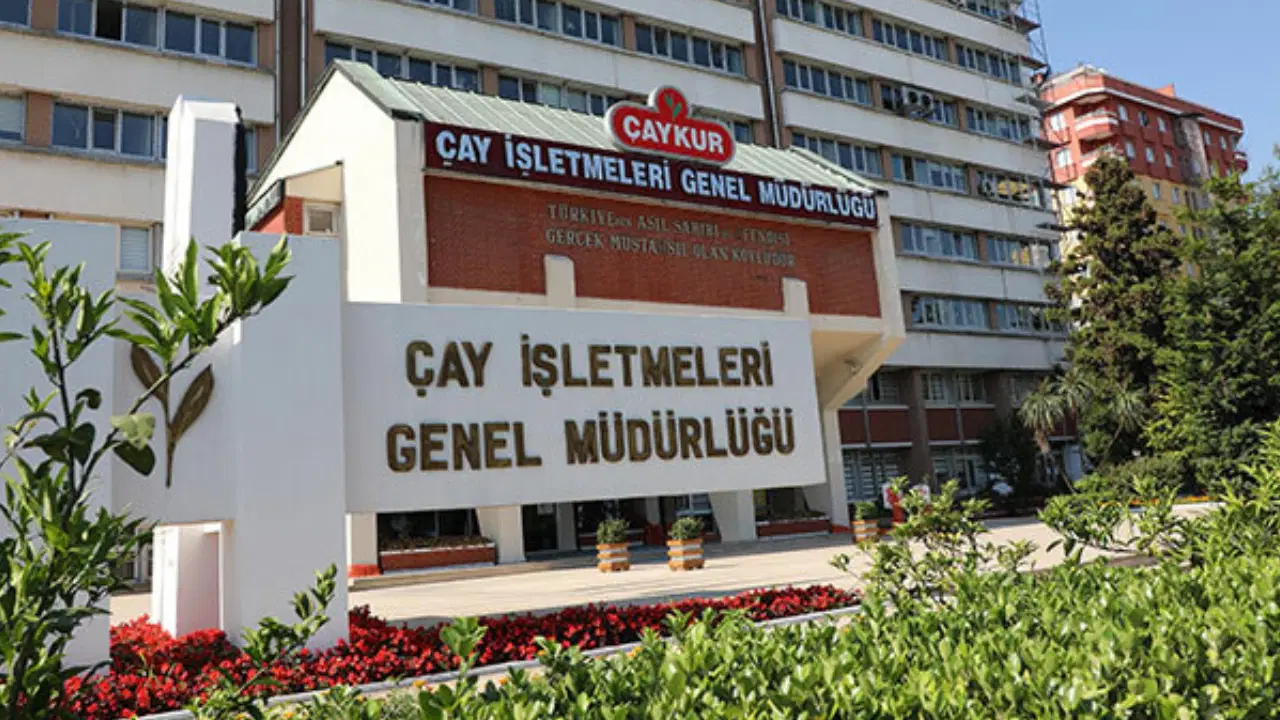
ÇAYKUR Responds to 'Imaginary Invoice and Uncollateralized Sale' Claims: 'Everything is in Accordance with Regulations'
Translated from Turkish, summarized and contextualized by DistantNews.
At a glance
News
Named sources
Under investigation
- ÇAYKUR, a Turkish state-owned tea company, is facing allegations of irregular sales practices through its subsidiary ÇAYTAŞ.
- Accusations include sales without collateral, "imaginary invoices," and causing public loss.
- ÇAYKUR denies the claims, stating all transactions comply with commercial regulations and institutional strategies.
Turkey's state-owned tea company, ÇAYKUR, has responded to allegations of financial irregularities concerning a 31,500-ton sale of dried tea conducted through its subsidiary, ÇAYTAŞ. Opposition figures and political representatives have accused the company of conducting sales without collateral, using "imaginary invoices," and causing a loss to the public treasury.
These claims were initially raised by İhsan Alkan, the MHP Rize Provincial Chairman, who pointed to discrepancies between ÇAYKUR's production and sales figures. He questioned the process for handling "waste tea" and suggested the possibility of fictitious invoices being issued for the 31,500-ton sale. Reports based on internal correspondence and documents indicate that the ÇAYKUR board approved the sale to ÇAYTAŞ on December 22, 2025. Allegations suggest the tea was not physically removed from warehouses and the transaction was merely a paper exercise to inflate the 2025 financial statements.
The allegations that 31,500 tons of tea were sold without collateral are completely untrue. Such a practice is a crime. There can be no such situation.
Further claims detail delays in payment collection from ÇAYTAŞ and its dealers, with the company reportedly granting extensions. Internal communications from April and May 2026 show that dealers were slow to provide bank guarantees. A directive from ÇAYKUR's Marketing Department on May 22, 2026, allegedly instructed that 2026 price increases not be applied to these sales, leading to a claimed loss of public revenue. ÇAYKUR has vehemently denied these accusations, with officials stating that all operations are legal and adhere to commercial rules. They confirmed the sale of 31,500 tons of tea to ÇAYTAŞ, which includes 156 dealers, as part of a strategy to increase ÇAYKUR's market share from 45% to 50%. The company stressed that selling without collateral is illegal and not occurring, and that 4,286 tons of the 2025 sales remain unsold in stock.
It is true that we sold 31,500 tons of tea to ÇAYTAŞ, which includes 156 dealers, in 2025. However, we sell tea directly to the main distributor, not directly to dealers; other dealers procure their products through this center. Thanks to this method, we managed to increase ÇAYKUR's market share from 45% to 50%.
DistantNews Editorial
Originally published by Cumhuriyet in Turkish. Translated, summarized, and contextualized by our editorial team with added local perspective. Read our editorial standards.
More Stories



From Our Blog

What Gets Lost (and Found) When News Is Translated

The Critical Role of Diaspora Media in Global News

What Travellers Should Know About Countries with Restricted Press

A Digital Nomad's Guide to Following Local News

How the Same Story Looks Different in Different Countries
