


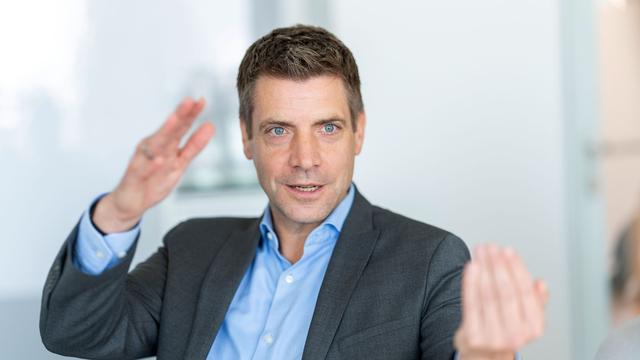
CEO sees early pension plan as boost for German stock culture
Translated from German, summarized and contextualized by DistantNews.
At a glance
News
From a news agency
New plan
- ING Germany's CEO Lars Stoy views the "Frühstartrente" (early start pension) as a chance to boost Germany's stock market culture and long-term retirement planning.
- The proposed policy offers a 10 euro monthly state subsidy for children's capital-backed retirement accounts from ages 6 to 18, starting in 2027.
- Stoy advocates for a comprehensive financial education strategy and urges the government to consider including more birth years in the subsidy program.
Lars Stoy, CEO of ING Germany, believes the government's proposed "Frühstartrente" (early start pension) initiative presents a significant opportunity to foster a stronger stock market culture and improve retirement provisions in Germany.
The best thing that could happen to the country in terms of retirement provision is that a movement gets going.
Stoy emphasizes that this policy should not be the sole step towards greater capital market involvement in securing old-age pensions. He calls for a concerted national financial education strategy, stating, "We must reach the point where students are also educated about financial issues after graduation." He notes a growing willingness among younger generations to invest in capital markets, a trend the new private retirement savings options are designed to align with. Stoy suggests that the best outcome for the country regarding retirement planning would be the initiation of a widespread movement towards proactive saving.
The "Frühstartrente" plan, set to launch in 2027, involves the state providing a monthly subsidy of 10 euros to children's capital-backed retirement accounts from ages six to eighteen. Initially, the program will benefit children born in 2020, receiving retroactive state funding from January 1, 2026. Each subsequent year, the cohort turning six will be added. Stoy hopes the government will allocate further budget funds to include additional birth years, arguing it would be unusual to exclude many generations from such a beneficial program, despite acknowledging the state's financial limitations.
I believe that we as a country should develop and implement a financial education strategy.
While acknowledging that building capital stock takes time, Stoy views the overall retirement savings depot as a positive development. He observes that many Germans understand the necessity of saving for retirement but often struggle to take action. The proposed law also allows parents, godparents, and grandparents to contribute up to 6,840 euros annually to these accounts, potentially accumulating six-figure sums over time. The funds are accessible only after the individual reaches the age of 65.
It would be quite unique if you exclude so many generations.
Financial institutions are preparing to offer attractive products for this new market. Stoy confirms that ING Germany is actively working on developing competitively priced offerings. He anticipates that it will take time for the full impact of these measures to be realized, as the capital base needs to grow. However, he remains optimistic that the initiative can spark a crucial movement towards better retirement planning in Germany.
It will take time for everyone to realize this, because the capital stock naturally has to build up first.
DistantNews Editorial
Originally published by Die Zeit in German. Translated, summarized, and contextualized by our editorial team with added local perspective. Read our editorial standards.
More Stories


From Our Blog

What Gets Lost (and Found) When News Is Translated

How the Same Story Looks Different in Different Countries

The Critical Role of Diaspora Media in Global News

What Travellers Should Know About Countries with Restricted Press

A Digital Nomad's Guide to Following Local News
