

Challenging work begins on Romania's Sibiu–Pitești highway viaducts
Translated from Romanian, summarized and contextualized by DistantNews.
At a glance
News
Sources not specified
Context piece
- The most difficult work has begun on the Boița viaducts, part of the Sibiu–Pitești highway in Romania.
- Constructors are working on the main opening of the longest viaduct and preparing to launch the metal deck on the highest one.
- These complex engineering feats involve methods like the balanced cantilever technique and incremental launching of metal structures.
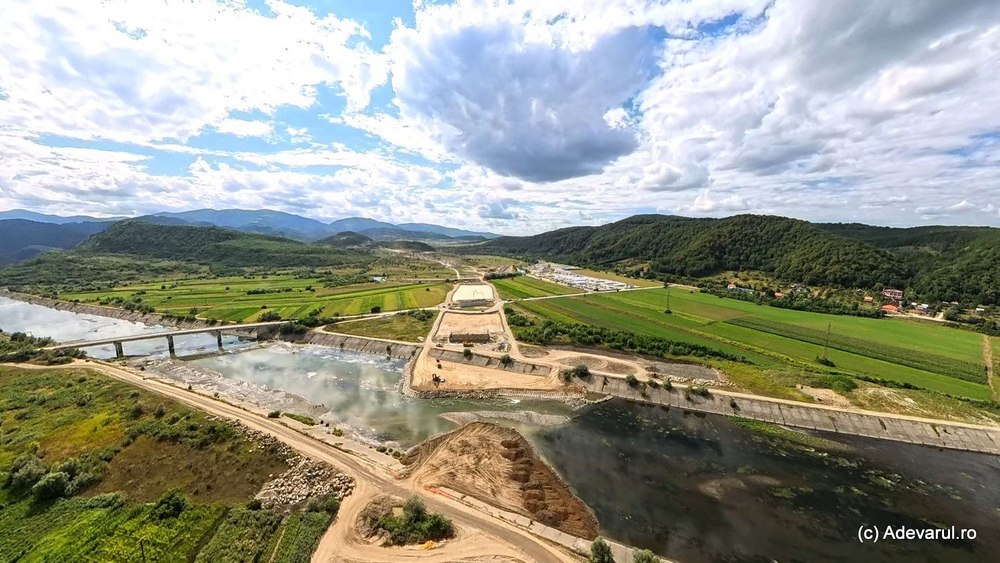
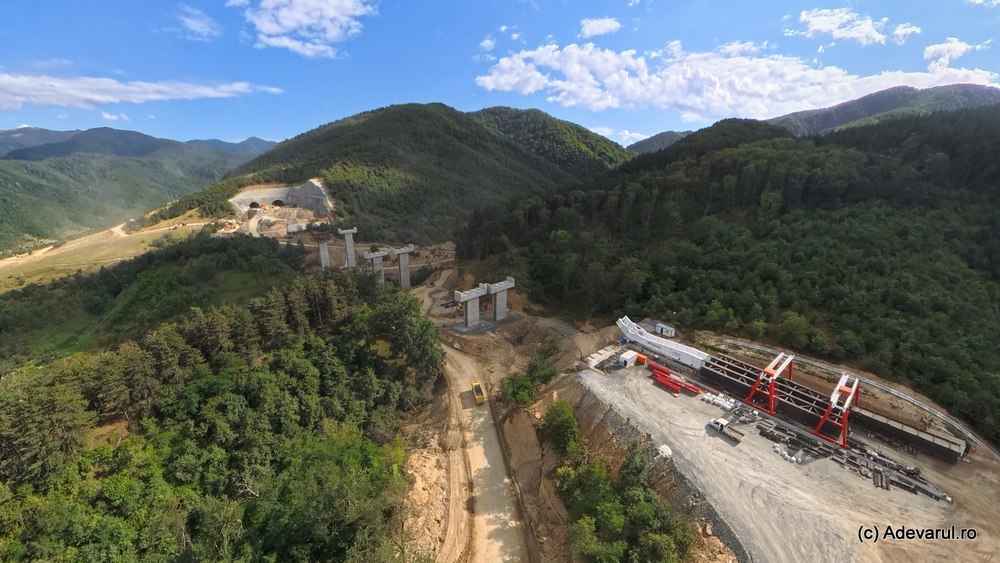
The most challenging construction work has commenced on the Boița viaducts along the Sibiu–Pitești highway in Romania, specifically on the Boița–Cornetu section. Five of the 24 planned viaducts are currently under construction within the first six kilometers of the route near Boița in Sibiu County.
On the longest viaduct, approximately 650 meters with 11 spans, constructors are focused on its main 140-meter opening. This section is being built using the balanced cantilever method, which involves constructing the deck segment by segment from the main piers. The structure extends outward in both directions, like the arms of a balance, to maintain equilibrium, with segments later joined without temporary scaffolding.
Meanwhile, on the highest viaduct, which towers nearly 50 meters, equivalent to a 20-story building, engineers are preparing to launch the metal deck. Due to the difficult terrain, this structure will utilize incremental launching. This technique involves attaching a metal "nose" to the deck and pushing the entire structure forward with hydraulic jacks until it reaches the first pier. New segments are then assembled on the ground.
These advanced construction methods are being employed to overcome the complex geographical challenges of the Olt Valley. Similar techniques have been used on other Romanian highway projects, including the Nădășelu Viaduct on the Transylvania Highway and the Tălmăcel Viaduct on the first lot of the Sibiu–Pitești highway. Historically, a cantilever construction method was also used for the bridge over the Cerna River at Orșova, built in the late 1960s.
DistantNews Editorial
Originally published by Adevărul in Romanian. Translated, summarized, and contextualized by our editorial team with added local perspective. Read our editorial standards.
More Stories



From Our Blog

What Gets Lost (and Found) When News Is Translated

The Critical Role of Diaspora Media in Global News

What Travellers Should Know About Countries with Restricted Press

A Digital Nomad's Guide to Following Local News

How the Same Story Looks Different in Different Countries
