


Charges Laid in St. Albert Electric Dirt Bike Crash Amidst Rising E-Mobility Injuries
Translated from English and summarized by DistantNews. Read the original for the full story.
At a glance
News
Named sources
Outcome reported
- Charges have been laid following a serious collision between an electric dirt bike and a vehicle in St. Albert, Alberta.
- An emergency physician noted a rise in injuries from electric scooters and bikes, attributing it to rapidly evolving technology and higher speeds.
- Experts warn that the adolescent brain's risk assessment capabilities are not fully developed, increasing dangers for young riders of high-speed e-mobility devices.
A serious crash involving an electric dirt bike and a vehicle in St. Albert, Alberta, has led to charges being laid and highlights a concerning trend of increasing injuries related to electric mobility devices. Dr. Louis Hugo Francescutti, an Edmonton emergency physician and public health professor, stated that the rapid evolution of technology is making these vehicles faster and more dangerous.
The technology is rapidly evolving and these vehicles are getting faster and faster.
Dr. Francescutti has treated three injuries from electric scooters in the past week alone. While rental e-scooters and e-bikes are typically speed-governed, privately owned models can reach speeds up to 50 km/h. "These things can go up to 50 km/h. What ends up happening is the energy transfer quadruples," Francescutti explained, emphasizing that while helmets help prevent brain injuries, they do not prevent crashes.
The physician also pointed to the developing adolescent brain, noting that the capacity for risk assessment is not fully formed until age 25. This makes young riders of electric scooters, bikes, and motorcycles particularly vulnerable, as they may not fully grasp the inherent dangers. "It’s not that these kids are stupid. It’s just that they can’t access risk. That part the brain has not been formed properly," he said.
These things can go up to 50 km/h. What ends up happening is the energy transfer quadruples. So a helmet is good, but a helmet doesn’t prevent a crash, right? A helmet may help prevent a brain injury.
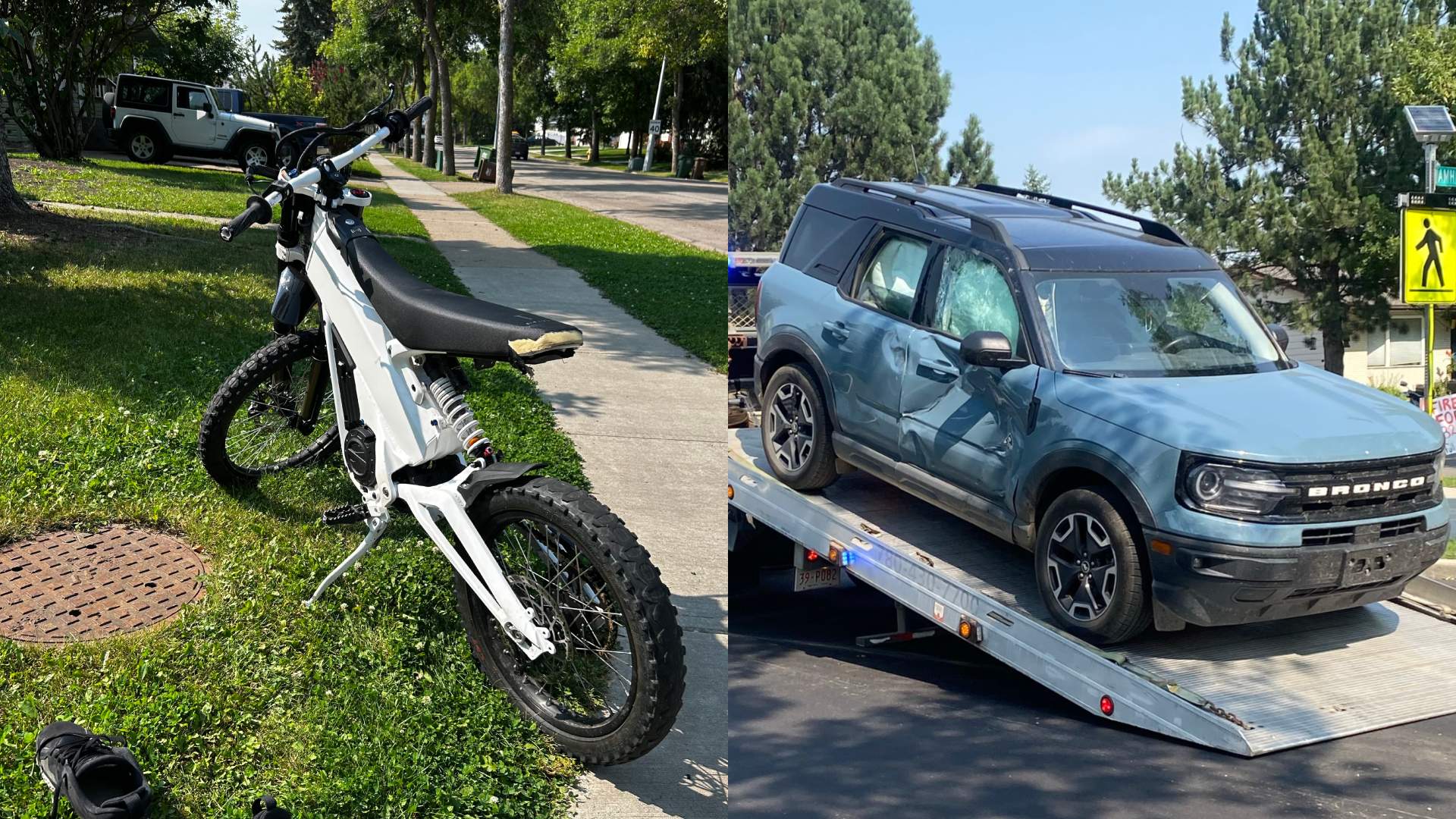
The St. Albert collision occurred on Akins Drive when a 16-year-old boy on an electric dirt bike collided with a Ford Bronco SUV. RCMP arrived to find the teenager injured and the dirt bike damaged. The SUV sustained significant damage, with airbags deployed and a window smashed, indicating a substantial impact speed. The SUV driver reported seeing a flash and hearing a loud impact.
It’s not that these kids are stupid. It’s just that they can’t access risk. That part the brain has not been formed properly.
Witnesses described the crash as very loud. Matt McCotter, who lives nearby, stated, "I came outside and the kid was, like, mangled in his bike." He added that it appeared the dirt bike did not yield to the stop sign before colliding with the SUV with considerable force. RCMP have commented that electric dirt bikes are dangerous, high-speed, off-highway vehicles unsuitable for urban streets.
Judging by the damage done to the Bronco, which caved in both passenger doors, deployed the airbags and smashed out a window, it had to be going at a substantial speed.
About this summary
Originally published by Global News in English. Translated, summarized, and contextualized automatically by DistantNews, with a note on how the source frames the story. Not individually reviewed before publishing. How this works.
More Stories



From Our Blog

What Gets Lost (and Found) When News Is Translated

The Critical Role of Diaspora Media in Global News

What Travellers Should Know About Countries with Restricted Press

A Digital Nomad's Guide to Following Local News

How the Same Story Looks Different in Different Countries
