


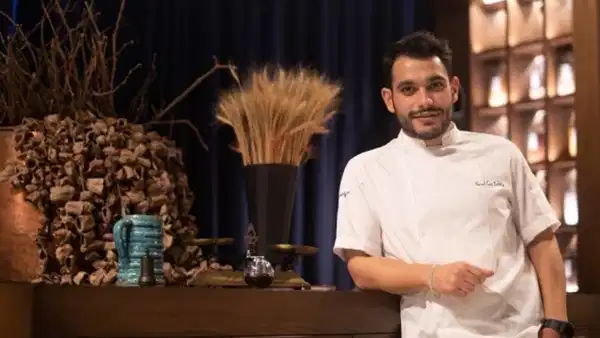
Chef Kemal Can Yurttaş: 'The start of a good plate is finding good ingredients'
Translated from Turkish and summarized by DistantNews. Read the original for the full story.
At a glance
Interview
Sources not specified
Context piece
- Chef Kemal Can Yurttaş began his culinary journey at 15, driven by curiosity and a passion for learning.
- Yurttaş blends his Karadeniz and immigrant heritage in his cooking, uniting diverse culinary traditions on a single plate.
- He emphasizes that understanding the 'why' behind a dish is more crucial than memorizing recipes, valuing the emotional memory a dish evokes.
Chef Kemal Can Yurttaş, who stepped into the professional kitchen at just 15, now stands as a prominent figure interpreting Anatolia's products, techniques, and culinary heritage with a modern flair. His journey began with a youthful ambition, unaware of the long road ahead. "I had big dreams about cooking at 15, but I didn't know how long the path would be," Yurttaş reflects. "Today, I have more experience and responsibility. What hasn't changed is my curiosity. I still get excited by new products or unfamiliar recipes as I did on the first day."
I had big dreams about cooking at 15, but I didn't know how long the path would be. Today, I have more experience and responsibility. What hasn't changed is my curiosity. I still get excited by new products or unfamiliar recipes as I did on the first day.
Yurttaş's culinary philosophy is deeply rooted in his background. As the child of a Black Sea father and an immigrant mother, his childhood table was a natural fusion of two distinct cultures. "My childhood table was a place where two different culinary cultures naturally came together," he explains. "The strong, product-focused flavors of the Black Sea met the pastry, preservation methods, and table culture of immigrant cuisine. I think my desire to bring different geographies together on one plate stems from this."
My childhood table was a place where two different culinary cultures naturally came together. The strong, product-focused flavors of the Black Sea met the pastry, preservation methods, and table culture of immigrant cuisine. I think my desire to bring different geographies together on one plate stems from this.
He also shared insights from his time teaching Turkish cuisine at university. Yurttaş found defining Turkish cuisine challenging due to its vastness and the centuries of cultural exchange it represents. "It is very difficult to draw the boundaries of Turkish cuisine," he stated. "Because we are not talking about a single cuisine, but a heritage formed by a vast geography and cultures that have influenced each other for centuries." He stressed the importance of understanding the origin of a dish over rote memorization: "The most important thing I tried to convey to students was to understand why a recipe exists before memorizing it."
It is very difficult to draw the boundaries of Turkish cuisine. Because we are not talking about a single cuisine, but a heritage formed by a vast geography and cultures that have influenced each other for centuries.
When interpreting traditional dishes, Yurttaş believes the 'memory' a dish evokes is paramount. "What is the essential element that defines the identity of a traditional dish? Its flavor, technique, ingredients, or memory?" he asks. "I think memory is above all of them. Because ingredients or techniques can change over time, but the emotion a dish leaves in a person does not change easily. When I interpret, I try not to lose that memory."
The most important thing I tried to convey to students was to understand why a recipe exists before memorizing it.
About this summary
Originally published by Cumhuriyet in Turkish. Translated, summarized, and contextualized automatically by DistantNews, with a note on how the source frames the story. Not individually reviewed before publishing. How this works.
More Stories

From Our Blog

What Gets Lost (and Found) When News Is Translated

The Critical Role of Diaspora Media in Global News

What Travellers Should Know About Countries with Restricted Press

A Digital Nomad's Guide to Following Local News

How the Same Story Looks Different in Different Countries
