


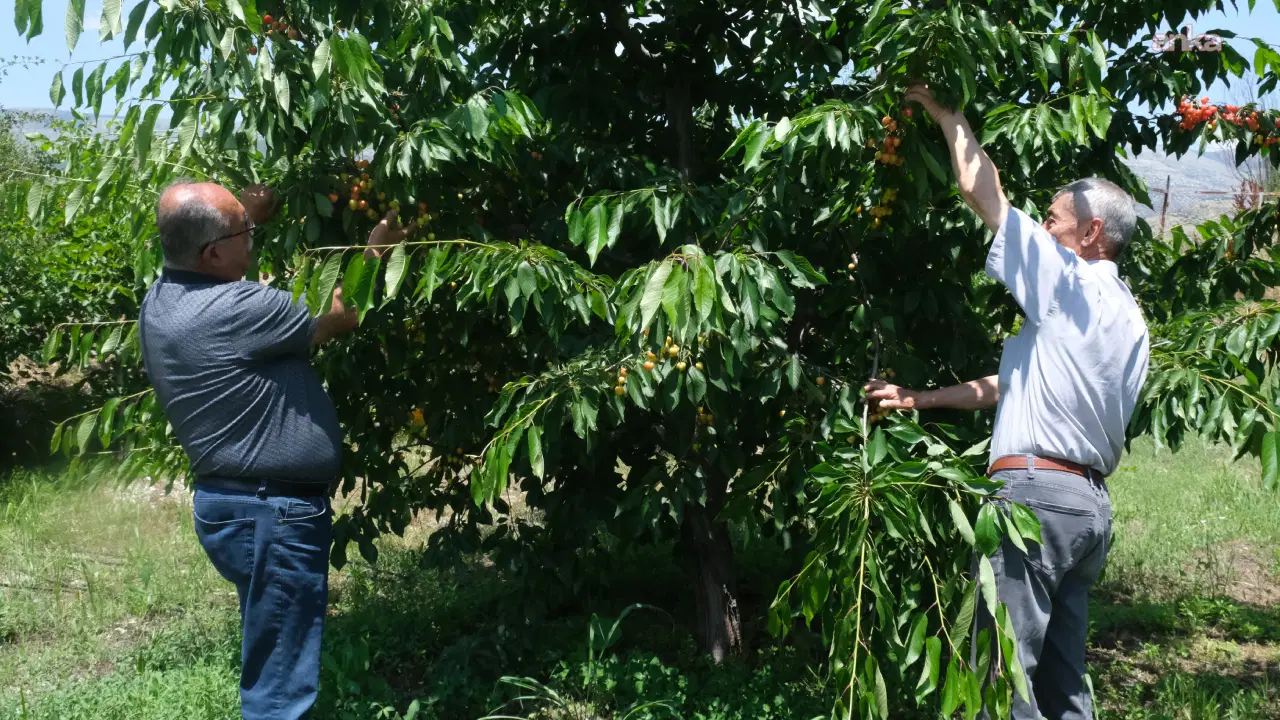
Cherry producers in Turkey face ruin amid rising costs and falling prices
Translated from Turkish, summarized and contextualized by DistantNews.
At a glance
News
Sources not specified
Context piece
- Cherry producers in Uluborlu, Turkey, are facing significant financial distress due to rising production costs and low purchasing prices.
- Farmers report that current prices do not cover expenses for fertilizer, pesticides, and labor, leading many to consider abandoning cherry cultivation.
- Exacerbating the situation, buyers reportedly collude to lower prices in Uluborlu compared to other regions, leaving producers struggling to recoup investments.
Cherry producers in Uluborlu, a key cherry-producing district in Isparta, Turkey, are beginning the new harvest season with deep anxiety rather than hope. They report that announced purchasing prices are insufficient to cover the escalating costs of fertilizer, pesticides, and labor. If current conditions persist, they warn that cherry production will become unsustainable.
In the early years, we made money, but lately, unfortunately, we haven't been able to earn. Pesticide and fertilizer prices have increased significantly. Buyers agree amongst themselves. The cherries they buy for 300-400 lira in Kemalpaşa, they bring down to 60-70 lira when they come to Uluborlu. This situation seriously victimizes us.
Murat Çerçilli, who has been growing cherries for about 30 years, stated that while they used to profit from cherries, costs have recently reached uncontrollable levels. He identified purchasing prices as the biggest problem, alleging that exporting firms significantly lower prices upon arriving in the region. "In the early years, we made money, but lately, unfortunately, we haven't been able to earn," Çerçilli said. "Pesticide and fertilizer prices have increased significantly. Buyers agree amongst themselves. The cherries they buy for 300-400 lira in Kemalpaşa, they bring down to 60-70 lira when they come to Uluborlu. This situation seriously victimizes us."
Çerçilli emphasized that production is not sustainable at current prices, revealing that many producers are contemplating not harvesting their cherries or even uprooting their trees. "Under these conditions, we will either not harvest the cherries or stop after a few days of picking," he stated. "There is no point in producing a product that doesn't make money. If it continues like this, we will have to uproot our trees."
Under these conditions, we will either not harvest the cherries or stop after a few days of picking. There is no point in producing a product that doesn't make money. If it continues like this, we will have to uproot our trees.
Despite Uluborlu cherries being a high-quality product, Çerçilli noted that exporters' high expectations for quality require producers to exert significant effort, for which they receive no adequate compensation. He anticipates harvesting 6 to 7 tons from his approximately 18-decare orchard this year, with expenses reaching 150,000 to 200,000 lira. "We don't even know if we can cover these costs with prices of 60-70 lira. We are thinking hard about it," he added.
We don't even know if we can cover these costs with prices of 60-70 lira. We are thinking hard about it.
Hüseyin Yetkin, who has been involved in cherry trade for many years, echoed the sentiment, stating that producers and workers began the season demoralized. He pointed to the imbalance between labor costs and product prices, noting that people's purchasing power has decreased, further impacting producer morale. "Cherry prices are low, labor wages are high. That's why we enter the season with low morale," Yetkin said. He mentioned that while the Uluborlu Municipality set the daily wage at 1,250 lira, workers demand at least 1,500 lira. Yetkin calculated that if a worker picks 50-60 kg of cherries per day, half the earnings go to the worker, leaving insufficient funds for the producer's expenses. "If cherry prices fall to the 40-50 lira level, producers will have nothing left," he warned.
People's purchasing power has decreased, producer morale is low. Cherry prices are low, labor wages are high. That's why we enter the season with low morale.
DistantNews Editorial
Originally published by Cumhuriyet in Turkish. Translated, summarized, and contextualized by our editorial team with added local perspective. Read our editorial standards.
More Stories

From Our Blog

What Gets Lost (and Found) When News Is Translated

The Critical Role of Diaspora Media in Global News

What Travellers Should Know About Countries with Restricted Press

A Digital Nomad's Guide to Following Local News

How the Same Story Looks Different in Different Countries
