


Children Become Adults First... The Reality of 'Complex Crisis Families' Facing Overlapping Illness and Poverty
Translated from Korean, summarized and contextualized by DistantNews.
At a glance
In-depth
Sources not specified
Context piece
- Six-year-old Sungjun helps his visually impaired mother and ailing grandmother with daily chores and caregiving, despite being a child himself.
- The family struggles with income, earning only about 6,000 won ($4.50) daily from processing anchovies, insufficient for living and medical expenses.
- The article highlights the growing issue of "complex crisis families" in South Korea, where children bear significant caregiving and financial burdens due to overlapping family issues like illness, poverty, and housing instability.
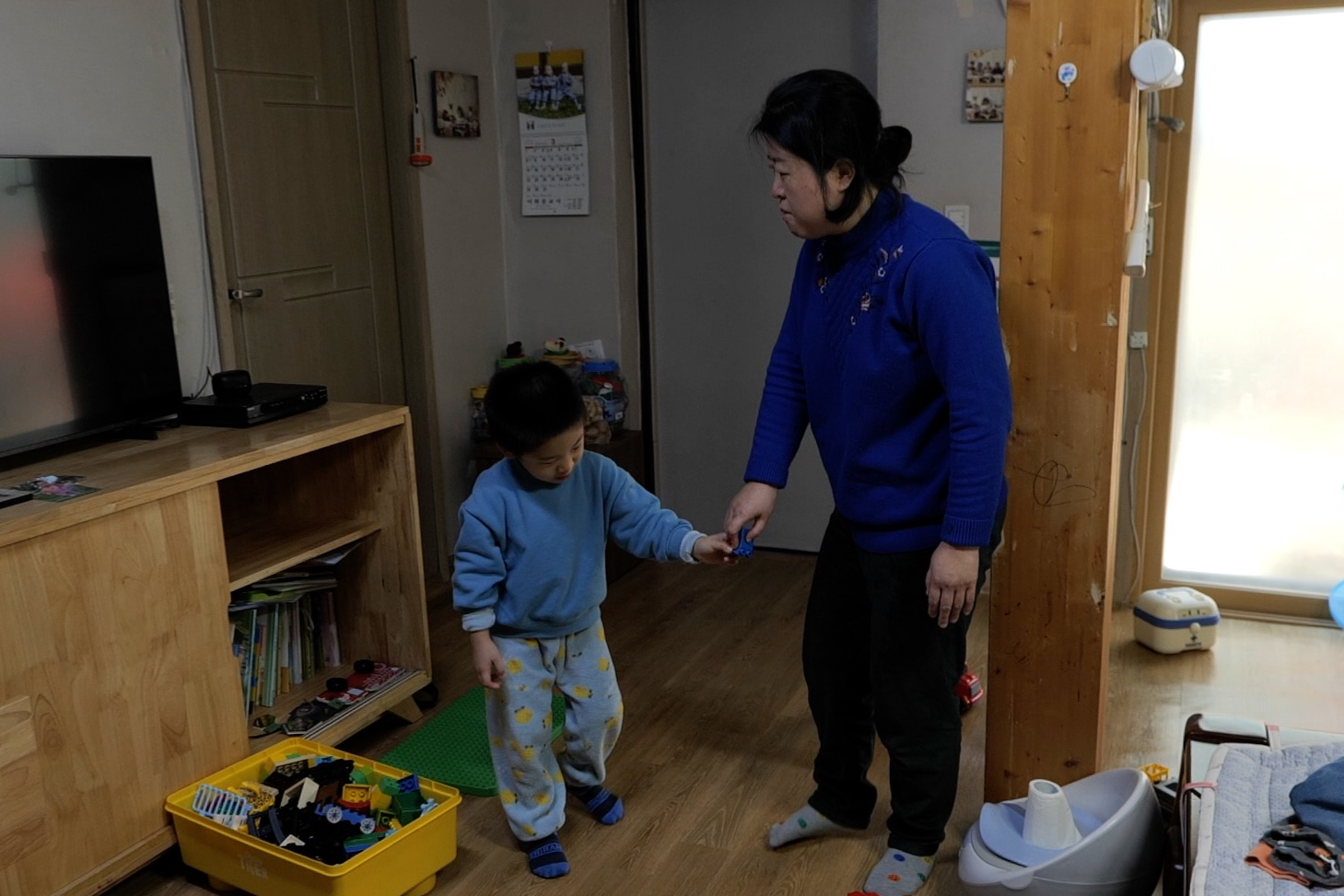
In South Korea, children are increasingly taking on adult responsibilities in "complex crisis families" where illness, poverty, and housing instability converge. Six-year-old Sungjun exemplifies this reality, acting as his mother's eyes and guiding her through their home. His mother lost her sight and was diagnosed with a brain disorder after a hit-and-run accident, leaving the family with mounting medical bills and little compensation.
Mom, be careful here.
Sungjun also assists his grandmother, who suffers from poor health, including knee problems and a heart condition, yet continues to work to support the family. The family's sole income source is processing anchovies, a laborious task that earns them approximately 6,000 won (about $4.50) per day. Sungjun, who calls himself an "anchovy doctor," helps his grandmother by removing anchovy innards, a task he performs diligently despite his young age. When asked what he wants his grandmother to buy with the anchovy earnings, he simply replies, "Please buy me meat."
His mother worries about the increasing burden on Sungjun, fearing she will become a greater liability to him. The article cites a 2023 survey by the Ministry of Health and Welfare, which found that children in complex crisis situations experience higher levels of stress and depression, greater material deprivation, and lower life satisfaction compared to their peers. These overlapping crises often create a domino effect, where poor health leads to increased medical costs and financial instability, exacerbating caregiving gaps and poor living conditions.
Grandma's legs hurt, and Mom was injured in an accident. Only I am healthy.
The story of Sungjun is not isolated. Seven-year-old Seono helps his father, who has lower-body paralysis and cardiovascular issues, and his mother, who has limited use of one hand. Their home is cramped, difficult for a wheelchair to navigate, and suffers from leaks and mold. Despite his father's health challenges, he is learning wheelchair repair, hoping to buy his son a backpack and pencil case for school. Nine-year-old Yejin cares for her brother Suhyun, who has Duchenne muscular dystrophy, a rare and incurable disease. After their father's sudden death, their mother struggles alone, with Yejin helping with chores like washing dishes and drying her brother's hair. Yejin dreams of becoming a doctor to cure her brother's condition.
I am so afraid that I will become a burden to Sungjun in the future.
Experts emphasize the need for early detection and sustained support for these children, as prolonged exposure to crisis can negatively impact their academic, emotional, and social development. Good Neighbors, an organization that produced a human documentary series called "Wish" to shed light on these families, provided support to 233,360 individuals in crisis last year and plans to continue its assistance.
Mom's hand is inconvenient, and Dad's legs are inconvenient, so I've been helping since I was young.
DistantNews Editorial
Originally published by Dong-A Ilbo in Korean. Translated, summarized, and contextualized by our editorial team with added local perspective. Read our editorial standards.
More Stories


From Our Blog

What Gets Lost (and Found) When News Is Translated

The Critical Role of Diaspora Media in Global News

What Travellers Should Know About Countries with Restricted Press

A Digital Nomad's Guide to Following Local News

How the Same Story Looks Different in Different Countries
