


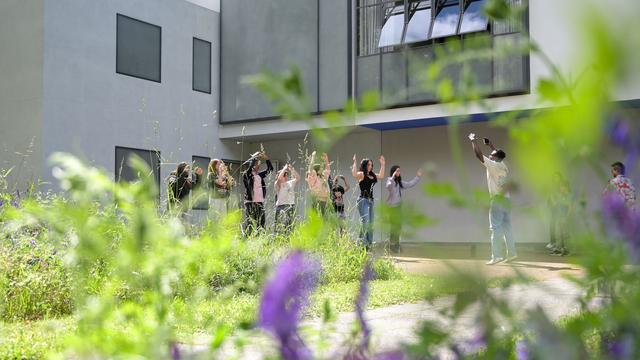
Children explore composer Kurt Weill's world through art and music
Translated from German, summarized and contextualized by DistantNews.
At a glance
In-depth
From a news agency
Context piece
- A project in Dessau, Germany, uses the life and work of composer Kurt Weill to engage young people from disadvantaged backgrounds.
- Participants are creating a children's book, a song, and a music video, developing new perspectives on Weill's music.
- The initiative aims to build self-esteem and a sense of family among the children, fostering their creativity and confidence.
In Dessau, Germany, a unique project called "Made by Weill" is bringing the music of composer Kurt Weill to life for children from socially and educationally disadvantaged backgrounds. Initially unfamiliar with Weill, who was born in their hometown, the 13-year-old participants are now deeply engaged, finding a sense of family and a new appreciation for his work.
It is really exciting to put yourself in his shoes.
The project, led by Susanne Heft, began with the idea of creating a children's book or comic about Weill. However, the team adapted the concept when they realized not all children were inclined to draw. The initiative evolved to include the creation of a collaboratively written book, an original song composed and recorded by the children, and a music video featuring their own choreography.
The children have a completely different perception and completely new impulses, especially fresher than experts.
Alina Dorn, a 13-year-old participant, describes the experience as exciting, despite the occasional challenges of performance and creative decision-making. She highlights the strong sense of camaraderie among the group, emphasizing their mutual support and encouragement. This feeling of family has been a key element in helping the children open up and build trust.
We stick together, give each other advice, improve each other and so on.
"Made by Weill" aims to empower these young individuals, encouraging them to become ambassadors for Weill's legacy by sharing fresh perspectives. Project leaders stress the importance of valuing the children's ideas and contributions, focusing on strengthening each child's self-worth. The overarching goal is to provide a supportive environment that fosters confidence and a sense of belonging, transforming their initial uncertainty into a vibrant engagement with art and culture.
It took a long time for the children to open up. Their self-esteem is quite low. The big goal was to give the children a sense of family and to place trust in them.
DistantNews Editorial
Originally published by Die Zeit in German. Translated, summarized, and contextualized by our editorial team with added local perspective. Read our editorial standards.
More Stories

From Our Blog

What Gets Lost (and Found) When News Is Translated

How the Same Story Looks Different in Different Countries

The Critical Role of Diaspora Media in Global News

What Travellers Should Know About Countries with Restricted Press

A Digital Nomad's Guide to Following Local News
