


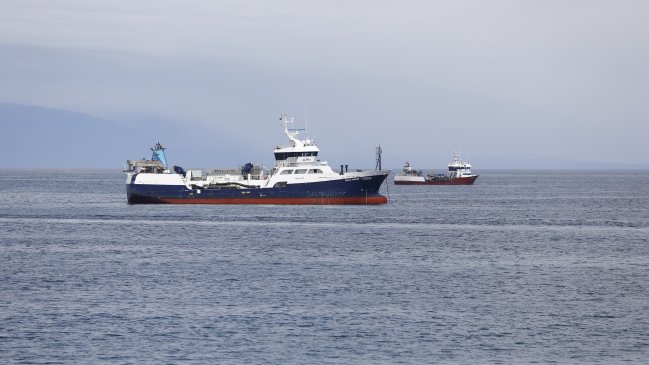
 Image: ATON (Referencial)
Chilean Coastal Commission Approves Five Projects, Rejects Others
Translated from Spanish and summarized by DistantNews. Read the original for the full story.
At a glance
News
Sources not specified
Approved/passed
- The Los Lagos regional coastal commission held its second session, reviewing applications for marine spaces and concessions.
- Five projects received approval, focusing on legal certainty and compatibility with existing uses.
- Several applications were rejected, with discussions also touching on the impact of the Lafkenche Law on indigenous communities and businesses.
Chile's Los Lagos regional commission for coastal use has advanced five development projects after its second ordinary session this year. The commission, led by regional governor Alejandro Santana, reviewed requests for Indigenous Marine Coastal Spaces (ECMPO), maritime concessions, and the inclusion of new fishing coves.
The approved projects include those from Inversiones Coihuin in Puerto Montt, AquaChile in Hualaihué, Dávila y Díaz in Quellón, Empresas Oxxean in Puerto Montt, and the Sindicato de Trabajadores Independientes Gente Mar Chaular de Ancud. These approvals were granted based on factors such as territorial compatibility, lack of overlap with other uses, and the need to regularize existing productive activities.
today the point was to signal that it is important to have legal certainty, that it is important to have agreements, that it is important for the community to understand that any ECMPO requirement must meet and fulfill the expectation of a productive sector in terms of benefiting the community.
However, the commission also rejected several applications, including those for Isla Tranqui in Queilen, Tabón and Puluqui in Calbuco, Nercon in Castro, and Yaldad in Quellón. The rejection of the Yaldad request was due to a lack of consensus among commission members.
AmiChile's position regarding the results of this regional commission is that it is entirely shaped and very determined by the problems that the Lafkenche Law, as it is currently in force, has generated and will generate in the future. In that sense, we fully agree and hope that, as soon as possible, several of these problems can be resolved through the modifications that the Government itself is proposing and the work that the Undersecretariat of Fisheries and Aquaculture is carrying out.
Governor Santana emphasized the importance of providing legal certainty and fostering agreements that benefit both the community and productive sectors. The commission also approved the inclusion of the Metri and Yerbas Buenas coves in Puerto Montt and Chaiguao in Quellón into the national registry, highlighting the significance of this for their development.
Rodrigo Carrasco, president of the Chilean Mussel Association (AmiChile), expressed hope that the Lafkenche Law can be improved for the benefit of indigenous communities and regional businesses. He noted that current issues with the law are being addressed through proposed government modifications and work by the Undersecretariat of Fisheries and Aquaculture.
It is very important to have changes that can generate good prospects for applications for indigenous peoples and, of course, also provide tranquility and guarantees to all those who work on the coast.
About this summary
Originally published by Cooperativa in Spanish. Translated, summarized, and contextualized automatically by DistantNews, with a note on how the source frames the story. Not individually reviewed before publishing. How this works.
More Stories


From Our Blog

What Gets Lost (and Found) When News Is Translated

The Critical Role of Diaspora Media in Global News

What Travellers Should Know About Countries with Restricted Press

A Digital Nomad's Guide to Following Local News

How the Same Story Looks Different in Different Countries
