

China-backed Project Enhances Drinking Water Access in Southern Chad
Translated from French, summarized and contextualized by DistantNews.
At a glance
News
Sources not specified
New plan
- A China-backed project has improved access to drinking water for communities in southern Chad.
- The project, implemented by China Jiangxi International Economic and Technical Cooperation Co., Ltd. (CJIC), involved drilling wells and installing pumps.
- Previously, residents like Robgué Ozias had to travel long distances daily for water, often of poor quality.
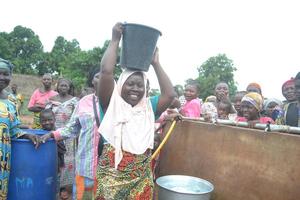
Communities in southern Chad's Mandoul and Salamat provinces now have improved access to potable water thanks to a project supported by China. For years, residents faced the daily burden of long treks to find water, which was frequently not safe for consumption. Robgué Ozias, a resident of Koumra, recounted the arduous journey his family and neighbors endured, traveling four kilometers daily to fetch water, a hardship passed down through generations.
Chinese engineers arrived in late October 2024, and the China Jiangxi International Economic and Technical Cooperation Co., Ltd. (CJIC) began drilling operations. The initiative has since established over 500 boreholes equipped with manual pumps. This intervention marks a significant shift from the previous reality, where water scarcity and the effort required to obtain it dominated daily life, particularly during the dry season.
In the past, during every dry season, each family had to send at least one able-bodied person to travel four kilometers to fetch water. Our ancestors endured this ordeal generation after generation.
DistantNews Editorial
Originally published by Journal du Cameroun in French. Translated, summarized, and contextualized by our editorial team with added local perspective. Read our editorial standards.
More Stories


From Our Blog

What Gets Lost (and Found) When News Is Translated

The Critical Role of Diaspora Media in Global News

What Travellers Should Know About Countries with Restricted Press

A Digital Nomad's Guide to Following Local News

How the Same Story Looks Different in Different Countries
