



China deploys psychological aid to rescuers in flood disaster
Summarized by DistantNews. Read the original for the full story.
At a glance
In-depth
Official statement
Ongoing story
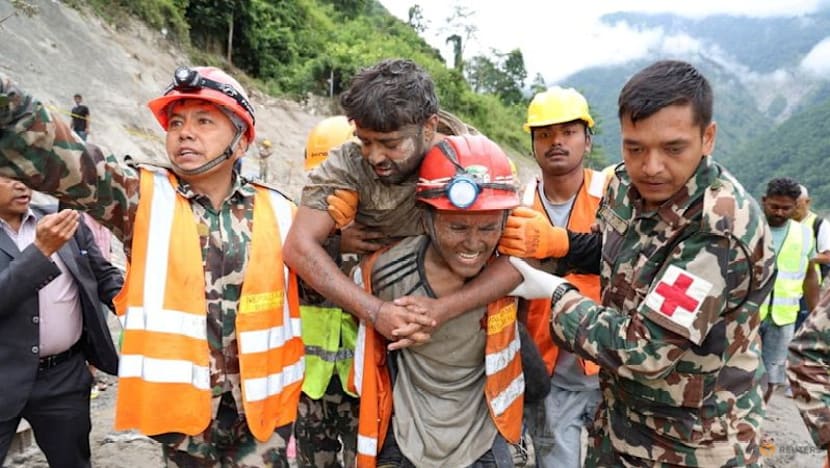
- China has deployed psychological counsellors to support military and other rescue personnel working after mudslides in Gyirong county, Xizang autonomous region.
- By Sept. 3, the People’s Liberation Army and People’s Armed Police Force had assigned 726 personnel to rescue and relief operations.
- Rescuers can receive psychological assessments, individual and group counselling, and guidance on techniques to manage acute stress reactions.
As rain continued to fall in Gyirong county on Sept. 5, psychological counsellor He Lei began another day supporting search and rescue personnel working at the mudslide-hit Gyirong Port in Shigatse, Xizang autonomous region.
Through our work these days, we have found that our soldiers are quite resilient. They are focused on fulfilling their missions here and are fully aware of the significance of helping every family affected by the disaster.
He said counsellors had found the soldiers resilient and focused on their missions. She described a technique called "look, listen, smell and move" for personnel experiencing panic or physical stiffness. Counsellors guide them to identify objects around them, listen for distinct sounds, notice different smells and perform a simple movement, such as stamping their feet.
"This rapid redirection of attention helps alleviate immediate physiological stress responses," He said. She also visits the core disaster area when needed, saying she wanted to see whether soldiers required support and teach them methods they could use independently.
We have a method called ‘look, listen, smell and move’.
As of Sept. 3, the PLA and the People’s Armed Police Force had deployed 726 personnel for rescue and relief operations. The medical and disease prevention team provides medical and psychological services to rescuers and affected villagers, disinfects key sites and monitors health risks.
This rapid redirection of attention helps alleviate immediate physiological stress responses.
Tan Xiangdong of the Xizang autonomous regional health commission said authorities had organised three groups of psychological health experts, totaling more than 210 people. Front-line workers can access psychological risk assessments, group and individual counselling, and pocket guides explaining stress reactions and coping methods.
As members of the military, we cannot shy away from difficult conditions.
About this summary
Originally published by The Straits Times. Summarized and contextualized automatically by DistantNews, with a note on how the source frames the story. Not individually reviewed before publishing. How this works.
More Stories


From Our Blog

News in Translation: What Gets Lost, and How We Keep the Framing

Diaspora Media: How Communities Follow News From Home

Traveling Where the Press Is Not Free: How to Read the News There

The Digital Nomad's Guide to Local News

The Same Story, Different Countries: How Coverage Changes at the Border
