



China develops missile to target planes thousands of kilometres away
Summarized and contextualized by DistantNews.
At a glance
News
Named sources
Context piece
- China has developed hypersonic glide vehicles capable of launching air-to-air weapons.
- This advancement aims to threaten high-value targets like command-and-control aircraft from thousands of kilometers away.
- The U.S. faces missile supply challenges amid ongoing conflicts.
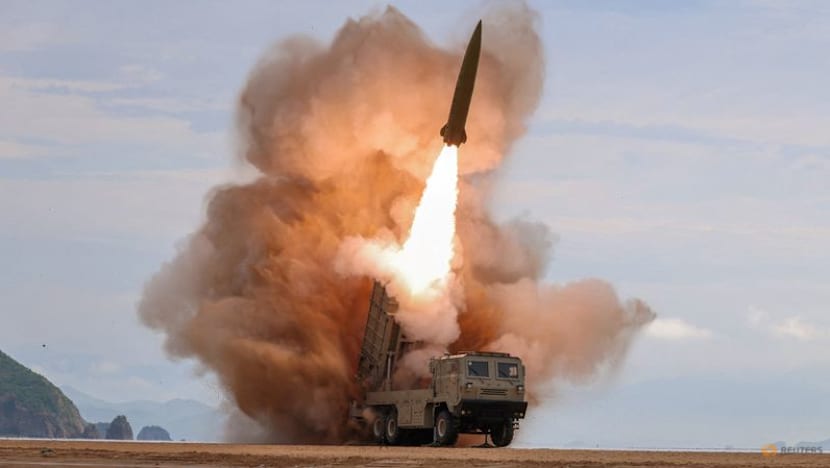
China's military has achieved a significant breakthrough by developing hypersonic glide vehicles (HGVs) that can deploy air-to-air missiles. This capability is designed to target high-value assets, such as command-and-control aircraft, from extreme distances exceeding thousands of kilometers. This development is part of a broader strategy by China to leverage its extensive missile arsenal, the world's largest with over 3,150 ballistic weapons, for a wide array of military objectives. The advancement poses a considerable threat to U.S. air operations in the event of a conflict.
These advanced weapons systems add air-to-air capabilities to some hypersonic cruise missiles and integrate anti-ship functions into various missile types. Such integration allows China to project power and threaten critical airborne platforms that typically operate far from direct combat zones. Support aircraft, including tankers, airborne warning and control systems, and flying command posts, are designed for extended range operations, making them vulnerable to these new Chinese weapons.
The range of these HGVs is substantial. A glide vehicle launched from a DF-17 missile could cover approximately 2,414 km, nearly reaching the distance to the U.S. military hub on Guam. Furthermore, the DF-27 missile boasts a maximum range of about 8,000 km, placing Hawaii within its reach. Unlike traditional ballistic missiles, HGVs can maneuver within the atmosphere during their trajectory, enhancing their range and making them more difficult to intercept. No other nation is known to combine HGV technology with air-to-air missile capabilities.
Despite the technological leap, employing ballistic missiles against distant aircraft presents considerable challenges. The extended flight time of a ballistic missile, potentially 20 minutes or more at maximum range, necessitates highly precise targeting information. This long "kill chain" is susceptible to disruption, and the nature of ballistic missile launches can be misconstrued as a nuclear attack, complicating the weapon's use, particularly during wartime, due to the risk of an inadvertent nuclear response.
DistantNews Editorial
Originally published by The Straits Times. Summarized and contextualized by our editorial team with added local perspective. Read our editorial standards.
More Stories


From Our Blog

What Gets Lost (and Found) When News Is Translated

The Critical Role of Diaspora Media in Global News

What Travellers Should Know About Countries with Restricted Press

A Digital Nomad's Guide to Following Local News

How the Same Story Looks Different in Different Countries
