

China rejects South China Sea ruling on 10th anniversary, calls it illegal
Translated from Korean, summarized and contextualized by DistantNews.
At a glance
News
Official statement
Context piece
- China reiterated its rejection of the 2016 South China Sea arbitration ruling on its 10th anniversary.
- Foreign Ministry spokesperson Mao Ning called the ruling illegal, invalid, and non-binding.
- China is pursuing a Code of Conduct with ASEAN nations to maintain peace and stability.
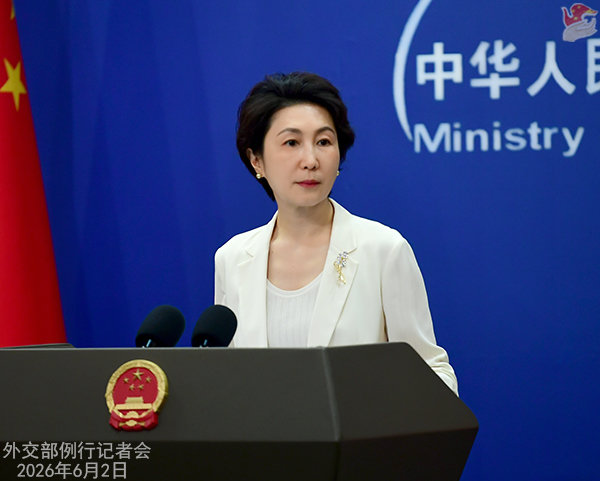
China has firmly rejected the 2016 South China Sea arbitration ruling, marking the 10th anniversary of the Permanent Court of Arbitration's decision. Foreign Ministry spokesperson Mao Ning stated on July 10 that China has consistently declared the ruling illegal, invalid, and non-binding. "China has already declared many times that the so-called 'ruling' on the 'South China Sea arbitration' is illegal, invalid, and has no binding force," Mao said during a press briefing. "China will not accept or recognize it."
China has already declared many times that the so-called 'ruling' on the 'South China Sea arbitration' is illegal, invalid, and has no binding force. China will not accept or recognize it.
China also emphasized that it will not accept any claims or actions based on the ruling. Mao Ning pointed to the ongoing negotiations for a Code of Conduct in the South China Sea with ASEAN nations, describing it as an important measure to implement the Declaration on the Conduct of Parties in the South China Sea. "The formulation of the Code of Conduct is an important measure to implement the 'Declaration on the Conduct of Parties in the South China Sea' and an important common understanding of China and ASEAN countries," she stated.
The formulation of the Code of Conduct is an important measure to implement the 'Declaration on the Conduct of Parties in the South China Sea' and an important common understanding of China and ASEAN countries.
The Philippines, which has a territorial dispute with China in the South China Sea, initiated the arbitration in 2013. The tribunal ruled in favor of the Philippines in July 2016. As the ruling's 10th anniversary approaches, Philippine Foreign Minister Maria Theresa Lazaro referred to the decision as a "beacon" and a legally binding judgment, according to AP. China, however, urged the Philippines not to use the ruling to obstruct the agreement on the Code of Conduct, asserting that the arbitration has no relation to the code.
The so-called ruling has no relation to the Code of Conduct. The Philippines should not use the so-called ruling to obstruct the agreement on the Code of Conduct.
DistantNews Editorial
Originally published by Dong-A Ilbo in Korean. Translated, summarized, and contextualized by our editorial team with added local perspective. Read our editorial standards.
More Stories


From Our Blog

What Gets Lost (and Found) When News Is Translated

The Critical Role of Diaspora Media in Global News

What Travellers Should Know About Countries with Restricted Press

A Digital Nomad's Guide to Following Local News

How the Same Story Looks Different in Different Countries
