


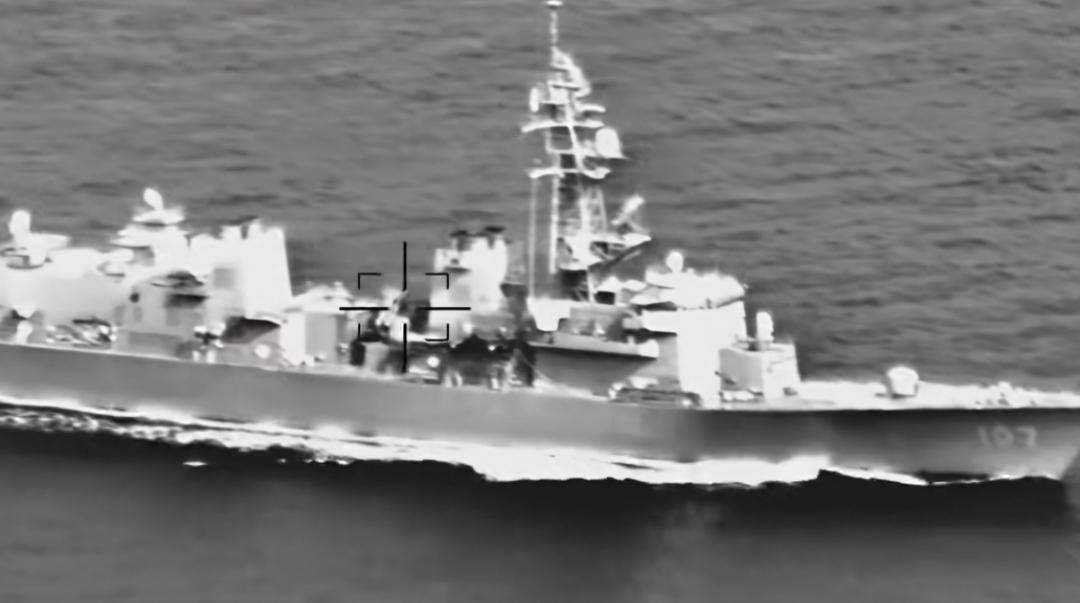
China Releases Footage of Japanese Warship in Taiwan Strait, Citing 'Clear Provocation'
Translated from Korean, summarized and contextualized by DistantNews.
TLDR
- China released footage of a Japanese Maritime Self-Defense Force vessel transiting the Taiwan Strait.
- The Chinese military condemned the transit as a 'clear provocation' and a test of China's response.
- The incident occurred on the anniversary of the Treaty of Shimonoseki, which Japan used to seize Taiwan from China.
Dong-A Ilbo views China's release of footage showing a Japanese Maritime Self-Defense Force vessel in the Taiwan Strait not merely as a geopolitical maneuver, but as a deliberate and provocative act designed to inflame historical sensitivities and assert dominance. The timing of the release, coinciding with the anniversary of the Treaty of Shimonoseki – a symbol of Japan's past aggression and territorial gains at China's expense – is particularly galling. This treaty, signed on April 17, 1895, resulted in Japan seizing Taiwan and the Liaodong Peninsula from China. By highlighting this date, Chinese state media is clearly aiming to evoke a sense of historical grievance and nationalistic fervor among its populace. The People's Liberation Army's statement, warning Japan that 'if it insists to the end and does not correct its mistakes, it will eventually burn itself in the fire it started,' is a stark reminder of China's assertive military posture. From a Korean perspective, this escalation underscores the precarious security situation in Northeast Asia, where historical disputes and competing national interests frequently spill over into military posturing. While Western media might focus on the strategic implications for US-China relations, Dong-A Ilbo emphasizes the direct bilateral tension between China and Japan, rooted in a complex and often fraught history, and its potential to destabilize the region.
If it insists to the end and does not correct its mistakes, it will eventually burn itself in the fire it started.
DistantNews Editorial
Originally published by Dong-A Ilbo in Korean. Translated, summarized, and contextualized by our editorial team with added local perspective. Read our editorial standards.
More Stories


From Our Blog

What Gets Lost (and Found) When News Is Translated

The Critical Role of Diaspora Media in Global News

What Travellers Should Know About Countries with Restricted Press

A Digital Nomad's Guide to Following Local News

How the Same Story Looks Different in Different Countries
