


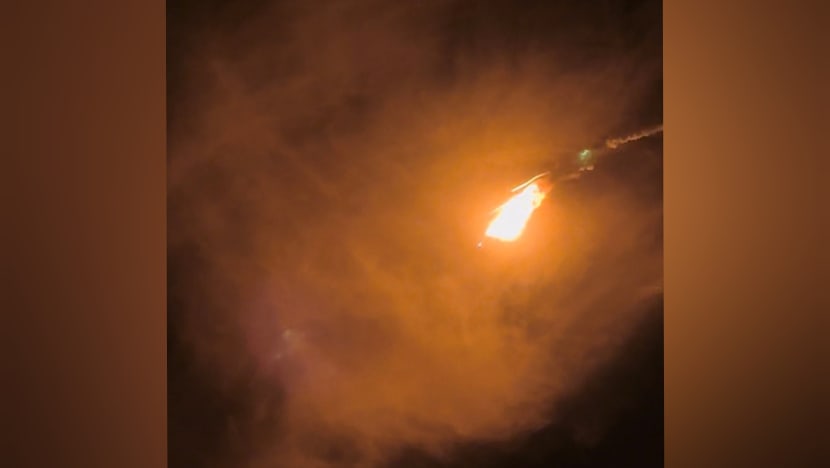
China's Long March 7A Rocket Launch Fails After In-Flight Anomaly
Translated from English, summarized and contextualized by DistantNews.
At a glance
News
From a news agency
Outcome reported
- China's Long March 7A rocket experienced an in-flight anomaly and failed during its launch on August 10, 2026.
- The rocket was carrying the ChinaSat-4B satellite, intended for communication services.
- This marks the first failure for the Long March 7A since its maiden flight in March 2020, prompting an investigation into the cause.
China's Long March 7A rocket suffered a launch failure on August 10, 2026, after encountering an in-flight anomaly shortly after liftoff from the Wenchang space launch site in Hainan province. The rocket was carrying the ChinaSat-4B satellite, a communications satellite in the same series as the previously launched ChinaSat-4A.
The mission was declared unsuccessful by state news agency Xinhua, which reported that the cause of the anomaly is under analysis and investigation. Video footage appeared to show the rocket breaking apart at a relatively low altitude and velocity, indicating that neither the payload nor significant debris reached orbit.
The rocket experienced an anomaly during the flight and the launch mission failed.
This incident represents the first failure for the Long March 7A rocket since its initial launch in March 2020, which also ended in an in-flight malfunction. Following that setback, the rocket had a series of successful flights before Monday's mission. The payload, identified as Zhongxing-4B or ChinaSat-4B, is part of a series designed to provide voice, data, radio, and television transmission services, though its specific capabilities and customers were not immediately clear.
The Long March 7A is a medium-lift rocket designed for high-orbit missions. The failure could prompt reviews of other Chinese space missions. SpaceX founder Elon Musk commented on the launch failure, noting the inherent difficulty of rocket development, as numerous Chinese firms are actively competing in the space sector.
rockets are insanely hard
DistantNews Editorial
Originally published by CNA in English. Translated, summarized, and contextualized by our editorial team with added local perspective. Read our editorial standards.
More Stories



From Our Blog

What Gets Lost (and Found) When News Is Translated

The Critical Role of Diaspora Media in Global News

What Travellers Should Know About Countries with Restricted Press

A Digital Nomad's Guide to Following Local News

How the Same Story Looks Different in Different Countries
