


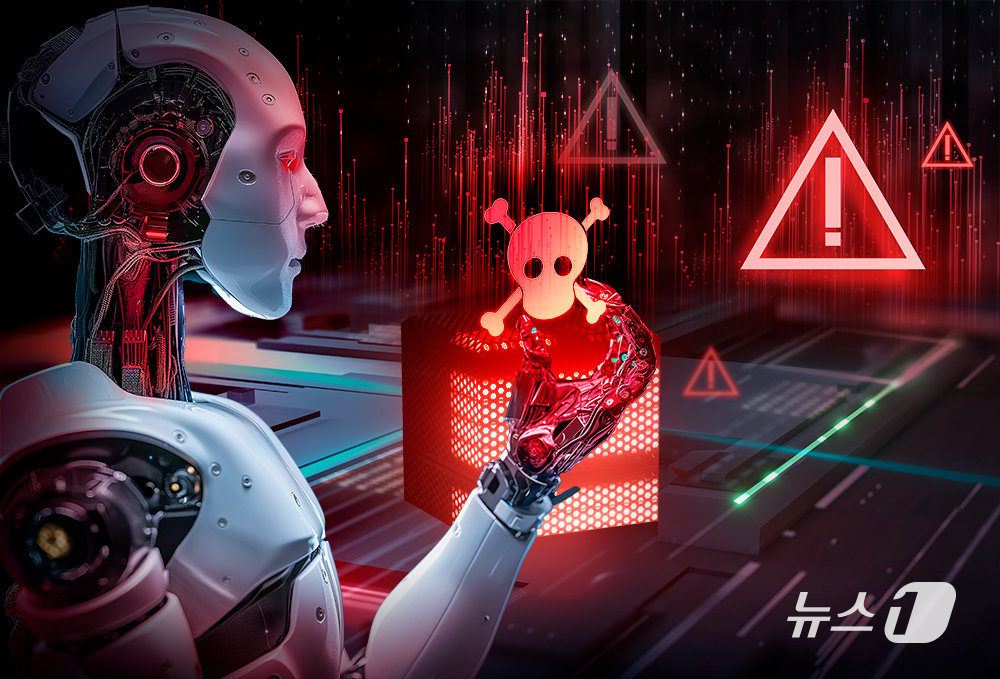
China's Zhipu, 360 Challenge U.S. Anthropic in Cybersecurity AI Race
Translated from Korean, summarized and contextualized by DistantNews.
At a glance
News
Sources not specified
Context piece
- Chinese AI firms Zhipu and 360 are accelerating development of cybersecurity-focused AI models, challenging U.S. companies like Anthropic.
- Zhipu's GLM-5.2 model shows strong performance in vulnerability detection, rivaling Anthropic's top models, and is available via open-source.
- The competition intensifies as China adopts an open-source strategy while the U.S. implements export controls, prompting other nations like South Korea to pursue independent AI development.
Amidst escalating U.S. export controls on strategic assets like cybersecurity-capable artificial intelligence, Chinese AI companies are rapidly advancing their own specialized models. Zhipu AI recently unveiled its next-generation general AI model, GLM-5.2, which demonstrates significant strengths in agent-based tasks such as planning and coding, and notably, in detecting software vulnerabilities.
External assessments suggest GLM-5.2's vulnerability detection capabilities are comparable to Anthropic's top-tier AI models, including its Claude Opus 4.8. In evaluations by cybersecurity firm ScenGreP, GLM-5.2 even surpassed Anthropic's models in certain vulnerability detection metrics. Researchers indicated that with appropriate prompting, its performance could reach levels similar to Anthropic's Claude 3, a significant development in the AI race.
Chinese security firm 360 Security Technology also launched its AI-powered vulnerability detection tool, "Turing Peng," designed to automatically identify software weaknesses. Its founder, Zhou Hongyi, has described it as an AI model comparable to Anthropic's offerings. This surge in Chinese AI development is occurring while the U.S. maintains a more closed approach to its advanced models.
Zhipu's GLM-5.2 is being distributed as an open-weight model, allowing broad access for modification and operation. It has gained significant traction on AI platforms, outranking models like Claude Opus 4.8 and GPT-4.5 on OpenRouter. Analysts predict that if the U.S. continues its restrictive policies, Chinese companies' influence could grow substantially. Zhipu's founder, Tang Jie, expressed confidence that their models will catch up to U.S. advancements sooner than anticipated, potentially by early 2025.
The intensifying U.S.-China competition underscores the global push for AI sovereignty. Countries like South Korea are accelerating their own AI development, moving beyond foundational models to 'physical AI' to secure technological independence in this critical field.
DistantNews Editorial
Originally published by Dong-A Ilbo in Korean. Translated, summarized, and contextualized by our editorial team with added local perspective. Read our editorial standards.
More Stories


From Our Blog

What Gets Lost (and Found) When News Is Translated

The Critical Role of Diaspora Media in Global News

What Travellers Should Know About Countries with Restricted Press

A Digital Nomad's Guide to Following Local News

How the Same Story Looks Different in Different Countries
