


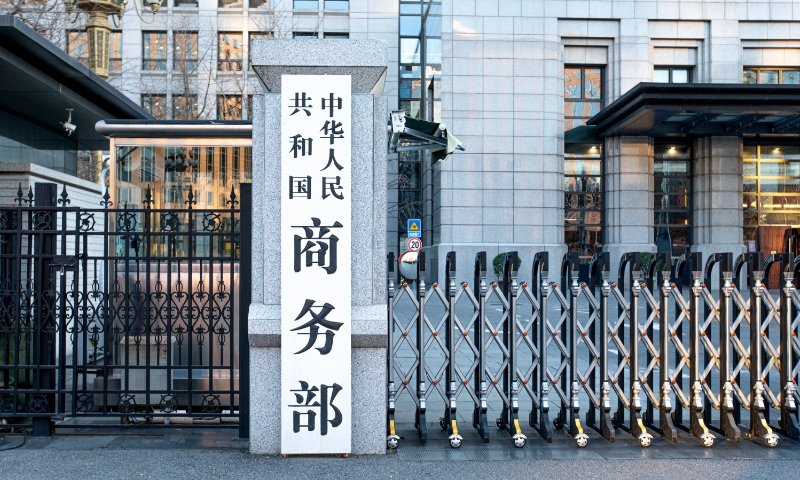
China slams U.S. sanctions on companies as 'economic coercion,' denies forced labor in Xinjiang
Translated from Korean, summarized and contextualized by DistantNews.
At a glance
News
Sources not specified
Context piece
- China's Ministry of Commerce strongly condemned the U.S. for adding 43 Chinese companies to a sanctions list under the Uyghur Forced Labor Prevention Act.
- Beijing labeled the U.S. action as "economic coercion" and a violation of international norms, citing a lack of factual basis.
- China insists that no forced labor exists in Xinjiang, asserting the region is stable, prosperous, and its residents live peacefully.
China's Ministry of Commerce has vehemently denounced the United States' decision to add 43 Chinese companies to a sanctions list under the Uyghur Forced Labor Prevention Act (UFLPA). Beijing characterized the U.S. move as "typical economic coercion" and a unilateral application of domestic law without factual grounds, purportedly in the name of human rights and forced labor.
The ministry released a statement asserting that the U.S. action severely undermines the consensus reached during a video conference between the two countries on July 30th, aimed at stabilizing economic and trade relations. China expressed strong condemnation and firm opposition to what it termed "malicious measures" announced by the U.S. just one day after their constructive discussions.
China has consistently opposed forced labor, and the Ministry of Commerce emphasized that Xinjiang is currently experiencing social harmony, stability, and economic prosperity, with residents living peaceful lives. The statement explicitly denied the existence of any form of forced labor in the region. The U.S. Department of Homeland Security had previously stated that the targeted companies were involved in procuring materials from Xinjiang or cooperating with the regional government in recruiting, transporting, and detaining Uyghur, Kazakh, and Kyrgyz individuals.
China urged the U.S. to immediately cease its attacks and slanders against Xinjiang and to stop the political instrumentalization of the so-called forced labor issue, as well as the unfair suppression of Chinese companies. Beijing vowed to take all necessary measures to resolutely protect the legitimate rights and interests of Chinese enterprises. Products from the sanctioned companies, including those involved in aluminum, apparel, copper, cotton, and tomato production, are banned from entering the U.S. starting September 3rd.
DistantNews Editorial
Originally published by Dong-A Ilbo in Korean. Translated, summarized, and contextualized by our editorial team with added local perspective. Read our editorial standards.
More Stories


From Our Blog

What Gets Lost (and Found) When News Is Translated

The Critical Role of Diaspora Media in Global News

What Travellers Should Know About Countries with Restricted Press

A Digital Nomad's Guide to Following Local News

How the Same Story Looks Different in Different Countries
