


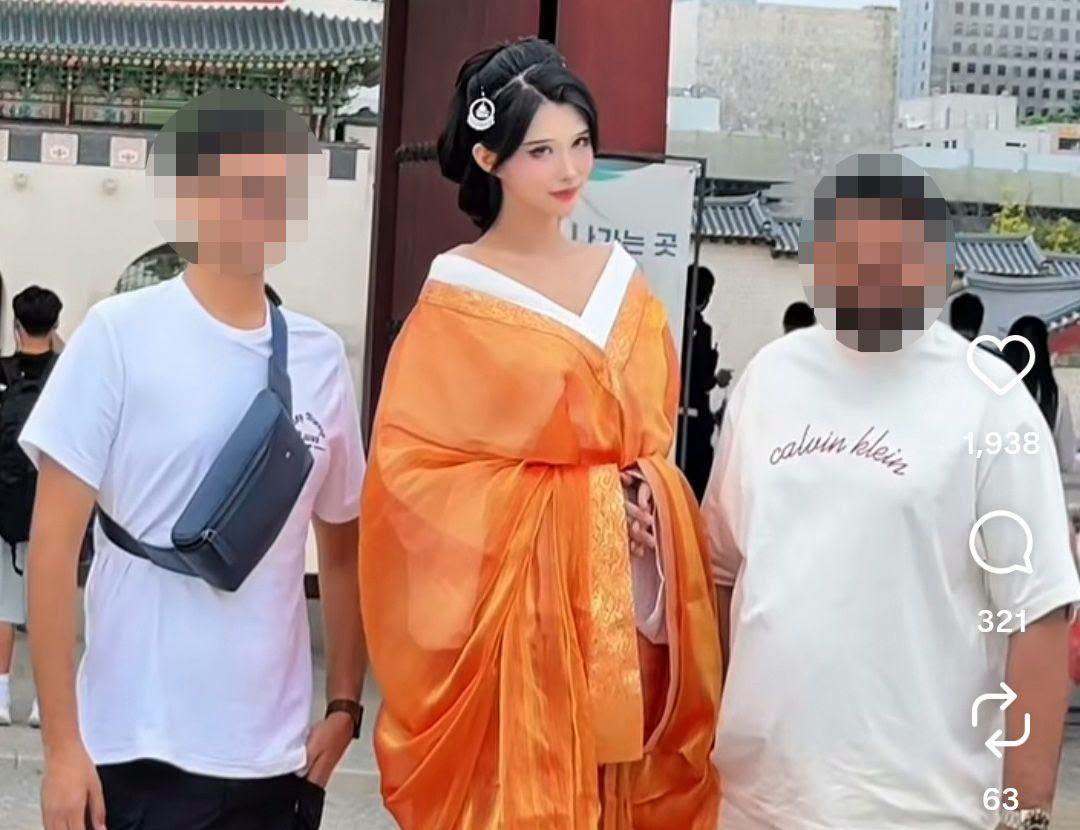
Chinese Influencers' Hanfu at Gyeongbok Palace Sparks Cultural Debate
Translated from Korean, summarized and contextualized by DistantNews.
At a glance
News
Named sources
Context piece
- A controversy has erupted after Chinese influencers wore "Hanfu" at Gyeongbok Palace in Seoul, sparking debate about cultural appropriation.
- Professor Seo Kyung-duk of Sungshin Women's University warned that such displays could mislead foreign tourists about the origins of Korean traditional clothing.
- The incident follows previous online disputes where some Chinese netizens claimed Hanbok originated from Hanfu, leading to accusations of "cultural theft."
A recent trend of Chinese influencers donning traditional Chinese attire, known as "Hanfu," at Seoul's historic Gyeongbok Palace has ignited controversy and debate online. Photos and videos of influencers posing in Hanfu amidst the palace grounds have surfaced on social media, prompting concerns about cultural misrepresentation.
Our Hanbok and China's Hanfu are distinctly different garments, yet foreigners might mistake them for Korean traditional attire.
Professor Seo Kyung-duk, a prominent scholar at Sungshin Women's University, has voiced his apprehension regarding the situation. While acknowledging that tourists are free to wear their traditional clothing while visiting foreign countries, Professor Seo emphasized that the context matters. He fears that showcasing Hanfu at Gyeongbok Palace could create confusion among international visitors, leading them to mistakenly believe it is Korean traditional clothing.
"Our Hanbok and China's Hanfu are distinctly different garments, yet foreigners might mistake them for Korean traditional attire," Professor Seo stated. He further highlighted that the act of Chinese influencers creating and sharing content of themselves wearing Hanfu at Gyeongbok Palace exacerbates the issue. This practice has become a recurring point of contention, following past online campaigns by some Chinese netizens asserting that Hanbok is derived from Hanfu.
These Chinese influencers parading around Gyeongbok Palace in Hanfu and creating videos for their social media is a bigger problem.
These claims have previously led to accusations of "cultural theft" and sparked heated discussions. The controversy has also extended to online marketplaces, where some Chinese e-commerce platforms have controversially grouped Hanbok and Hanfu together in the same sales category. Professor Seo urged Chinese influencers to demonstrate "global etiquette" by respecting the history and culture of the countries they visit, emphasizing that such incidents are not isolated occurrences.
Chinese influencers must possess 'global etiquette' and learn to respect the history and culture of other nations.
DistantNews Editorial
Originally published by Dong-A Ilbo in Korean. Translated, summarized, and contextualized by our editorial team with added local perspective. Read our editorial standards.
More Stories



From Our Blog

What Gets Lost (and Found) When News Is Translated

The Critical Role of Diaspora Media in Global News

What Travellers Should Know About Countries with Restricted Press

A Digital Nomad's Guide to Following Local News

How the Same Story Looks Different in Different Countries
