


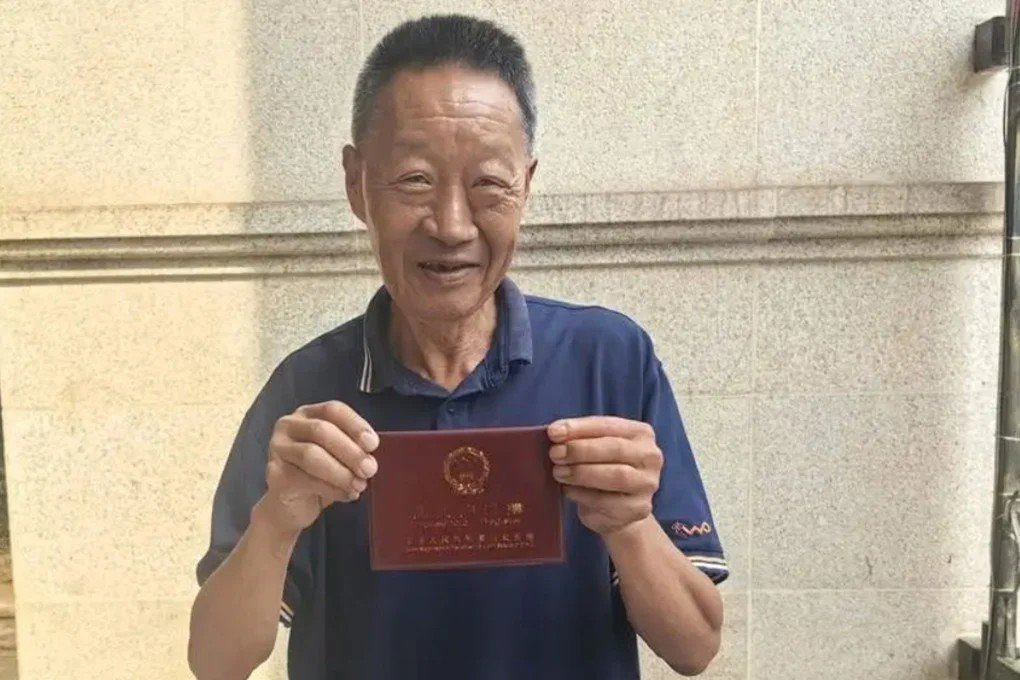
Chinese Man Reunited With Family After 25 Years of Mountain Isolation
Translated from Korean, summarized and contextualized by DistantNews.
At a glance
News
Sources not specified
Outcome reported
- A Chinese man, Li Guoyou, has been reunited with his family after living in isolation in a mountain home for 25 years.
- Li left his hometown in 1987 seeking work and lost contact with his family, eventually moving to a remote mountain house in 1998.
- With the help of a former acquaintance, Li was able to obtain new identification and travel back to his hometown to reunite with his brothers.
A remarkable story of perseverance and reunion has emerged from China, where a man has finally returned to his family after spending 25 years living in isolation in a remote mountain home. Li Guoyou, 63, recently received his renewed Hukou, China's household registration document, at a police station, marking his official re-entry into society after nearly three decades.
Li's journey began in 1987 when, at the age of 24, he left his hometown in Pingtan, southwestern Sichuan province, in search of better employment opportunities in Guangzhou. Over the years, his parents passed away, and he gradually lost contact with his two brothers, his only remaining family. Although he briefly returned to his hometown in 1997, he was unable to reconnect with his siblings who were working elsewhere.
He stayed there because of my words. I feel sorry for him.
In 1998, Li moved to Harbin in Heilongjiang province, where he found work operating a highway rest stop with a woman named Lin. However, their livelihood was cut short three years later when the highway was closed, forcing the restaurant to shut down. Concerned about Li's precarious situation, Lin offered him the use of her remote mountain house, assuring him he could leave whenever he wished.
Li is an honorable person who stayed in that house for 25 years to keep his promise.
Li stayed, living a self-sufficient life by growing corn, raising livestock, and fishing, with the nearest grocery store three kilometers away. His identification card expired in 2005 when China transitioned to newer, chip-enabled ID cards, and he lacked the funds to travel back to Sichuan for a renewal. Lin, who had been traveling for business, returned in May of this year to sell the property and was astonished to find Li still residing there, having kept his promise.
Moved by Li's desire to see his brothers, Lin assisted him in obtaining new identification and arranging travel. Using police assistance, Li secured a train ticket to Chongqing, a city near his hometown, a journey that took 40 hours. Upon arrival, Pingtan police and government officials escorted him home, where he was finally reunited with his brothers. Lin also accompanied him, sharing in the joyous reunion and promising to stay in touch.
Li and Lin helped each other. It's meaningless to argue about who owes whom.
DistantNews Editorial
Originally published by Dong-A Ilbo in Korean. Translated, summarized, and contextualized by our editorial team with added local perspective. Read our editorial standards.
More Stories


From Our Blog

What Gets Lost (and Found) When News Is Translated

The Critical Role of Diaspora Media in Global News

What Travellers Should Know About Countries with Restricted Press

A Digital Nomad's Guide to Following Local News

How the Same Story Looks Different in Different Countries
