


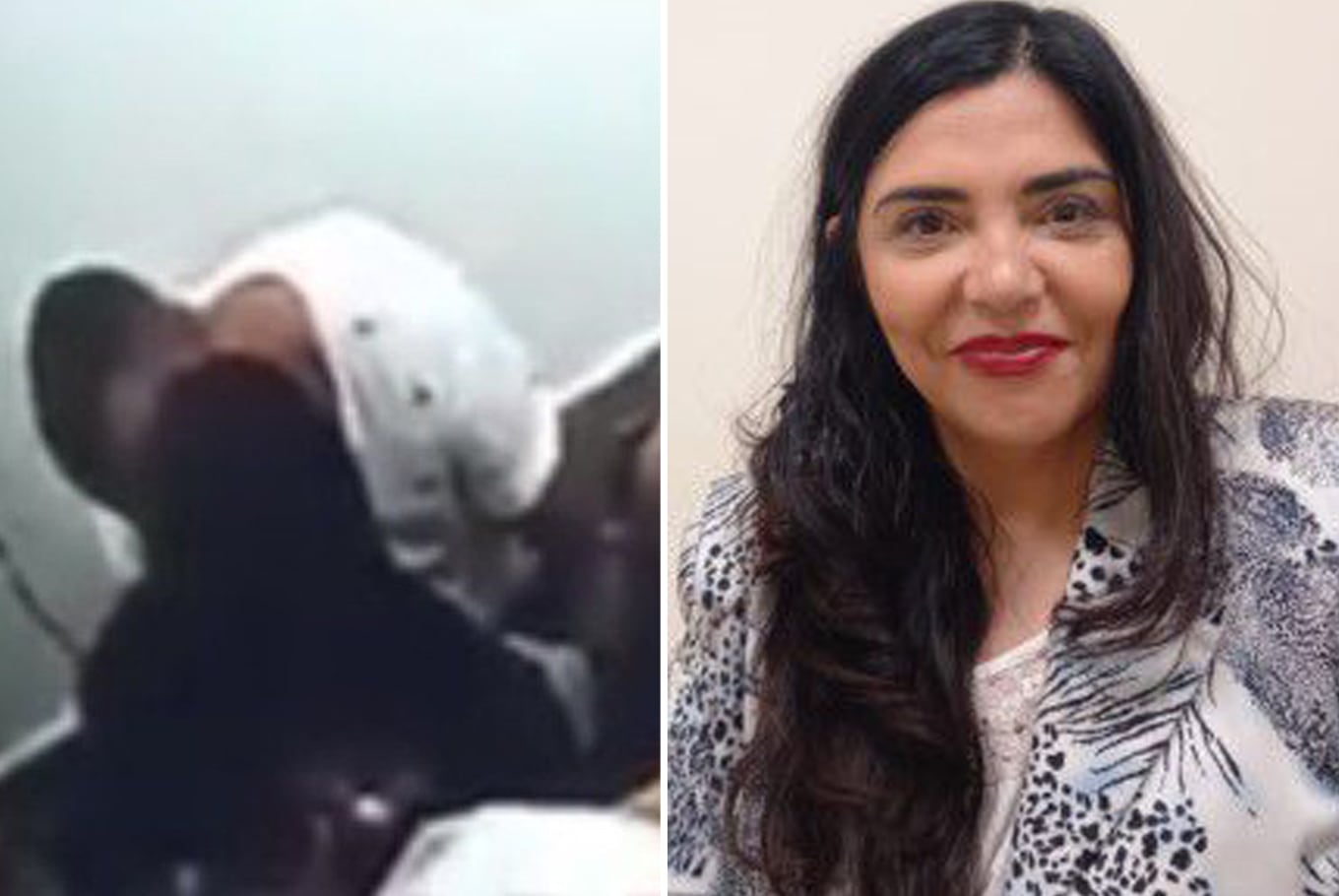
Chubut judge filmed kissing inmate reinstated after court overturns dismissal
Translated from Spanish, summarized and contextualized by DistantNews.
At a glance
News
Named sources
Outcome reported
- A judge in Argentina's Chubut province, Mariel Suárez, will return to her post after a higher court overturned her dismissal.
- Suárez was fired in November 2023 for being filmed kissing an inmate she had previously sentenced.
- The Superior Tribunal of Justice cited a violation of impartiality guarantees due to the prior involvement of the head of the impeachment tribunal.
Judge Mariel Suárez is set to resume her duties as a criminal judge in Comodoro Rivadavia, Chubut, following a unanimous decision by the Superior Tribunal of Justice (STJ). The STJ declared the November 2023 sentence that dismissed Suárez null and void, ordering her immediate reinstatement.
Suárez, a criminal judge, was removed from her position after security cameras captured her kissing an inmate she had previously judged. The impeachment tribunal had voted three to two to dismiss her.
The STJ's ruling centered on the impartiality of the impeachment process. It found that the tribunal's president, Daniel Báez, had previously been involved in various stages of the case, making public statements and assessments that compromised the constitutional guarantee of impartiality. This prior involvement, the STJ concluded, rendered the entire impeachment process void.
The guarantee of impartiality comprises two dimensions of equal constitutional hierarchy. The first is subjective and refers to the personal attitude of the judge: it requires that they have no preconceived notions about the case or interest in its outcome. The second is objective and relates to verifiable external circumstances: it requires that there be no facts that, from the perspective of a reasonable observer, allow for well-founded doubt about the neutrality of the tribunal with respect to the parties or the matter.
The STJ noted that Suárez had initially challenged Báez's impartiality, but her recusal request was denied. The court stated that addressing this recusal properly at the outset would have prevented the current nullification and its institutional consequences.
Minister Javier Raidan emphasized the dual nature of impartiality, encompassing both the judge's personal attitude and objective, verifiable circumstances. Minister Andrés Giacomone specifically pointed to Báez's prior actions, including ordering the investigation and making public comments, as incompatible with his role as a judge.
Dr. Daniel Esteban Báez's prior interventions reveal a degree of involvement incompatible with his subsequent role as a judge: he ordered the opening of the investigation, made immediate public assessments of the investigated facts, and participated in institutional acts.
DistantNews Editorial
Originally published by La Nación in Spanish. Translated, summarized, and contextualized by our editorial team with added local perspective. Read our editorial standards.
More Stories


From Our Blog

What Gets Lost (and Found) When News Is Translated

The Critical Role of Diaspora Media in Global News

What Travellers Should Know About Countries with Restricted Press

A Digital Nomad's Guide to Following Local News

How the Same Story Looks Different in Different Countries
