


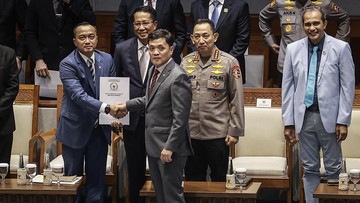
Civil Society Coalition Rejects Swift Passage of Police Law Revision Bill in Indonesia
Translated from Indonesian, summarized and contextualized by DistantNews.
At a glance
News
Sources not specified
New plan
- A coalition of civil society groups in Indonesia is protesting the swift passage of a bill to revise the National Police Law (UU Polri).
- The coalition argues the revision was rushed without public participation and contains provisions contradicting police reform principles.
- They claim the bill serves political interests and undermines the spirit of reform, citing issues like dual office-holding and inadequate oversight.
A coalition of Indonesian civil society organizations has strongly opposed the rapid ratification of the draft bill to amend the National Police Law (UU Polri). The coalition, comprising prominent groups such as KontraS, YLBHI, ICJR, and others, argues that the revision process was haphazard and lacked meaningful public involvement. They contend that the bill's content contradicts the mandate and spirit of police reform.
"The coalition strongly suspects a political power agenda behind the revision of the Police Law and believes this revision will not benefit the public, but rather close off avenues for improvement as demanded by police reform," the coalition stated on Tuesday. They further asserted that the swift passage of the bill proves President Prabowo's promises of police reform were "lies and empty talk."
The coalition outlined several key concerns. Firstly, they emphasized that the revision process should be transparent and accountable, allowing public access and monitoring. The lack of transparency, they argue, closes off equal participation between policymakers and the public. Secondly, the bill should not be rushed, requiring careful consideration to address public needs rather than creating new problems. Thirdly, the coalition criticized provisions that legitimize police officers holding dual positions without resigning, which they believe conflicts with existing legal mandates.
Furthermore, the coalition stressed the need to strengthen the independence and function of the National Police Commission (Kompolnas) within the law, ensuring its position as an external supervisory body independent of the executive branch. They also questioned the increased retirement age for police officers (to 60-63 years), arguing it lacks clear justification and could hinder personnel regeneration without solving internal issues of member accumulation. Finally, they stated that Article 19A of the revised bill fails to improve police accountability, relying solely on oversight.
The coalition strongly suspects a political power agenda behind the revision of the Police Law and believes this revision will not benefit the public, but rather close off avenues for improvement as demanded by police reform.
DistantNews Editorial
Originally published by CNN Indonesia in Indonesian. Translated, summarized, and contextualized by our editorial team with added local perspective. Read our editorial standards.
More Stories


From Our Blog

What Gets Lost (and Found) When News Is Translated

The Critical Role of Diaspora Media in Global News

What Travellers Should Know About Countries with Restricted Press

A Digital Nomad's Guide to Following Local News

How the Same Story Looks Different in Different Countries
