


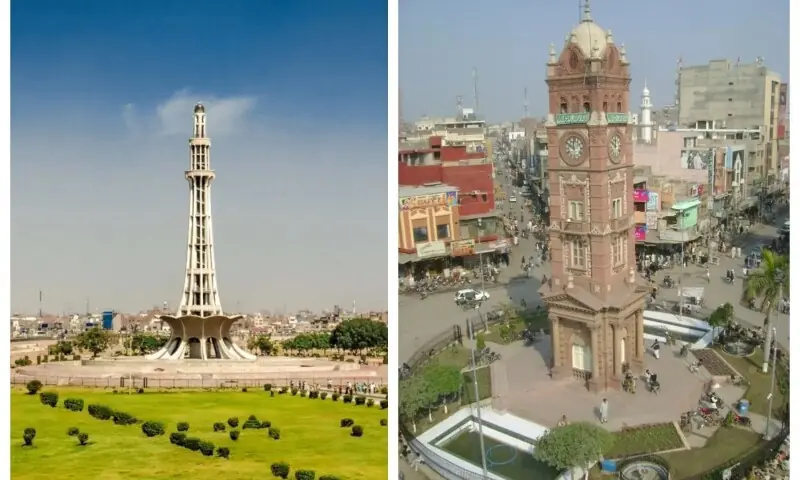
Claims of Lahore, Faisalabad Ranking Among World's Hottest Cities by 2050 Are Misleading
Translated from English, summarized and contextualized by DistantNews.
At a glance
News
Sources not specified
Context piece
- Social media claims that Lahore and Faisalabad will be among the world's hottest cities by 2050 are misleading.
- The Pakistan Meteorological Department warned of a heatwave but did not project such rankings.
- A University of Chicago study cited by some outlets ranked cities by heat-related mortality risk, not temperature.
Recent claims circulating on social media and some local news outlets suggest that Lahore and Faisalabad are on track to become the world's hottest cities by 2050. However, these assertions are misleading. The Pakistan Meteorological Department (PMD) issued an advisory on June 7, 2026, warning of a heatwave expected to last until June 12, with temperatures rising seven degrees Celsius above normal. The PMD predicted a persistent high-pressure system in the upper atmosphere and cautioned about rising night-time temperatures and potential dust storms in southern Punjab and Sindh. While the department advised extra caution for vulnerable groups, it did not project any city rankings for 2050. The misleading claims often accompany AI-generated imagery and cite an unspecified "climate study" without providing its source or date. A thorough search for credible domestic or international reports corroborating these specific rankings yielded no results. Instead, a March 2026 study by the University of Chicago's Climate Impact Lab, which was covered by various news outlets including Dawn, projected that Pakistan could experience a net increase of 51 temperature-related deaths per 100,000 people by 2050. This study identified Faisalabad, Lahore, Multan, Gujranwala, Peshawar, Hyderabad, Rawalpindi, and Islamabad among the cities most vulnerable globally to heat impacts. Crucially, the Climate Impact Lab study focused on mortality risk, not temperature rankings. Its executive summary clarifies that understanding climate impact on mortality is complex and not solely based on projected temperatures. The study measured projected changes in net temperature-related death rates by 2050 compared to a 2001–2010 average, considering factors like income levels, adaptation capacity, and existing heat exposure, rather than simply thermometer readings.
DistantNews Editorial
Originally published by Dawn in English. Translated, summarized, and contextualized by our editorial team with added local perspective. Read our editorial standards.
More Stories



From Our Blog

What Gets Lost (and Found) When News Is Translated

The Critical Role of Diaspora Media in Global News

What Travellers Should Know About Countries with Restricted Press

A Digital Nomad's Guide to Following Local News

How the Same Story Looks Different in Different Countries
