


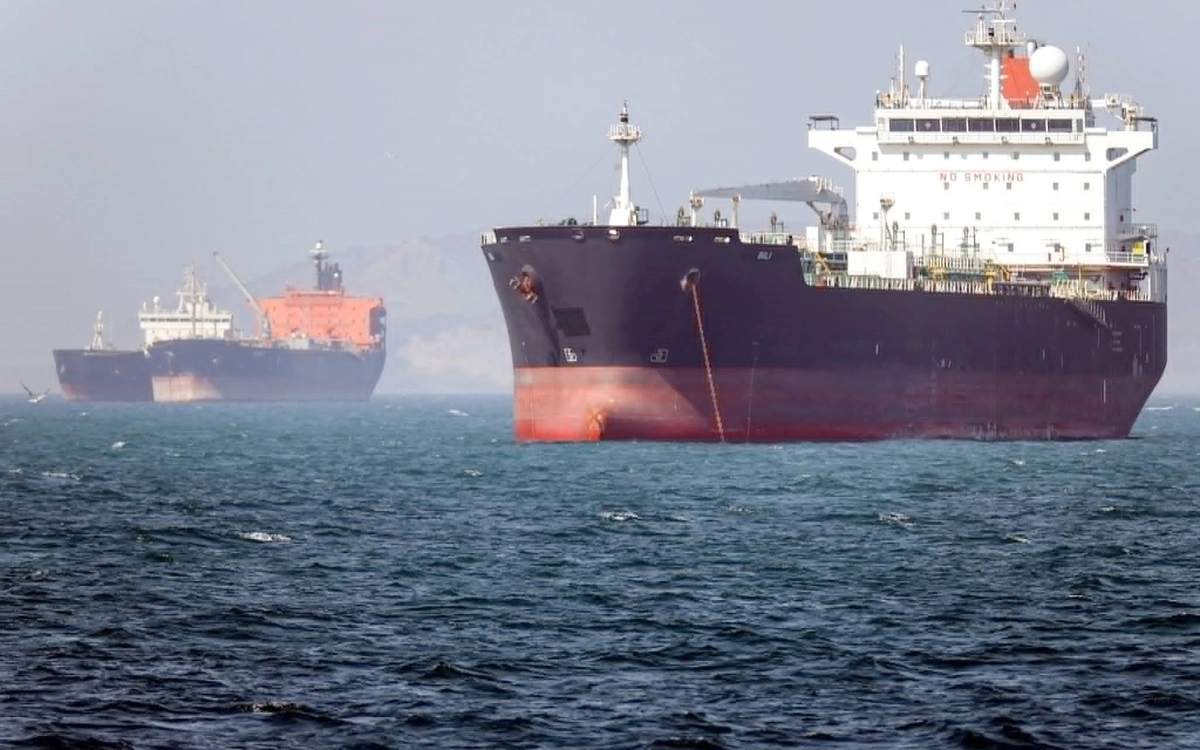
Clearing Hormuz Strait mines could take 40-50 days, impacting oil flow
Translated from Vietnamese, summarized and contextualized by DistantNews.
At a glance
News
Named sources
Ongoing story
- Clearing mines in the Strait of Hormuz could take 40 to 50 days, potentially trapping millions of barrels of oil.
- Western maritime security sources indicate that shipping companies and insurers are hesitant to use the route until it's deemed safe.
- International efforts, including naval deployments from the UK, France, and Germany, are underway to clear the strategic waterway, which previously handled 20% of global oil and LNG.
Clearing mines in the Strait of Hormuz could take between 40 and 50 days, or even longer, according to Western maritime security sources. This extended timeline means that insurers, shipping companies, and oil businesses may remain reluctant to send vessels through the crucial waterway, potentially leaving tens of millions of barrels of oil "stuck."
Maritime officials estimate that a supertanker and its crude oil cargo could be worth up to $300 million. Companies need absolute certainty that the shipping route is secure before allowing ships to transit. While Iran has repeatedly threatened action since the U.S.-Iran conflict escalated on February 28, it remains unclear if Iran has actually deployed mines in the Strait of Hormuz or in what quantity.
The U.S. considers the threat real and has attacked Iranian mine-laying vessels while conducting mine-clearing operations. The German Navy reported on June 11, citing U.S. and British naval information, that mines were discovered in four locations around Hormuz, though Berlin could not independently verify these positions. Earlier, Oman had warned ships to exercise caution after detecting a suspected floating mine.
International efforts are now focused on reopening the Strait of Hormuz, a strategic maritime route that previously transported up to 20% of global oil and liquefied natural gas before the conflict. The UK, France, and Germany have dispatched warships and mine-clearing vessels to the Middle East, preparing for potential participation in mine-clearing operations. Despite an increase in ship traffic to 12-15 vessels per day recently, this number remains significantly lower than the 120-140 vessels per day seen before the conflict. The Secretary-General of the International Maritime Organization, Arsenio Dominguez, welcomed the agreement to reopen the Strait, calling it a significant step toward restoring safety for sailors and vessels on this corridor, while emphasizing that full implementation will require time to ensure all safety and security conditions are met.
However, the implementation of the agreement will take time to ensure all safety and security conditions are met.
DistantNews Editorial
Originally published by Tuổi Trẻ in Vietnamese. Translated, summarized, and contextualized by our editorial team with added local perspective. Read our editorial standards.
More Stories


From Our Blog

What Gets Lost (and Found) When News Is Translated

The Critical Role of Diaspora Media in Global News

What Travellers Should Know About Countries with Restricted Press

A Digital Nomad's Guide to Following Local News

How the Same Story Looks Different in Different Countries
