


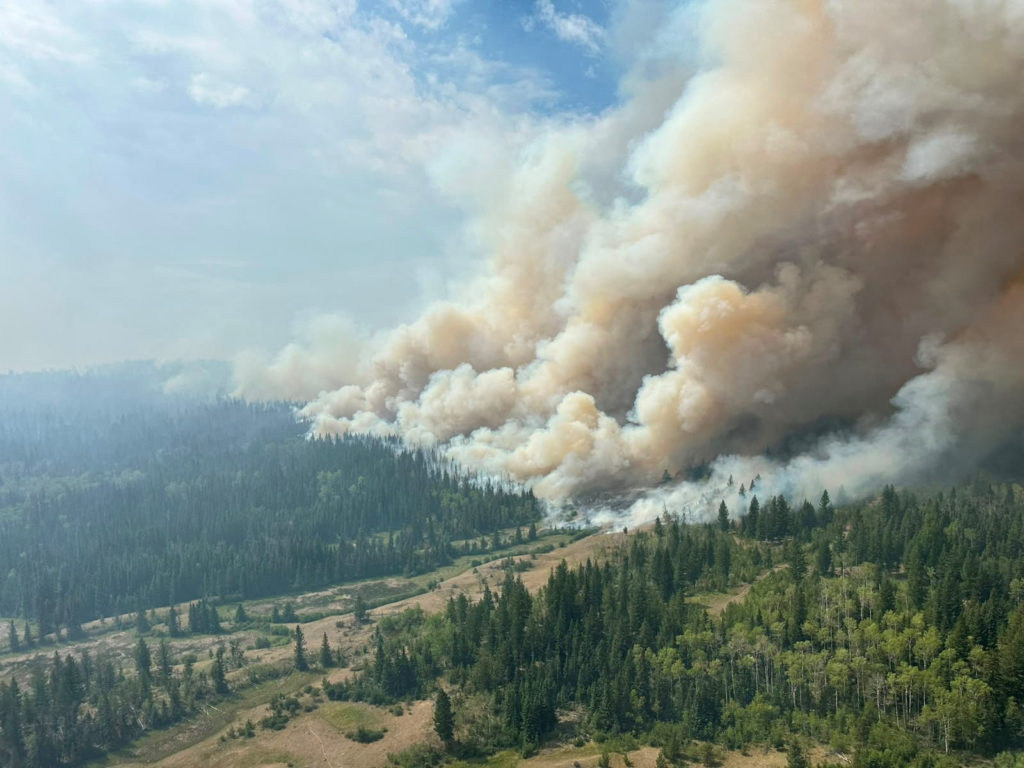
Climate change doubled likelihood of Canada fires, scientists say
Translated from English, summarized and contextualized by DistantNews.
At a glance
News
Documents & data
Context piece
- Scientists state that human-caused climate change doubled the likelihood of the extreme weather conditions that fueled Canada's massive summer wildfires.
- A study by World Weather Attribution found that the fire weather conditions were made twice as likely by global warming.
- Researchers suggest that the U.S.'s historical emissions of heat-trapping gases contribute to such events, countering former President Trump's focus on Canadian mismanagement.
Human-caused climate change significantly increased the probability of the extreme weather conditions that ignited Canada's devastating summer wildfires, according to a new study. Scientists involved in the research assert that the likelihood of such tinderbox conditions was doubled due to global warming.
In a pre-industrial climate this would have been much less likely to occur, maybe once in a lifespan. So climate change has made those events more likely.
The study, released by World Weather Attribution, examined the weather patterns contributing to the fires in Canada's Northwest Territories and northwestern Ontario. Researchers found that while these conditions might occur, global warming made them twice as likely. This finding is comparable to the impact on summer fires in France but less pronounced than in Spain, where climate change was found to make fires 20 times more likely.
The analysis, which has not yet undergone peer review, focused on key weather elements: heat, lack of rain, humidity, and wind. By comparing current conditions to a hypothetical world without the 1.4 degrees Celsius (2.5 degrees Fahrenheit) of warming since the industrial age, scientists determined the increased frequency of these fire-conducive events. The report indicates that weather conditions similar to those that caused the Ontario fires now occur roughly every six years, compared to perhaps once in a lifetime in a pre-industrial climate.
Mother Nature's been burning. Now she's on amphetamines and she burns more and more.
Fire and climate scientists not involved in the study largely agreed with its findings, describing a world where hotter, drier conditions are intensifying and increasing the frequency of wildfires. They noted that the widespread, hazardous smoke blanketing large parts of North America serves as a stark reminder of the consequences of burning fossil fuels. This perspective challenges former U.S. President Donald Trump's suggestions to blame Canada for poor fire management, with scientists pointing to the significant historical emissions from the United States as a contributing factor.
By burning more and more fossil fuels, we're putting nails in our coffins.
DistantNews Editorial
Originally published by PBS NewsHour in English. Translated, summarized, and contextualized by our editorial team with added local perspective. Read our editorial standards.
More Stories


From Our Blog

How the Same Story Looks Different in Different Countries

What Gets Lost (and Found) When News Is Translated

The Critical Role of Diaspora Media in Global News

What Travellers Should Know About Countries with Restricted Press

A Digital Nomad's Guide to Following Local News
