

Climate, Land-Use Change to Worsen Landslide Risk in India's Western Ghats
Translated from English, summarized and contextualized by DistantNews.
At a glance
News
Sources not specified
Context piece
- Climate change and land-use modifications are projected to significantly increase landslide risk in India's Western Ghats by 2050, a new study warns.
- The research, covering 45,000 sq km in Karnataka, used machine learning to model future landslide susceptibility and risk under various climate and land-use scenarios.
- Findings indicate a rise in rainfall intensity and urban development will heighten landslide dangers, particularly along transport corridors and populated areas.
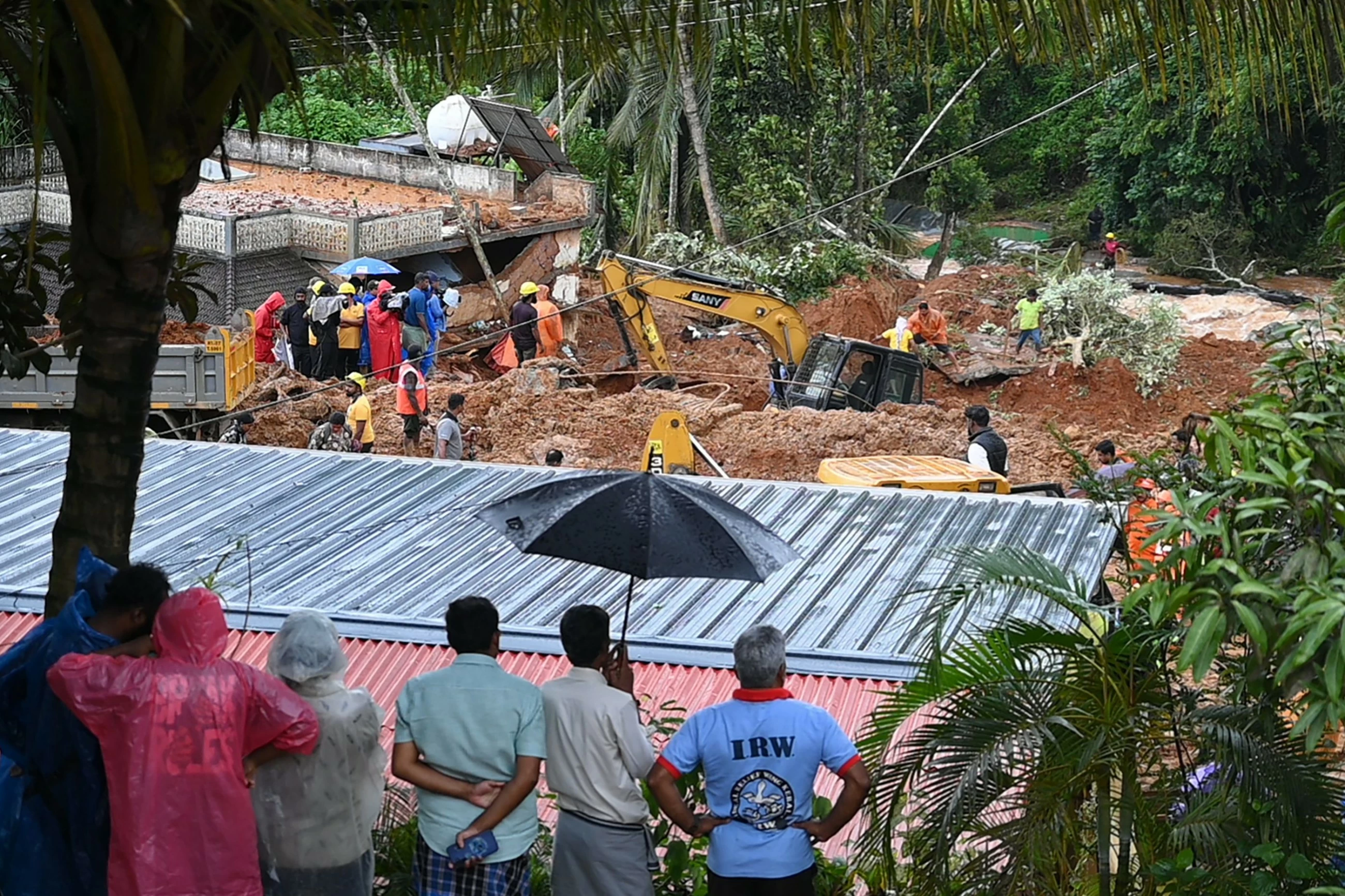
A recent study highlights the escalating threat of landslides in India's Western Ghats, projecting that climate change and human-induced land-use alterations could dramatically heighten susceptibility by 2050. This warning follows the July 7, 2026, Kalladi landslide in Kerala, which killed eight workers and echoed the devastating 2024 Mundakkai-Chooralmala disaster that claimed 298 lives.
The research, published in 'Scientific Reports' and highlighted by Mongabay-India, focused on approximately 45,000 square kilometers across seven districts in Karnataka. Unlike traditional assessments, the study incorporated projected changes in land use/land cover (LULC) and rainfall patterns under four Shared Socioeconomic Pathway (SSP) scenarios. Researchers employed machine learning to identify future landslide hotspots and assess risks to populations and infrastructure.
According to the study, the intensity and frequency of fatal landslides are exacerbated by human activities and changing climate conditions. The developed susceptibility maps pinpoint areas most prone to landslides, while risk maps combine this with exposure data to identify locations facing potential socioeconomic losses. This forward-looking approach is among the first of its kind for the region.
The findings forecast a significant increase in rainfall intensity and urban development by 2050. This combination is expected to lead to higher landslide susceptibility and risk, especially along major transport routes and in densely populated areas within the Uttara Kannada, Kodagu, and Chikkamagaluru districts. The study emphasizes the critical need to understand these evolving factors for effective disaster risk reduction strategies.
DistantNews Editorial
Originally published by Gulf Today in English. Translated, summarized, and contextualized by our editorial team with added local perspective. Read our editorial standards.
More Stories

From Our Blog

What Gets Lost (and Found) When News Is Translated

The Critical Role of Diaspora Media in Global News

What Travellers Should Know About Countries with Restricted Press

A Digital Nomad's Guide to Following Local News

How the Same Story Looks Different in Different Countries
