


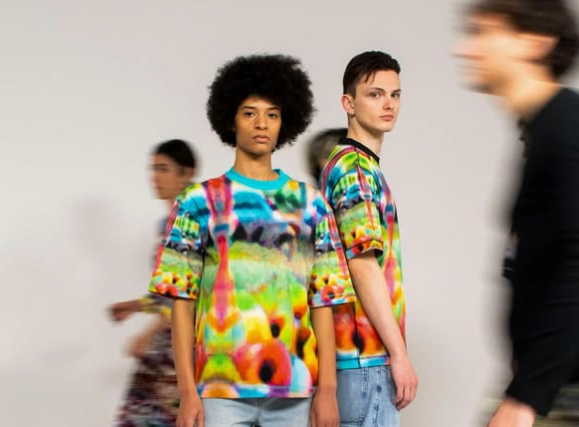
Clothing designed to fool AI facial recognition emerges as European trend
Translated from Korean, summarized and contextualized by DistantNews.
At a glance
News
Sources not specified
Context piece
- Clothing designs are emerging in Europe that intentionally disrupt AI facial recognition systems.
- These "anti-surveillance fashion" items use adversarial patterns to confuse AI algorithms, aiming to protect privacy.
- Brands like Urban Privacy and Capable are leading this trend, with experts predicting it could become a cultural phenomenon.
A new fashion trend is emerging in Europe focused on disrupting artificial intelligence facial recognition systems. These garments are designed to confuse AI algorithms, preventing them from accurately identifying faces, and are gaining traction as concerns over privacy grow.
As AI technology spreads and concerns about privacy violations increase, demand for related products is rapidly growing.
Dubbed "anti-surveillance fashion," these clothes incorporate "adversarial patterns" – specific geometric shapes and colors arranged to interfere with AI's ability to analyze facial contours and features. German brand Urban Privacy offers hooded items with infrared LEDs designed to thwart facial recognition by night vision cameras. Italian brand Capable is also selling similar products.
Raquelle Didero, founder of Capable, noted a significant increase in interest in their products over recent years. She attributes this rise to the proliferation of AI technology and growing anxieties about personal data breaches. "As AI technology spreads and concerns about privacy violations increase, demand for related products is rapidly growing," Didero stated.
Facial recognition technology is another step toward creating a surveillance society.
The Guardian reports that as facial recognition technology expands beyond government use into the private sector, public resistance is mounting. A recent UK poll indicated that 60% of respondents view facial recognition technology as another step toward creating a surveillance society.
If a famous person wears these clothes to an event, it could lead to a popular trend. They could become symbolic fashion that raises awareness about the importance of privacy.
Nick Tidball, co-founder of UK clothing brand Volleback, believes that clothing utilizing adversarial patterns has strong potential for mainstream adoption. He suggests that a single endorsement from a celebrity could spark a widespread trend, transforming these garments into a symbolic statement for privacy protection. Jennifer Bell, a professor at Nottingham Trent University, predicts that as prices decrease and societal awareness of privacy increases, wearing such clothing could become a notable cultural phenomenon.
As the price of related clothing falls and societal awareness of privacy increases, wearing it could become a cultural phenomenon.
DistantNews Editorial
Originally published by Dong-A Ilbo in Korean. Translated, summarized, and contextualized by our editorial team with added local perspective. Read our editorial standards.
More Stories


From Our Blog

What Gets Lost (and Found) When News Is Translated

The Critical Role of Diaspora Media in Global News

What Travellers Should Know About Countries with Restricted Press

A Digital Nomad's Guide to Following Local News

How the Same Story Looks Different in Different Countries
