


CNTE Marches Are "Due to Morena's Unfulfilled Electoral Promises": Moreira Warns of "Profound Social Crisis"
Translated from Spanish, summarized and contextualized by DistantNews.
At a glance
News
Named sources
Context piece
- The CNTE teachers' protests in Mexico City stem from the ruling Morena party's failure to fulfill electoral promises, primarily concerning pensions and wages.
- Critics point to unaddressed social demands from groups like "Madres y Familias Buscadoras" and transport workers.
- Budgetary decisions, including cuts to educational programs, have exacerbated Mexico's social and financial crises, according to analysts.
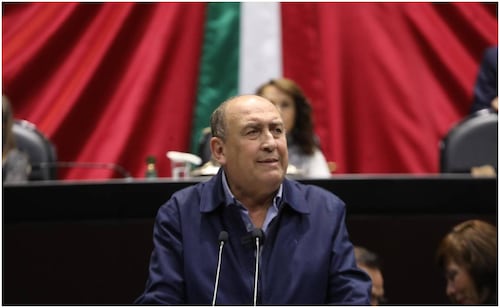
Protests by the National Union of Education Workers (CNTE) in Mexico City are fueled by the ruling Morena party's alleged failure to honor electoral promises, particularly regarding pension reforms and salary increases. Rubén Moreira Valdez, coordinator for the PRI in the Chamber of Deputies, stated that while pension reforms from 1997 and 2007 are debated, Morena made specific electoral pledges that they have not been able to fund.
Beyond the education sector, Moreira highlighted other pressing social demands that remain unaddressed. These include the ongoing search for loved ones by "Madres y Familias Buscadoras" (Mothers and Searching Families), security concerns for transport workers facing highway robberies, and farmers seeking higher guaranteed prices for their crops. He also noted that a proposed reform to Article 123 of the constitution, which would establish a professional minimum wage for police, national guards, medical staff, and teachers, estimated at around 19,000 pesos, has been stalled in the Senate.
Analysts Mario Di Costanzo and Francisco Lezama, speaking on the program "Con Peras, Manzanas y Naranjas," linked these social grievances to Morena's budgetary decisions. Lezama pointed out that 38 educational programs operating between 2015 and 2018, such as "Escuelas de Tiempo Completo" (Full-Time Schools) and "Escuela Digna" (Dignified School), have been eliminated from the budget. These cuts, totaling approximately 87 billion pesos, are seen as directly impacting the CNTE's current demonstrations.
More than whether one agrees or not with the pension reforms of '97 and 2007, they made an electoral offer. First Andrés Manuel López Obrador did it and then the president of [Morena] to roll back the pension reform, and today they do not have the necessary resources to fulfill what they offered.
Moreira added that funds diverted from essential sectors were channeled into flagship projects of the previous administration. These include the Maya Train, the Interoceanic Corridor, a "refinery that doesn't refine," a "plane that doesn't fly," and an airport that has not met expectations. The combined cost of these projects is estimated to be around 1.5 trillion pesos.
Di Costanzo concurred that the government's financial strategy has led to a "profound financial, educational, and social crisis" in Mexico. The disconnect between electoral promises and current realities, coupled with significant budget reallocations, appears to be the core of the widespread discontent.
The resources withdrawn from priority sectors were channeled to emblematic projects of the past administration, such as the Maya Train, the Interoceanic Corridor, the 'refinery that doesn't refine,' the 'airline that doesn't fly,' and an airport that continues 'without achieving the promised results,' and whose combined cost is around 1.5 trillion pesos.
DistantNews Editorial
Originally published by El Universal in Spanish. Translated, summarized, and contextualized by our editorial team with added local perspective. Read our editorial standards.
More Stories

From Our Blog

What Press Freedom Means for the News You Read

What Gets Lost (and Found) When News Is Translated

The Critical Role of Diaspora Media in Global News

What Travellers Should Know About Countries with Restricted Press

A Digital Nomad's Guide to Following Local News
