


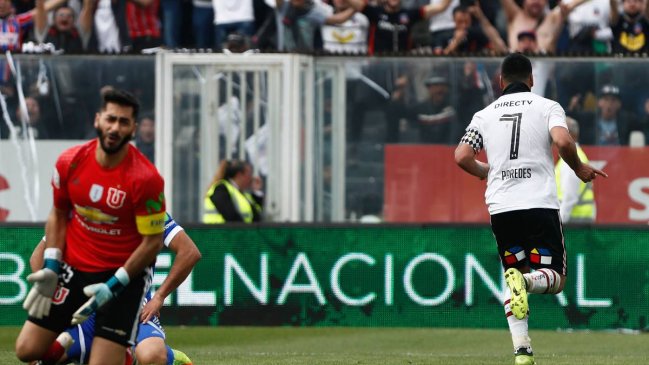
Colo Colo joins 'farming aura' trend ahead of Superclásico
Translated from Spanish, summarized and contextualized by DistantNews.
At a glance
News
Sources not specified
Context piece
- Chilean football club Colo Colo joined a social media trend called 'farming aura' ahead of a major match.
- The trend involves humorously referencing a past confident statement by club legend Esteban Paredes before a Superclásico game.
- 'Farming aura' refers to humorously accumulating charisma or respect, with 'my rival in the first round' used in memes for a formidable initial opponent.
Ahead of the highly anticipated Superclásico match, Chilean football club Colo Colo has embraced a popular social media trend known as 'farming aura.' The club posted a clip featuring club legend Esteban Paredes, accompanied by the phrase, "I'm entering the farming aura tournament. My rival in the first round."
The post references a memorable moment from 2017 when Paredes, then captain, confidently stated, "We are not going to lose" before a Superclásico against Universidad de Chile. Paredes went on to score in that match, solidifying the symbolic weight of his declaration among the club's supporters, known as 'El Cacique.'
I'm entering the farming aura tournament. My rival in the first round.
The expression 'farming aura' has become a viral trend on social media, used humorously to describe someone who gains presence, charisma, respect, or an imposing image through an action, statement, or attitude. In this digital vernacular, 'having aura' means projecting impact or authority, while 'farming it' signifies continuously accumulating that symbolic prestige.
Similarly, the phrase 'my rival in the first round' is frequently used in memes to indicate that the first challenge in a supposed tournament or competition is already an incredibly difficult opponent. In Colo Colo's case, the club playfully suggested that their initial opponent in this 'aura tournament' would be Paredes himself, a club icon and a key figure in a particularly memorable match against their rivals.
no vamos a perder
DistantNews Editorial
Originally published by Cooperativa in Spanish. Translated, summarized, and contextualized by our editorial team with added local perspective. Read our editorial standards.
More Stories



From Our Blog

What Gets Lost (and Found) When News Is Translated

The Critical Role of Diaspora Media in Global News

What Travellers Should Know About Countries with Restricted Press

A Digital Nomad's Guide to Following Local News

How the Same Story Looks Different in Different Countries
