

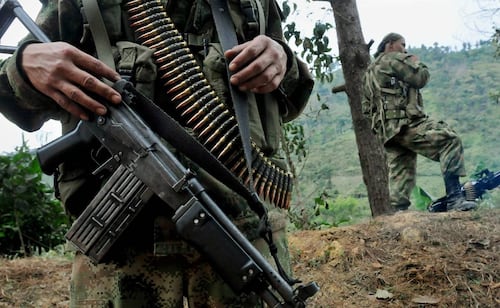
 Image: Archivo (EFE
Colombia reactivates arrest warrants for 46 members of three armed groups, including FARC leader
Translated from Spanish and summarized by DistantNews. Read the original for the full story.
At a glance
News
Official statement
Approved/passed
- Colombia reactivated arrest warrants for 46 members of three armed groups previously involved in peace talks with the government.
- The warrants target 27 members of the FARC dissident group EMBF, including its leader alias Calarcá, 13 members of the CNEB and six members of the ACSN.
- The government ended the talks on Aug. 28, saying the groups had not shown a verifiable willingness to pursue peace, civilian reintegration or serious submission to justice.
Colombia has reactivated arrest warrants for 46 members of three armed groups after the government ended peace talks with them, restoring a legal measure that had been suspended during the negotiations.
Attorney General Luz Adriana Camargo ordered the warrants against 27 members of the FARC dissident group known as the State Major of Blocks and Fronts, or EMBF, including its leader, alias Calarcá. The measure also covers 13 members of the Bolivarian Army’s National Coordination and six members of the paramilitary Conquerors of the Sierra Nevada.
The attorney general’s office said the warrants returned after the government terminated the dialogue tables on Aug. 28 and revoked the designation of the groups’ representatives. That decision ended the suspension benefiting the arrest orders.
President Abelardo de la Espriella confirmed on Sunday that he had ended talks begun under his predecessor, left-wing leader Gustavo Petro. He said the groups had not demonstrated a real and verifiable willingness to make peace, reintegrate into civilian life or submit seriously to justice.
The EMBF split from the Central General Staff, the main dissident faction of the former FARC guerrilla movement, in 2024 after rejecting continued talks with Petro’s government. The Bolivarian Army coordination emerged from a split within another dissident group, the Second Marquetalia, and includes the Pacific Guerrilla Coordination and the Border Commands.
The decision marks another setback for Petro’s “total peace” policy. Talks with several armed groups, including the ELN and the Central General Staff, had already been suspended over alleged lack of willingness for peace. The policy also sought the submission to justice of criminal organizations such as the Gulf Clan, but produced limited results.
I have taken this decision because there is no real and verifiable willingness for peace, much less for reintegration into civilian life or serious submission to justice that would justify maintaining them.
About this summary
Originally published by El Universal in Spanish. Translated, summarized, and contextualized automatically by DistantNews, with a note on how the source frames the story. Not individually reviewed before publishing. How this works.
More Stories
From Our Blog

What Press Freedom Means for the News You Read

What Gets Lost (and Found) When News Is Translated

The Critical Role of Diaspora Media in Global News

What Travellers Should Know About Countries with Restricted Press

A Digital Nomad's Guide to Following Local News
