


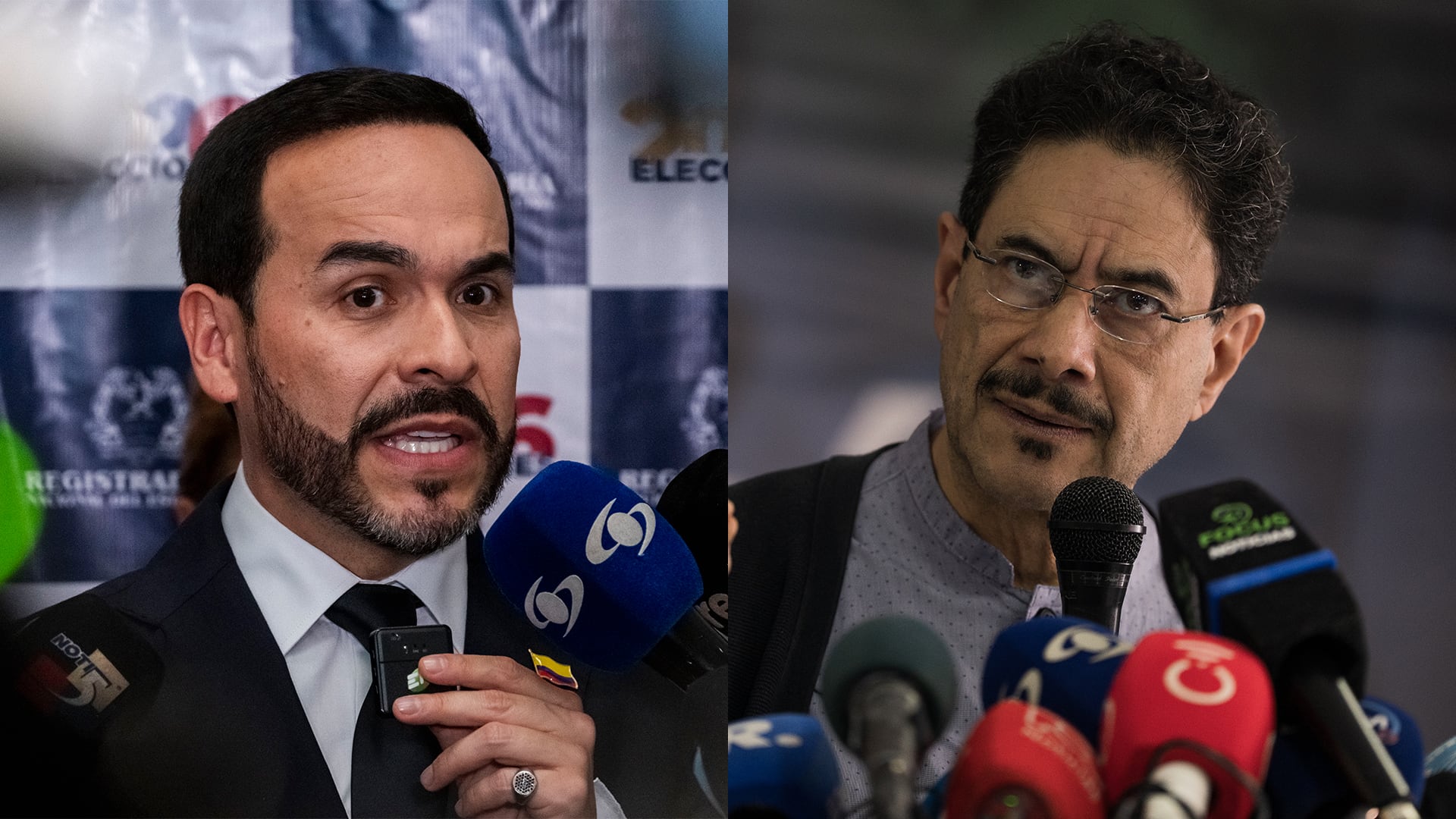
Colombia's Most Contentious Election Ever
Translated from Spanish, summarized and contextualized by DistantNews.
At a glance
News
Named sources
Outcome reported
- Colombia's presidential election is heading for its closest finish in history, with results still pending official scrutiny.
- Preliminary counts show Abelardo de la Espriella leading Iván Cepeda by less than one percentage point.
- This election is notable as the winner is expected to receive less than half the total votes cast.
Colombia's presidential election is poised for the tightest runoff in its history, with official scrutiny pending to declare a definitive winner. Abelardo de la Espriella and Iván Cepeda are facing the closest second-round presidential contest in the nation's recent past.
The first round three weeks prior already indicated a highly competitive race, with a difference of over 600,000 votes between the far-right lawyer, De la Espriella (43.7%), and the leftist senator, Cepeda (40.9%). This stark division reflected a palpable radicalization in the country. However, Sunday's runoff revealed an even narrower margin. With 99.7% of polling stations reporting in the preliminary count, De la Espriella had secured 49.65% of the votes compared to Cepeda's 48.71%, a difference of less than 250,000 votes, or just under one percentage point.
This election marks the first time in recent Colombian history that the winner is expected to secure less than half of the total votes cast. Several past elections have been decided by slim margins. The 1970 presidential election saw Misael Pastrana Borrero defeat Gustavo Rojas Pinilla by 1.6%. In 1978, Julio César Turbay narrowly won against Belisario Betancur by 2.7%. The 1994 second round saw Ernesto Samper elected over Andrés Pastrana by a margin slightly exceeding 2%. More recently, four years ago, President Gustavo Petro defeated Rodolfo Hernández by just over 3 percentage points.
The 1970 election, in particular, remains controversial. Under the National Front agreements, that period was supposed to be the last time Liberals and Conservatives alternated in power. According to the final report from the National Registry, Misael Pastrana of the Conservative Party, supported by the Liberal establishment, defeated retired General Gustavo Rojas Pinilla by approximately 70,000 votes. Rojas Pinilla had previously led Colombia during its only brief military dictatorship from 1953 to 1957, with support from factions within both major parties. Those close-run elections were marred by suspicions of irregularities. Academic Jorge Orlando Melo noted in his book "Historia mínima de Colombia" that while initial counts in major cities favored Rojas, the government suspended results. When Pastrana was announced the winner the next day, widespread doubt arose, with many believing the vote count had been manipulated overnight. Melo suggests that evidence indicates the recount was correct, despite significant fraud in rural areas, and that the areas yet to report were largely rural sectors whose total vote counts were already known.
The day of the elections, the recounts, which began in the big cities, where discontent over inflation was greater, gave a notable advantage to Rojas. The Government, worried, suspended the dissemination of results and when, the next day, it was announced that Pastrana had won, doubt was general: many believed that during the night the vote count had been cheated.
DistantNews Editorial
Originally published by El País in Spanish. Translated, summarized, and contextualized by our editorial team with added local perspective. Read our editorial standards.
More Stories

From Our Blog

What Gets Lost (and Found) When News Is Translated

The Critical Role of Diaspora Media in Global News

What Travellers Should Know About Countries with Restricted Press

A Digital Nomad's Guide to Following Local News

How the Same Story Looks Different in Different Countries
