

Colombia Warns of Illegal Group Control in Over 100 Municipalities Ahead of Elections
Translated from Spanish, summarized and contextualized by DistantNews.
At a glance
News
Named sources
Context piece
- Colombia's National Registrar, Hernán Penagos, has warned that illegal armed groups exercise social control in over 100 municipalities ahead of the presidential elections.
- These groups, including FARC dissidents, are reportedly registering and documenting citizens, posing a threat to the freedom of the vote.
- Five departments—Norte de Santander, Antioquia, Chocó, Nariño, and Cauca—are identified as having the most significant challenges due to the presence of these illegal organizations.
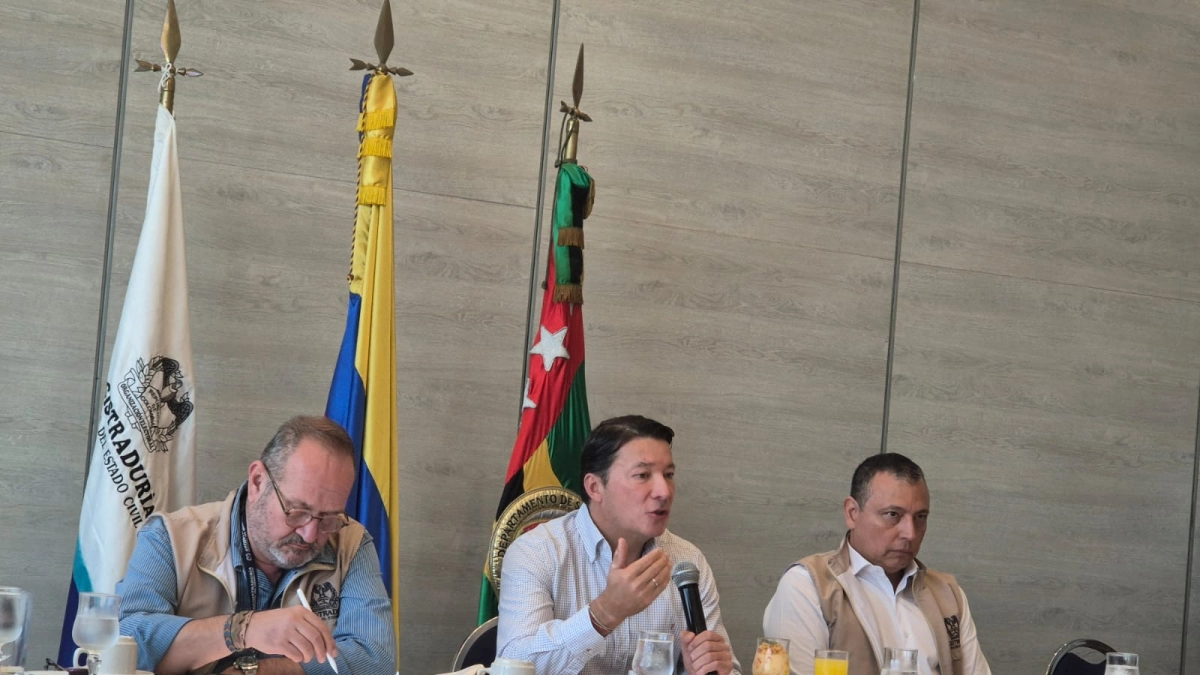
As Colombia stands on the cusp of its presidential elections, a grave concern looms over the integrity of the democratic process. El Tiempo reports that the National Registrar, Hernán Penagos, has issued a stark warning: over 100 municipalities are under the 'social control' of illegal armed groups, casting a shadow over the upcoming vote on May 31st.
This is not a new challenge for Colombia, a nation long grappling with the influence of non-state armed actors. However, the Registrar's alert, specifically mentioning FARC dissidents 'carnetizing and documenting citizens' in Meta, highlights a disturbing escalation. Such actions directly threaten the fundamental right to a free and secret ballot, suggesting a coordinated effort to influence or suppress voter choice in vulnerable regions. The involvement of the military and public forces is deemed essential, as the Registrar emphasized, 'The duty of the Registrar's Office is to guarantee the free vote, but it needs the backing of the Public Force.'
We must have the support of the Military Forces. The duty of the Registrar's Office is to guarantee the free vote, but it needs the backing of the Public Force.
The five departments identified—Norte de Santander, Antioquia, Chocó, Nariño, and Cauca—are particularly concerning due to the deep-rooted presence of these illegal organizations. While the Registrar's Office assures that electoral materials have reached all corners of the country, the critical question remains: can citizens in these affected areas truly exercise their vote freely and without coercion? From our perspective at El Tiempo, this situation underscores the persistent fragility of democratic institutions in regions where illegal groups hold sway. Ensuring a free election requires not only logistical preparedness but a robust security strategy that actively counteracts the 'social control' exerted by these menacing forces, upholding the principle that 'in Colombia, the vote has three essential characteristics: it is a universal right, it must be secret, and it must be free.'
Guaranteeing that citizens can exercise their right to vote in all corners of the country is fundamental. But more than that, it is about them being able to do so in freedom, that they can vote freely. I say this because there are alerts presented by the Electoral Observation Mission, the Ombudsman's Office, and even information from the Ministry of Defense about places where illegal groups exercise a certain social control. That control can put at risk the possibility that citizens vote freely in those territories.
DistantNews Editorial
Originally published by El Tiempo in Spanish. Translated, summarized, and contextualized by our editorial team with added local perspective. Read our editorial standards.
More Stories
From Our Blog

What Gets Lost (and Found) When News Is Translated

The Critical Role of Diaspora Media in Global News

What Travellers Should Know About Countries with Restricted Press

A Digital Nomad's Guide to Following Local News

How the Same Story Looks Different in Different Countries
