

 Image: EFE/ Mauricio Dueñas Castañeda
Colombian President ordered to apologize for religious ceremony at inauguration
Translated from Spanish and summarized by DistantNews. Read the original for the full story.
At a glance
News
Sources not specified
Outcome reported
- A Colombian judge ordered President Abelardo de la Espriella to apologize for a religious ceremony at his inauguration.
- The ceremony, which included a rabbi, Catholic priest, and evangelical pastor, allegedly violated the state's religious neutrality.
- The president must issue a public apology and a directive for officials to respect religious neutrality in public acts.
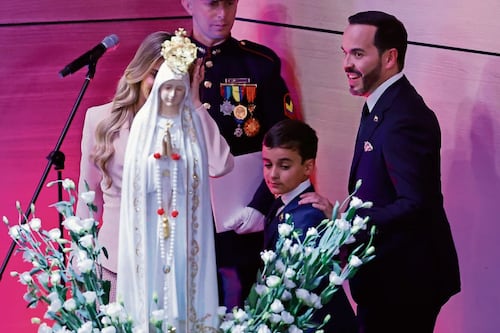
A Colombian judge has ordered President Abelardo de la Espriella to apologize for including a religious ceremony at his inauguration, ruling that it violated the state's secular neutrality. The ceremony, held on August 7 in Cali, featured prayers and praise for Israel alongside an altar to the Virgin Mary, with participation from a rabbi, a Catholic priest, and an evangelical pastor.
President De la Espriella is required to issue a televised apology by September 30, acknowledging the violation of religious neutrality. He must also issue a directive mandating that public officials respect and uphold this principle in all official capacities. This ruling stems from a complaint that the inauguration ceremony blurred the lines between state and religion, contrary to Colombia's constitutionally secular nature.
This incident highlights ongoing debates about the role of religion in Colombian public life. President De la Espriella, who has frequently invoked God and participated in spiritual retreats, has also been criticized for promoting a "cultural war" that opponents argue could roll back fundamental rights and promote traditional family values. Recent government decisions, such as a decree allowing churches to participate in public school pedagogy and a move to replace "children" with "childhood" in official documents, have fueled these concerns.
About this summary
Originally published by El Universal in Spanish. Translated, summarized, and contextualized automatically by DistantNews, with a note on how the source frames the story. Not individually reviewed before publishing. How this works.
More Stories
From Our Blog

What Press Freedom Means for the News You Read

What Gets Lost (and Found) When News Is Translated

The Critical Role of Diaspora Media in Global News

What Travellers Should Know About Countries with Restricted Press

A Digital Nomad's Guide to Following Local News
