


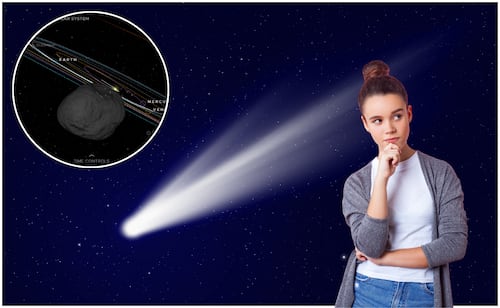
Comet C/2025 R3: Will It Be Visible in Mexico? El Universal Reports
Translated from Spanish, summarized and contextualized by DistantNews.
TLDR
- Comet C/2025 R3 (PanSTARRS) will be visible in the Northern Hemisphere, including Mexico, from April 17 to April 27.
- The comet is expected to reach its brightest point and closest proximity to Earth on April 27, about 44 million miles away.
- Optimal viewing conditions require early morning observation towards the sunrise horizon, away from light pollution, and potentially specialized equipment.
Mexico's skygazers are in for a treat as Comet C/2025 R3 (PanSTARRS) makes its appearance in the night sky. El Universal reports that this celestial visitor promises a spectacular show, with its brightness peaking around April 27. While the comet's magnitude suggests it should be visible, observers are advised that comets appear as diffuse smudges rather than sharp points of light, requiring keen eyes and optimal conditions.
The comet's journey brings it to its closest point to Earth, a mere 44 million miles away, during the latter half of April. For those in the Northern Hemisphere, including Mexico, the early morning hours before sunrise will offer the best chance to witness this phenomenon. El Universal emphasizes the importance of finding a location free from light pollution to truly appreciate the comet's glow.
While international space agencies like NASA provide the scientific data, the local perspective from Mexico, as highlighted by El Universal, focuses on the accessibility and viewing experience for its readers. The advice to use specialized equipment and track the comet's trajectory underscores that while the event is visible, appreciating its full splendor might require more than just looking up. This astronomical event serves as a reminder of the wonders visible from our planet, connecting us to the vastness of the cosmos.
DistantNews Editorial
Originally published by El Universal in Spanish. Translated, summarized, and contextualized by our editorial team with added local perspective. Read our editorial standards.
More Stories



From Our Blog

What Press Freedom Means for the News You Read

What Gets Lost (and Found) When News Is Translated

The Critical Role of Diaspora Media in Global News

What Travellers Should Know About Countries with Restricted Press

A Digital Nomad's Guide to Following Local News
