


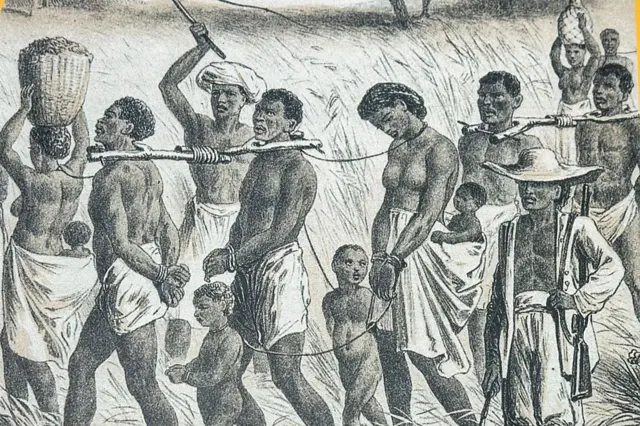
Commemorating the Slave Trade: Benin Hosts Ceremony on 'Door of No Return to Door of Return'
Translated from French, summarized and contextualized by DistantNews.
At a glance
In-depth
Sources not specified
New plan
- The international community commemorated the International Day for the Remembrance of the Slave Trade and its Abolition on August 23, 2026.
- This year's ceremony took place in Ouidah, Benin, under the theme 'From the Door of No Return to the Door of Return.'
- The event highlighted the enduring impact of the slave trade on Africa and the diaspora, acknowledging the suffering of enslaved people and the role of complicit African leaders.
The international community marked the International Day for the Remembrance of the Slave Trade and its Abolition on August 23, 2026. This year's official ceremony was held in Ouidah, Benin, a significant historical site associated with the transatlantic slave trade. The event focused on the theme, "From the Door of No Return to the Door of Return."
The chosen theme underscores the profound and lasting impact of the slave trade on Africa and its diaspora. Millions of Africans were forcibly removed from their homes, and many of their descendants continue to search for their origins, often facing despair and a sense of loss. The "doors of no return" symbolize the points of no return for countless enslaved individuals, while the "door of return" represents the ongoing quest for identity and connection.
The commemoration paid tribute to the enslaved people of Saint-Domingue, now Haiti, whose revolt in August 1791 played a crucial role in the abolition of the transatlantic slave trade. UNESCO's institution of this day is a vital initiative, ensuring that this tragedy, which deeply scarred humanity, remains in global memory. It serves as a stark reminder of the cruelty humans inflicted upon one another.
The article also acknowledges the complicity of certain African kings and leaders who facilitated the trade by organizing raids and wars to capture prisoners. These leaders exchanged captives for manufactured goods, such as weapons and textiles, thereby contributing to the suffering of millions. The piece emphasizes that these actions make them equally culpable as the slave merchants in the atrocities committed against Black Africans.
DistantNews Editorial
Originally published by Le Pays in French. Translated, summarized, and contextualized by our editorial team with added local perspective. Read our editorial standards.
More Stories

From Our Blog

What Gets Lost (and Found) When News Is Translated

The Critical Role of Diaspora Media in Global News

What Travellers Should Know About Countries with Restricted Press

A Digital Nomad's Guide to Following Local News

How the Same Story Looks Different in Different Countries
