


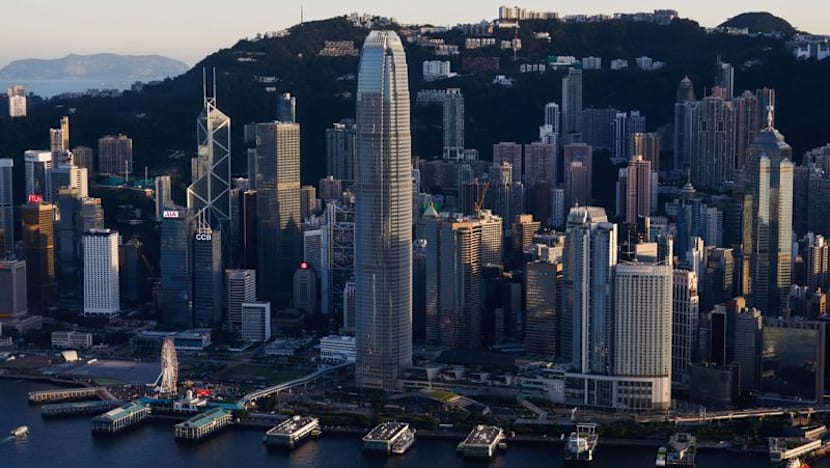
Commentary: Beijing's crackdown on overseas investing makes Hong Kong more important, not less
Translated from English, summarized and contextualized by DistantNews.
At a glance
News
Named sources
Context piece
- Beijing's recent penalties on investment platforms signal a tightening of capital controls, but the strategy aims to channel, not block, overseas investment.
- Hong Kong is being repositioned as a supervised gateway for capital flow between mainland China and the world, enhancing its importance.
- This controlled approach allows Chinese savers access to foreign assets while keeping capital within Beijing's oversight, benefiting Hong Kong's IPO market.
Recent actions by Beijing against popular investment platforms used by Chinese savers suggest a tightening of capital controls, but this interpretation overlooks a more nuanced strategy. China is not aiming to trap savings domestically but rather to ensure that capital flows across borders through channels it can meticulously supervise.
This controlled approach is reshaping Hong Kong's role in international finance. The city is increasingly becoming a "controlled gateway" between the yuan and dollar worlds. Initiatives like the Stock Connect and Wealth Management Connect schemes facilitate official links between mainland and Hong Kong markets. Furthermore, the Qualified Domestic Institutional Investor and Qualified Foreign Institutional Investor programs have expanded access for both Chinese institutional capital moving abroad and foreign capital entering China.
The recent crackdown on platforms like Futu, Tiger Brokers, and Longbridge, which Beijing terms "illegal" cross-border securities activity, is part of this broader architecture. This campaign has been developing for years, targeting overseas investments that occur outside Beijing's direct oversight and control. The consequence is a strengthening of Hong Kong's position as the approved route for companies seeking access to Chinese savings and for Chinese investors seeking international exposure.
Companies are increasingly choosing Hong Kong for their initial public offerings, and Chinese investors are turning to Hong Kong-based products for overseas exposure. The Connect schemes exemplify this strategy: while mainland investors can buy Hong Kong-listed shares, their proceeds ultimately return as yuan, keeping capital within China's financial orbit. Hong Kong is thus being repositioned not just as China's window to the world, but as a vital, supervised conduit that serves Beijing's interests while remaining deep enough to attract international investors.
The answer is that Beijing is not trying to stop capital from crossing borders. It is trying to ensure that capital crosses borders through channels it can supervise.
DistantNews Editorial
Originally published by CNA in English. Translated, summarized, and contextualized by our editorial team with added local perspective. Read our editorial standards.
More Stories


From Our Blog

What Gets Lost (and Found) When News Is Translated

The Critical Role of Diaspora Media in Global News

What Travellers Should Know About Countries with Restricted Press

A Digital Nomad's Guide to Following Local News

How the Same Story Looks Different in Different Countries
