


Commentary: Peace with Iran hinges on Lebanon conflict
Translated from English, summarized and contextualized by DistantNews.
At a glance
Analysis
Named sources
Context piece
- A reported ceasefire between the US and Iran may be unattainable if Israel continues its fight against Hezbollah in Lebanon.
- Former Israeli Foreign Minister Shlomo Ben-Ami suggests that Israeli Prime Minister Benjamin Netanyahu's past advice to the US president has led to the current conflict.
- Israel's continued strikes in Lebanon, particularly an air raid on Beirut, could jeopardize the US-Iran deal, as Iran demands an end to Israeli hostilities.
A potential ceasefire between the United States and Iran faces an uncertain future, contingent on Israel's ongoing conflict with Hezbollah in Lebanon, according to former Israeli Foreign Minister Shlomo Ben-Ami.
The ceasefire that was reportedly just agreed between the United States and Iran reflects US President Donald Trump’s desperation to escape the quagmire that he created.
Ben-Ami argues that the reported interim deal, aimed at ending the war, reflects U.S. President Donald Trump's desire to exit a self-made quagmire. The agreement's limited goals, reopening the Strait of Hormuz and discussing Iran's nuclear program, might be out of reach if Israel persists in its operations against Hezbollah.
The commentary highlights a persistent divergence between Trump and Israeli Prime Minister Benjamin Netanyahu. Netanyahu, who previously advised Trump to withdraw from the Iran nuclear deal, also reportedly convinced Trump to launch the current war with a vision of swift military success. Now, Netanyahu is portrayed as the primary obstacle to a deal that would allow Trump to disengage from the conflict.
Trump and Netanyahu were never really on the same page.
While Trump sought an "unconditional surrender" from Iran but lacked appetite for prolonged engagement, Israel views the elimination of Iran's ballistic missile threat and its support for proxy militias as non-negotiable. These issues are considered existential necessities for Iran, making compromise unlikely.
For Israel, however, eliminating the ballistic-missile threat emanating from Iran, as well as the country’s support for its proxy militias in Iraq, Lebanon, Palestine and Yemen, has always been non-negotiable.
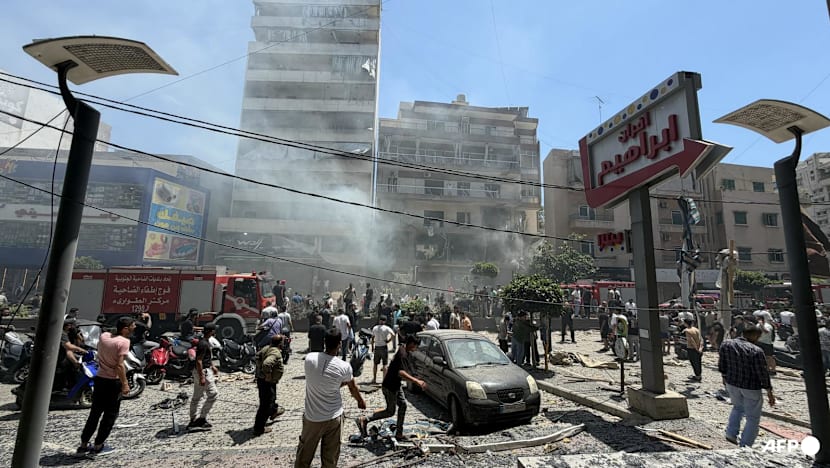
A particular point of contention is Lebanon, where Israel aims to dismantle the Iran-backed Hezbollah militia. Despite U.S. signals, Israel has pledged to remain in southern Lebanon until the threat is eliminated. An Israeli airstrike on Beirut on Sunday, coinciding with the finalization of the U.S.-Iran ceasefire, could derail the agreement, as Iran has stated that an end to Israeli hostilities in Lebanon is a prerequisite for any ceasefire or final deal.
With northern Israel having lived under Hezbollah fire for the last three years, Israel has pledged to remain in southern Lebanon for as long as it takes to eliminate the threat, regardless of what the US says.
DistantNews Editorial
Originally published by CNA in English. Translated, summarized, and contextualized by our editorial team with added local perspective. Read our editorial standards.
More Stories


From Our Blog

What Gets Lost (and Found) When News Is Translated

The Critical Role of Diaspora Media in Global News

What Travellers Should Know About Countries with Restricted Press

A Digital Nomad's Guide to Following Local News

How the Same Story Looks Different in Different Countries
