

Commentary: Singapore PM Wong's Cabinet Choices Reveal Limited Options Amidst Talent Shortage
Translated from English, summarized and contextualized by DistantNews.
At a glance
News
Named sources
New plan
- Prime Minister Lawrence Wong's recent Cabinet reshuffle in Singapore reveals a limited pool of candidates, particularly a slowdown in ministerial talent emerging from recent general elections.
- Many newly appointed ministers have backgrounds in the civil service or military, fast-tracked into political office after only one term as MPs.
- The article argues this indicates a significant problem requiring urgent action to ensure a sufficient pipeline of qualified leaders for Singapore's future.
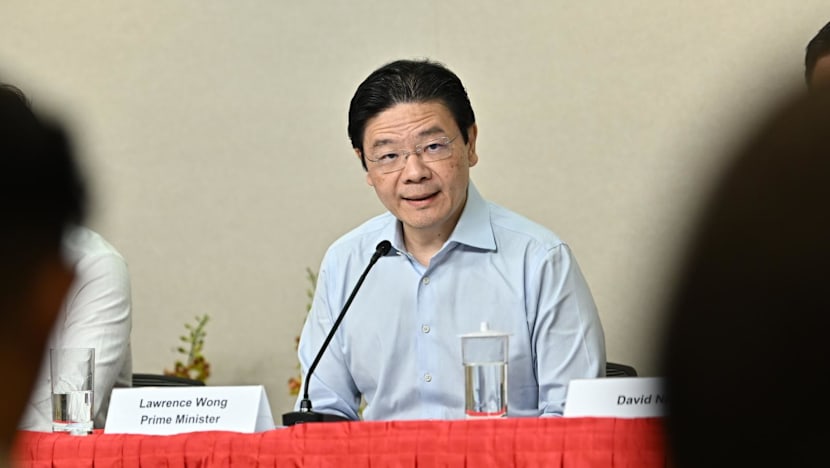
Prime Minister Lawrence Wong's recent Cabinet appointments in Singapore highlight a stark reality: the limited number of available candidates for ministerial positions. This situation, stemming from a slowdown in the emergence of ministerial-caliber talent over the past two general elections, has led to the fast-tracking of first-term Members of Parliament into key political roles.
Diversity is important and the Cabinet will benefit from members drawn from different backgrounds, but the prime minister’s hands were in effect tied, says veteran newspaper editor Han Fook Kwang.
The new lineup includes six parliamentarians who have spent the majority of their careers in the civil service or military. These individuals, elected for the first time in last year's General Election, have been promoted to significant positions, with two becoming full ministers and one appointed as an acting minister. This reflects Wong's constrained options in forming his government.
The issue is not new and can be traced back to the 2015 and 2020 General Elections. In 2015, only three out of 22 new People's Action Party (PAP) candidates are now ministers. The 2020 election yielded even fewer results, with only one of the 27 new candidates currently serving as a minister. This contrasts sharply with the departure of nine veteran ministers over the same period, creating a significant gap in experience and leadership.
He had too few cards to play and it showed in the way first-term Members of Parliament have been fast-tracked into political office.
Veteran newspaper editor Han Fook Kwang argues that this shortage of top-quality individuals to fill leadership positions poses a risk to Singapore's exceptional performance. He emphasizes that to maintain the necessary renewal of the Cabinet, approximately five minister-level candidates are required at every general election, or ten over two GEs. The actual numbers over the last two elections fall significantly short of this requirement, indicating a systemic problem that demands immediate attention to ensure a robust pipeline of future leaders.
It is a major problem that requires urgent action. Without a sufficient number of top quality people to fill leadership positions, the exceptional performance that has made Singapore what it is today will be at risk.
DistantNews Editorial
Originally published by CNA in English. Translated, summarized, and contextualized by our editorial team with added local perspective. Read our editorial standards.
More Stories

From Our Blog

What Gets Lost (and Found) When News Is Translated

The Critical Role of Diaspora Media in Global News

What Travellers Should Know About Countries with Restricted Press

A Digital Nomad's Guide to Following Local News

How the Same Story Looks Different in Different Countries
